
The main way of getting around the Island of the Gods is a scooter.
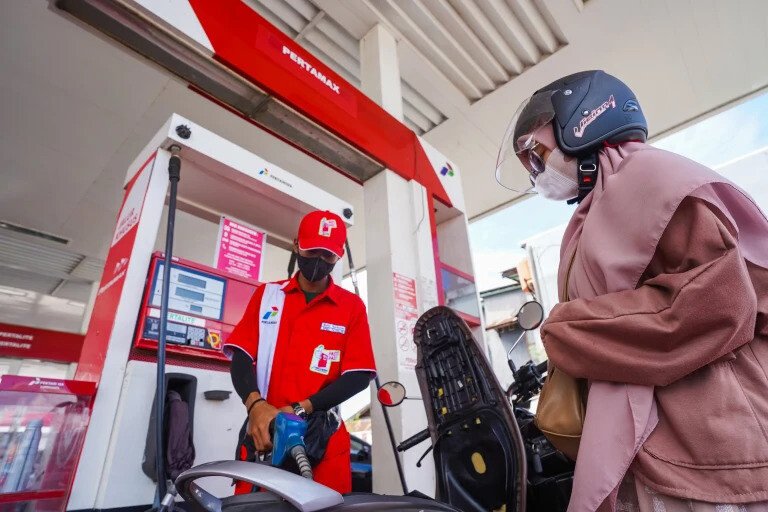
Economical as it is, it unfortunately still needs refuelling from time to time, as do the thirstier cars and motorcycles, of course. Although Indonesia is an oil-producing country and ranks 22nd in the world, it consumes more fuel than it produces, so prices here aren't the lowest. Let's look at how things stand with petrol in Bali, and where, how and when it's most convenient and efficient to fill up your vehicle.
These are the most popular types of fuel in Indonesia (prices are for Pertamina stations and may change over time).
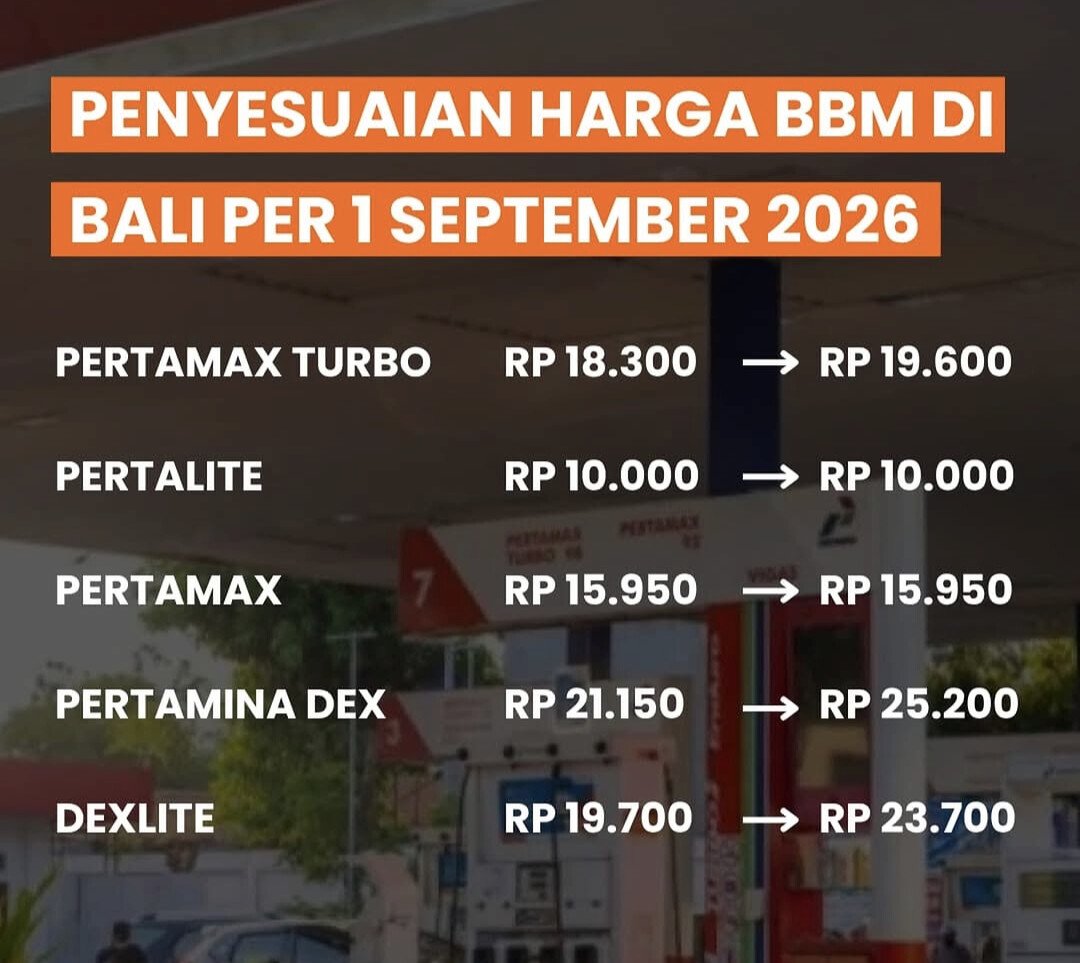
Pertalite
Octane rating: 90
The most affordable and popular fuel for everyday use. It suits most scooters and older car models (you can find out which fuel is best for your vehicle in the manual, or ask the owner if you're renting). This fuel is subsidised by the government, so its price will stay low. A government programme to target subsidies is currently under way, which is why filling up a car with it now often requires a special QR code, and limits and restrictions for drivers will be introduced later. There's a chance the same will eventually happen for scooters too.
Pertamax
Octane rating: 92
A higher-quality fuel with a higher octane rating, suitable for modern cars with higher compression. Subjectively, people who use this petrol feel that scooters are more responsive on it. I'd advise using the fuel recommended for your particular bike, since engines are designed for a specific compression. Most likely, filling up with a higher-octane fuel won't give you any significant advantage, but you'll be overpaying for petrol. That said, it probably won't do much harm either. On top of that, there's often little or no queue at the Pertamax pump, which you can take advantage of if you don't fancy standing in line for Pertalite under the scorching sun for a few minutes.
Pertamax Turbo
Octane rating: 98
A premium fuel, usually recommended for sports and high-performance cars and motorcycles. The same advice on using it applies as above.
Pertamina DEX
Premium-quality diesel.
DEXlite
Regular diesel with reduced sulphur content.
Where to fill up?
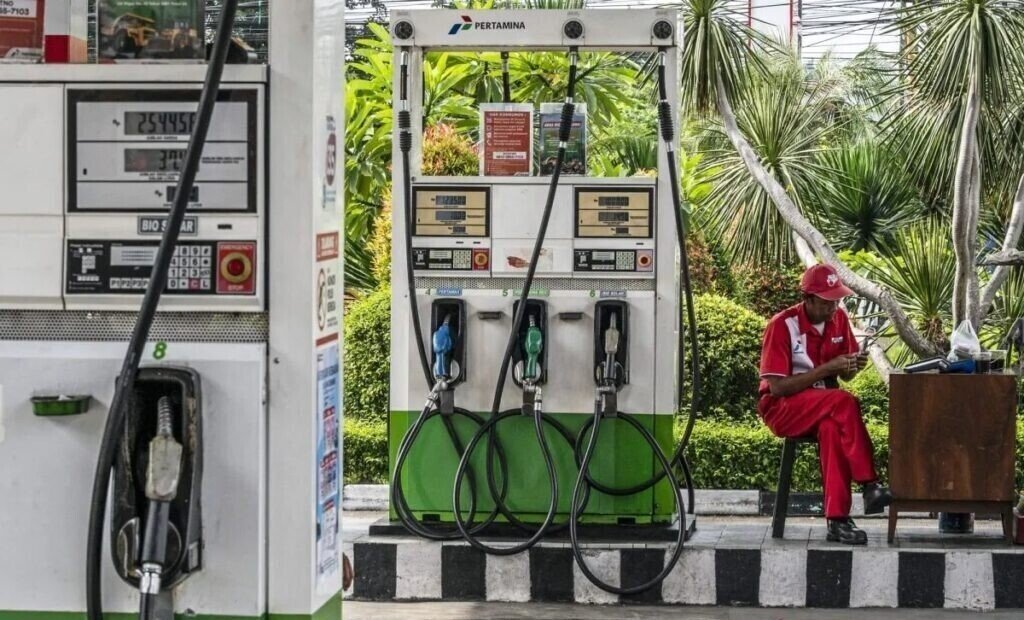
Let's start with the traditional option: regular petrol stations. Pertamina stations, run by Indonesia's leading petrol producer, are the most common on the island. At the pump you'll usually be greeted by an attendant; just tell them the type of petrol and how much money you're ready to turn into liquid energy. You can also say “full” or “penuh”, and they'll fill the tank and tell you the cost. Occasionally you'll come across stations where you pay first and then handle the nozzle yourself, but this is very rare.
Many of these stations aren't open around the clock, so if you're heading to one at night, check on Google Maps whether it's open.
If there are no large petrol stations nearby, don't despair: small local shops will come to your rescue. These little fuel stops are extremely numerous and dotted along roads all over the island. They come in two types: bottled petrol or hand pumps. At the latter you'll see a special booth with glass fuel cylinders, a hose and the proud sign PERTAMINI.
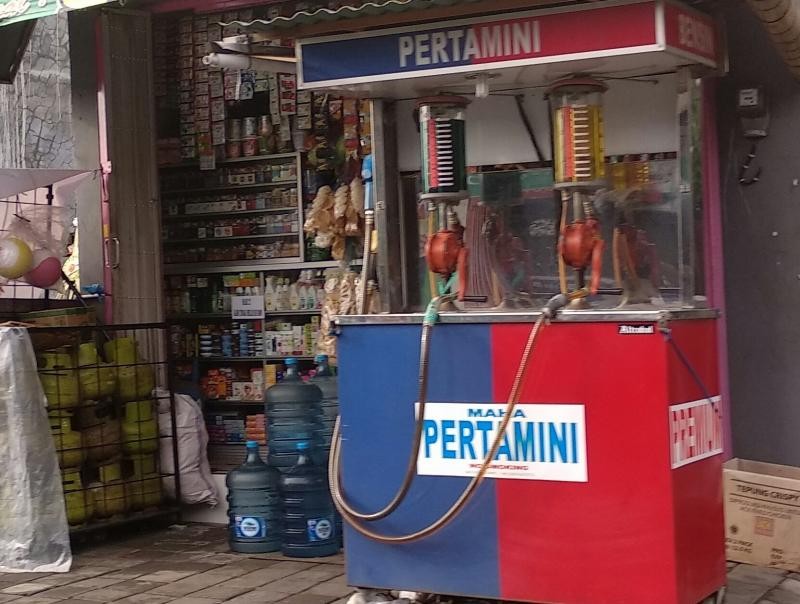
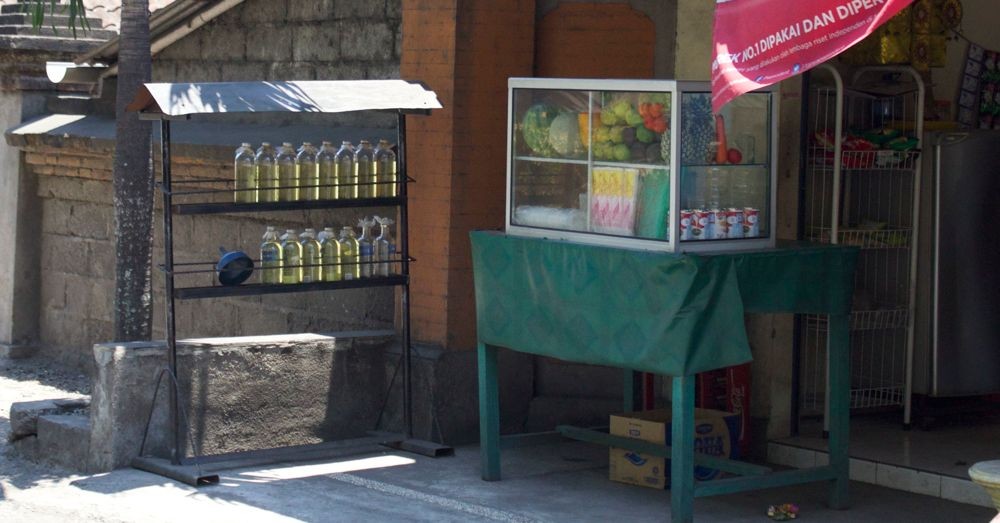
Petrol at these places is, naturally, more expensive, and it's best to fill up there only when absolutely necessary. The process couldn't be simpler: call the shop owner, point to the bottles of petrol or the pump, and say or show on your fingers how many litres you need. There's no need to haggle; prices at these stops are fixed.
But that's not all. Picture this: it's night, the road is deserted, and you're standing there with a scooter that has run out of petrol. What do you do? Either locals or Gojek will help, of course. Local guys will certainly want to know why you're standing helplessly by the road, and once they find out you've run out of petrol, they'll most likely ride off somewhere and bring you back a bottle of excellent petrol. Naturally, you should pay for the petrol and the favour, although there have been cases when the rescuers flatly refused any money.
With Gojek it works in much the same way. Order a goride to your location and, in the chat with the driver, write that you need petrol and are willing to pay for the service.
Of course, it's better not to let things get that far, and to always keep your tank at least half full.
Electric scooters
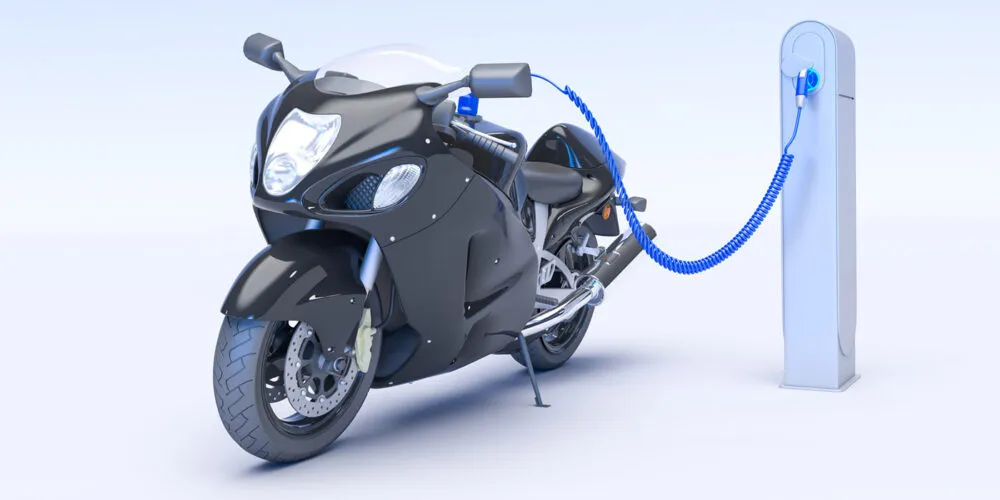
Inexpensive and often government-subsidised electric scooters and cars from local, Chinese and even Korean manufacturers are now gaining popularity in Indonesia. More and more places are appearing where you can charge them or swap batteries.
What's more, you can charge them at home, for example while you sleep. If you don't ride very far each day, no more than 50–70 km, and you prefer calm, unhurried riding rather than speed, you might consider these elegant, eco-friendly and silent vehicles. There are several large showrooms on the island where you can take a scooter for a free test ride. If you choose electric, Bali's air, tired of petrol fumes, will definitely thank you.

You can add one right now!