
Long queues, empty pumps and frustrated drivers have become a familiar sight across southern Bali as the island struggles with a shortage of Pertalite, Indonesia’s cheapest subsidised petrol.
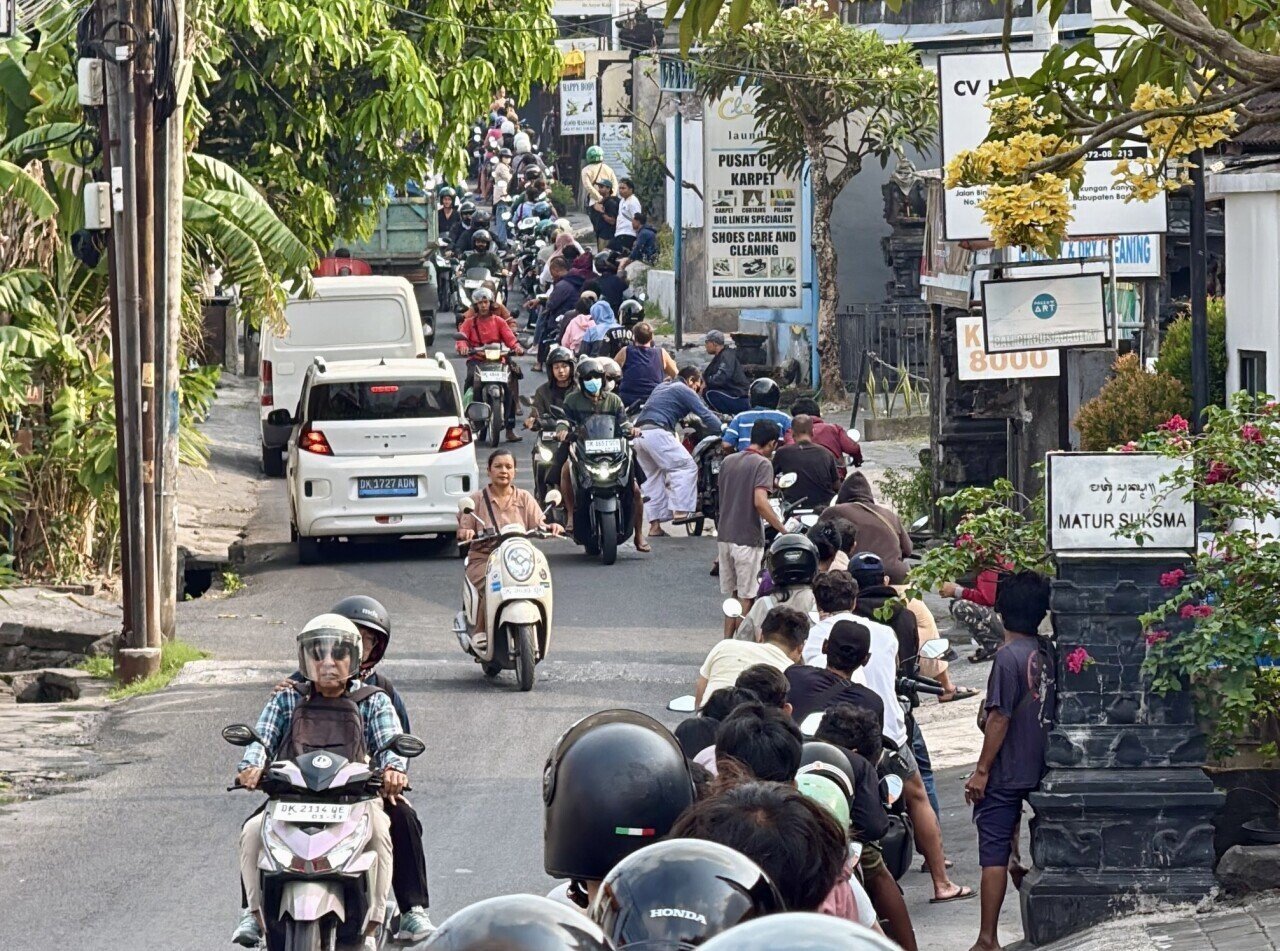
One Bali Live contributor spent nearly five hours trying to get enough fuel for his scooter.
It started with a flashing fuel warning light on the way from Ubud to Canggu. There was still enough petrol to make one more stop that evening, but by the following morning, riding to a petrol station was no longer an option.
With no Gojek drivers available, I set off on foot, carrying two empty 1.5-litre bottles.
After three years in Bali, it was the first time I had travelled through these familiar streets at such a slow pace. Walking wasn’t particularly pleasant. Pavements were scarce, motorbikes regularly occupied the roadside, and dogs occasionally came running out of residential compounds.
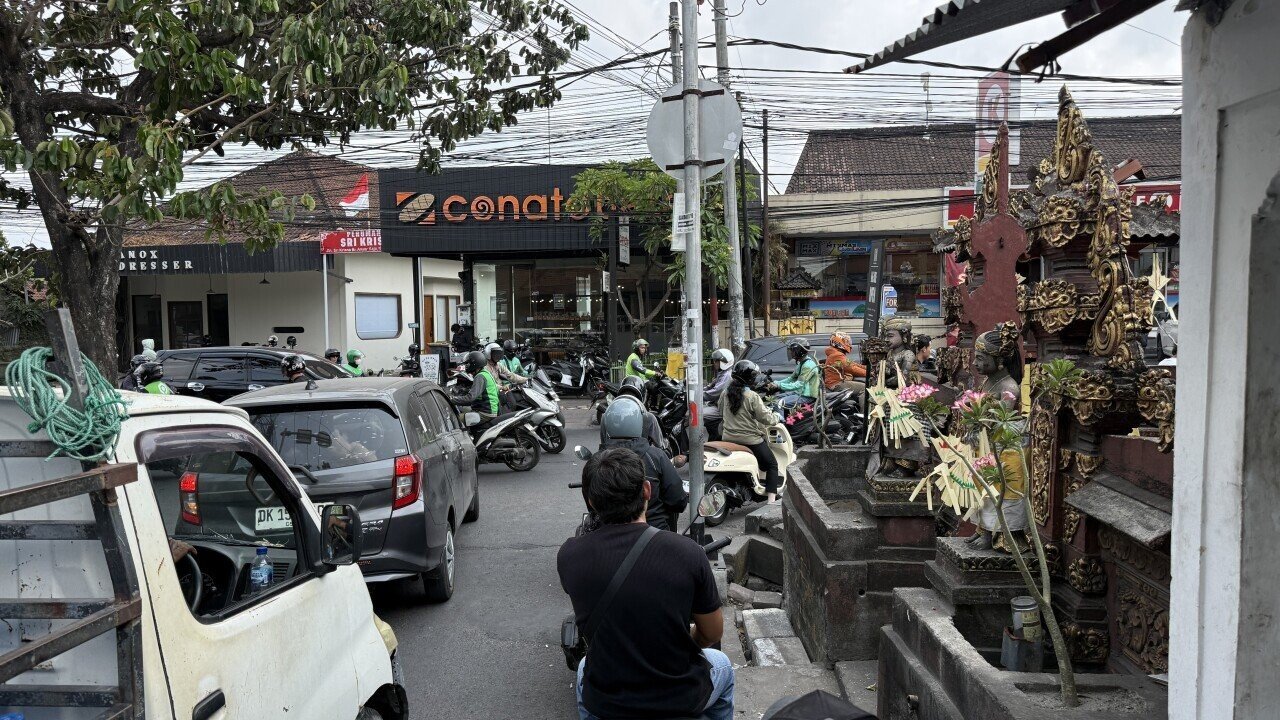
It took 35 minutes to reach a Pertamina petrol station on the road between Canggu and Kerobokan. Finding the end of the queue took another ten.
The line stretched into a narrow side street, almost a kilometre long.
Almost everyone waiting was Indonesian. Despite the inconvenience, the atmosphere was surprisingly relaxed.
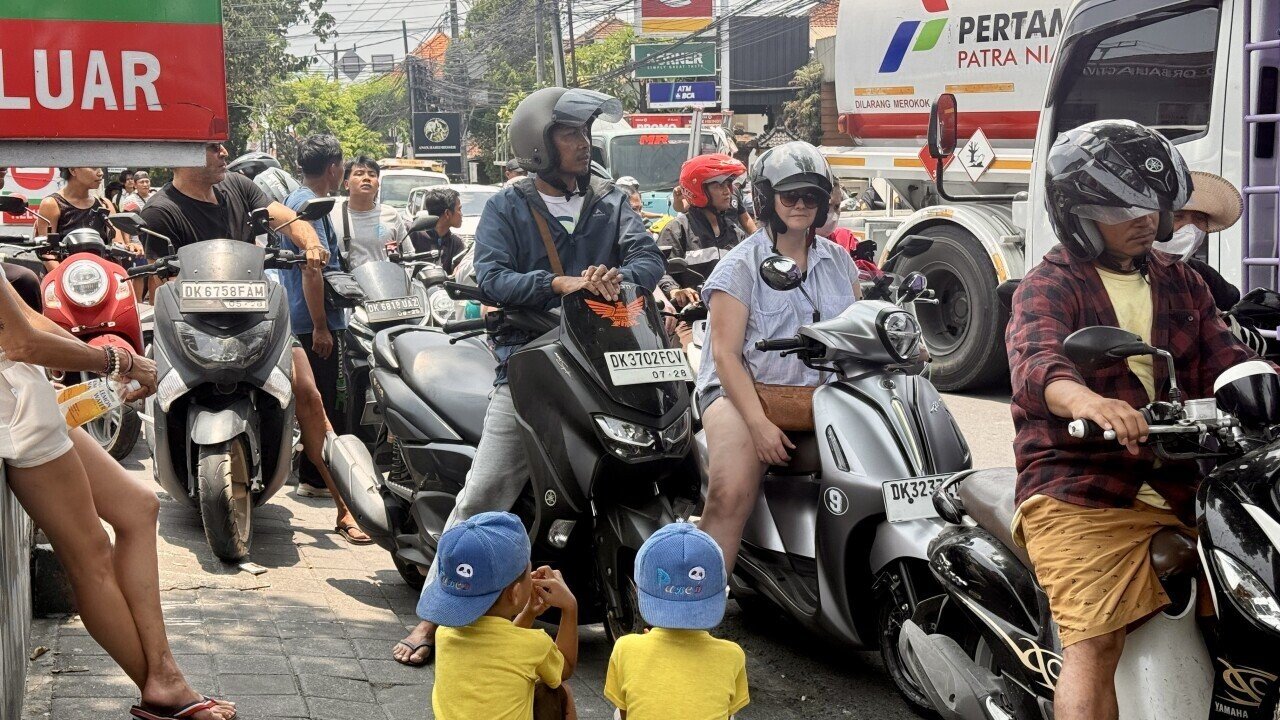
People filmed the extraordinary queue, called friends and family, and showed them the hundreds of motorbikes lined up ahead.
The small warungs and convenience stores along the route were doing brisk business. With so many people waiting for hours, there was no shortage of customers.
A couple of foreign visitors tried to find the end of the queue. When they realised they were only halfway along, they gave up. A minute later, they were carrying two bottles of blue Pertamax petrol, apparently purchased from someone selling fuel privately.
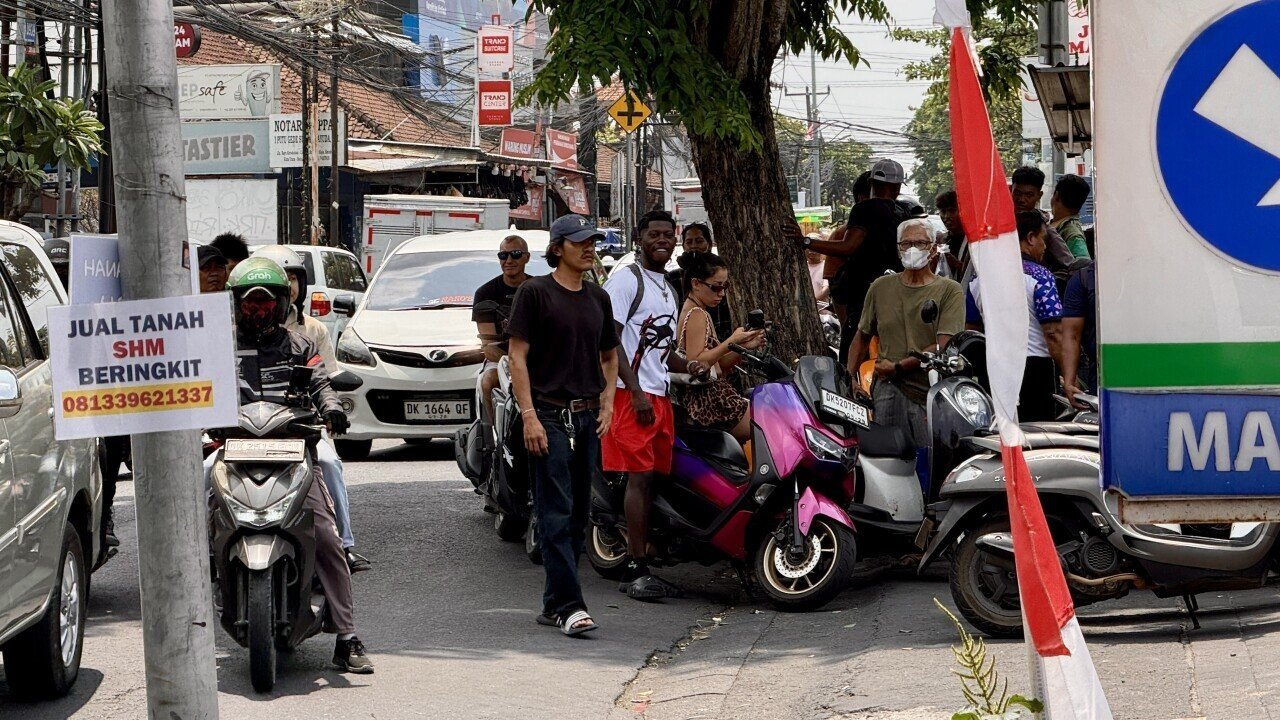
After two and a half hours of slowly moving forward, I finally reached Jalan Raya Canggu. The petrol station was now visible, along with police officers trying to keep traffic moving.
Despite their efforts, the congestion was severe.
“Yesterday I waited two hours to fill up in Denpasar,” said a Gojek driver standing behind me. “Today I sold almost a full tank to someone for three times the normal price. Maybe selling petrol is a better business than driving passengers right now.”
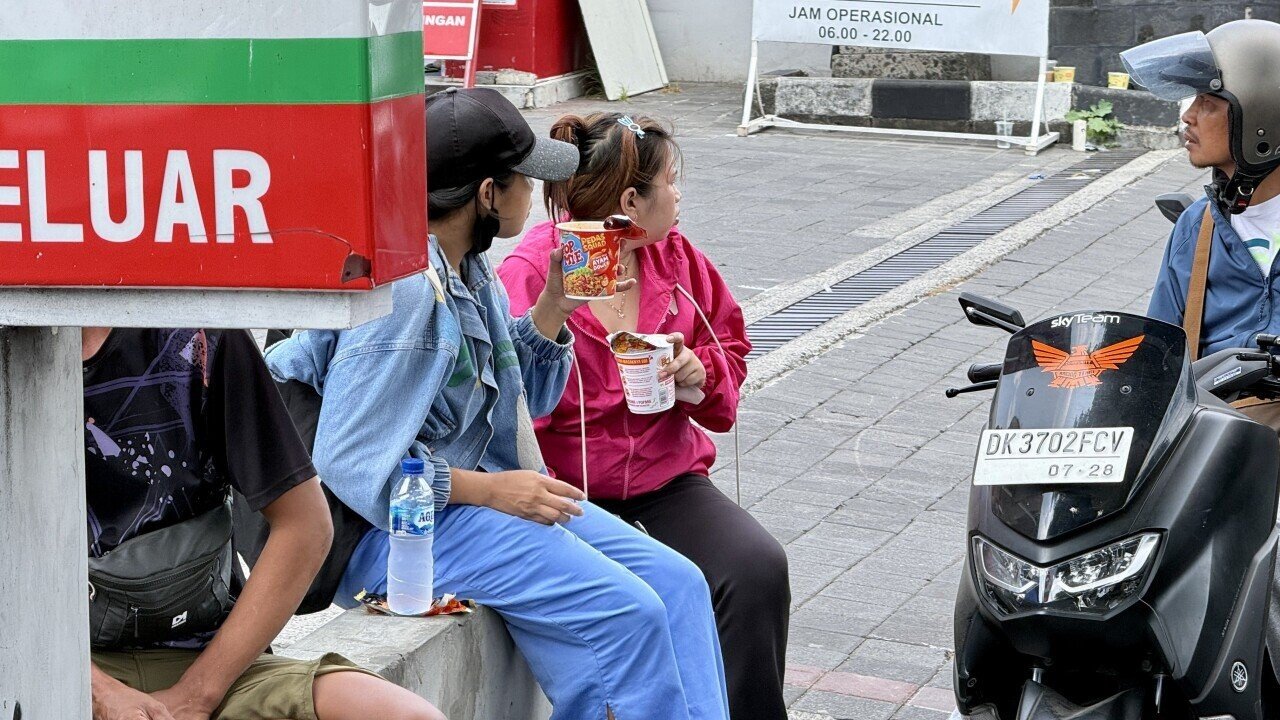
Nearby, a young couple had bought instant noodles from the Alfamart across the road. They prepared their lunch and sat down on the asphalt.
Motorists passing by looked at the queue with a mixture of curiosity and sympathy. Some would probably find themselves in the same position the following day.
“Our employer said we could come in late, but we need to be back by noon,” the woman explained. “We’ve got 40 minutes left. Hopefully we’ll make it.”
Then, suddenly, the mood changed.
A murmur spread from the pumps.
“Habis! Habis!”
The petrol had run out.
Cars and motorbikes began leaving the station. Drivers coming out told those still waiting that refuelling had been suspended until the next Pertamina tanker arrived.
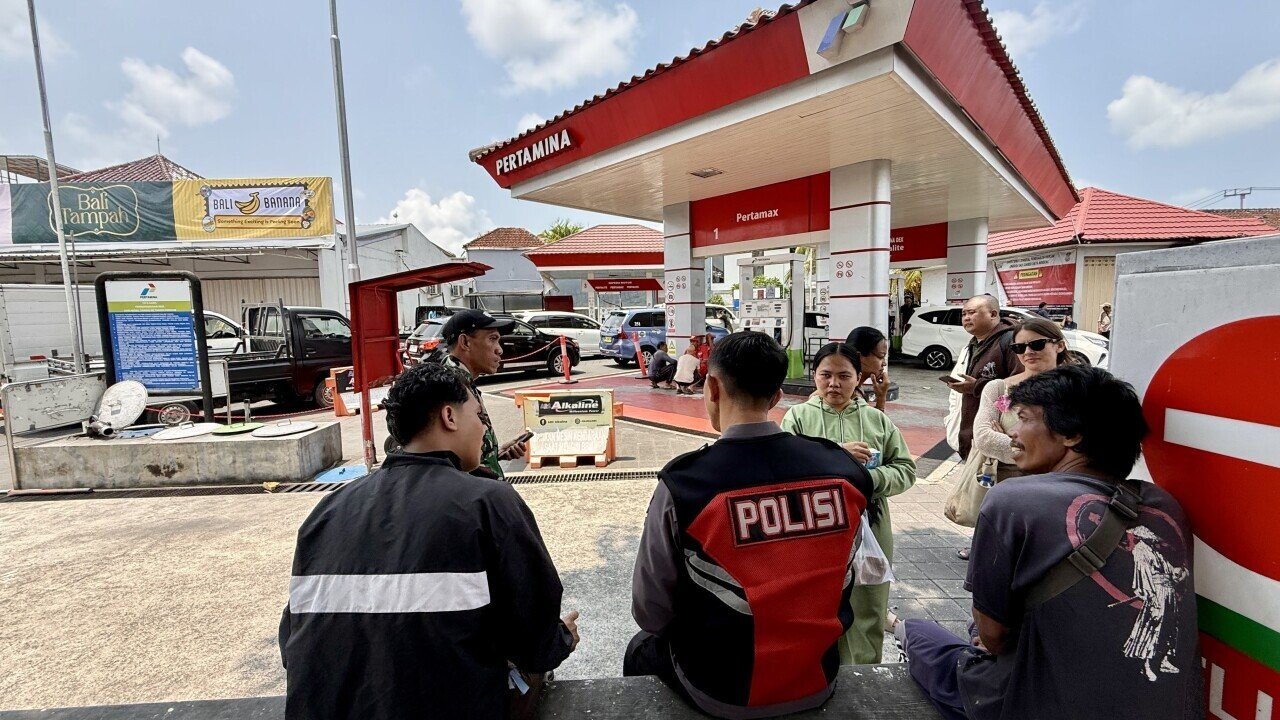
Some people immediately turned around and left. Others settled in for an even longer wait, looking for shade or heading to nearby shops.
Nobody knew when the tanker would arrive.
Even the police officers and petrol station staff finally had a moment to sit down, rest and talk.
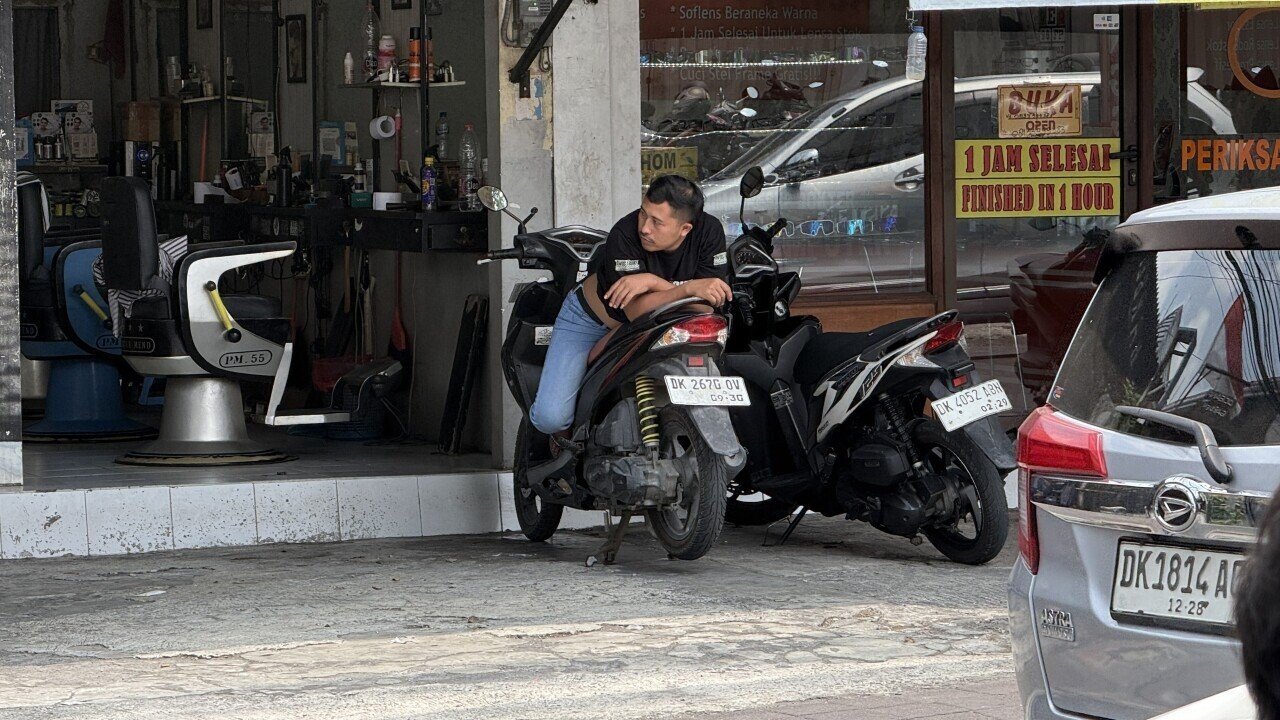
Meanwhile, a motorcyclist rode past holding a bottle of petrol. A foreigner asked how much it cost.
“Two hundred thousand,” came the reply.
At that price, the potential customer wasn’t interested. The seller didn’t seem particularly keen to negotiate either.
Another hour and a half passed.
Then something happened that nobody in the queue had expected to be quite so exciting.
Cheers erupted from the far end of the road.
In the distance, flashing police lights appeared, followed by a red Pertamina fuel tanker.
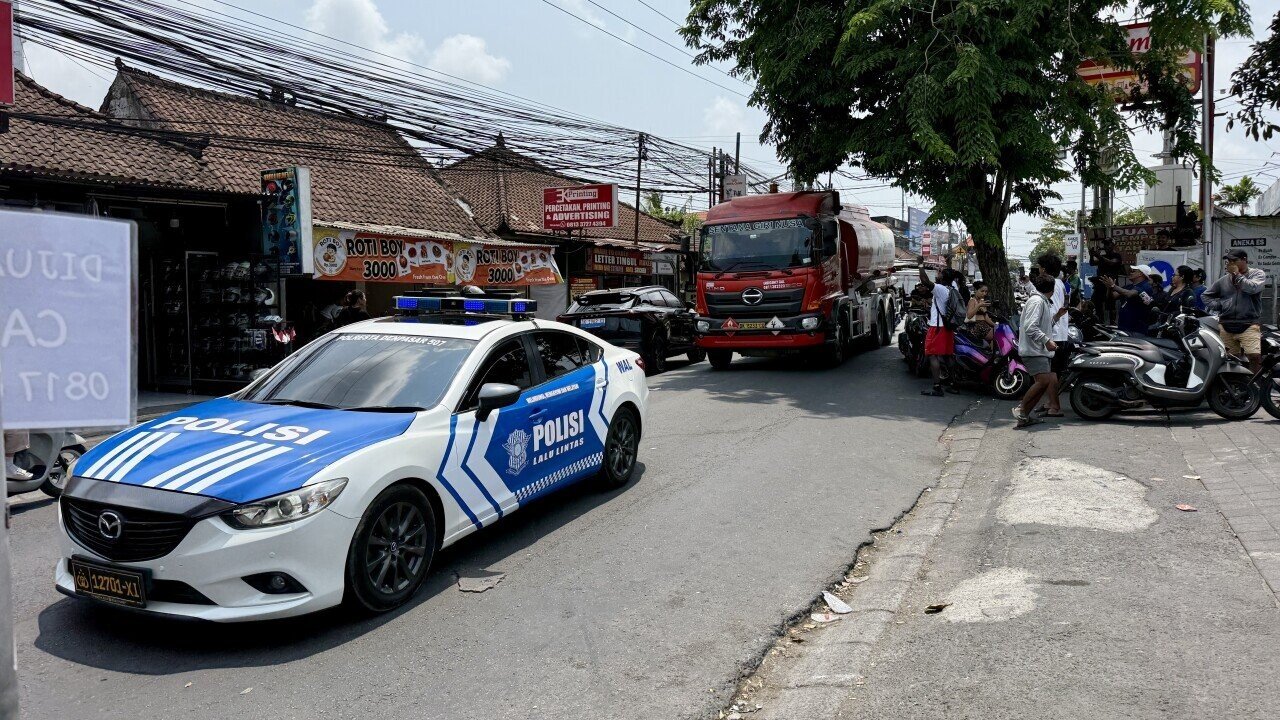
Motorcyclists quickly moved aside to clear a path.
As the truck entered the petrol station, people cheered and applauded. It was the sort of welcome usually reserved for a celebrity.
The driver parked beside the underground storage tanks and climbed out of his cab, looking rather like the star of the afternoon.
It took another 30 minutes to unload the fuel.
Finally, the queue began moving again.
By this point, the organisation was impressive. Police officers kept everyone in line, and attempts to skip ahead were dealt with immediately.
One man tried to squeeze in from the side.
“Where were you waiting? Who was in front of you?” an officer asked.
The man quietly rode away.
After hours of waiting, there were just six people ahead of me.
I was almost there. Or so I thought.
A petrol station attendant noticed that I wasn’t carrying a motorbike, only an empty bottle.
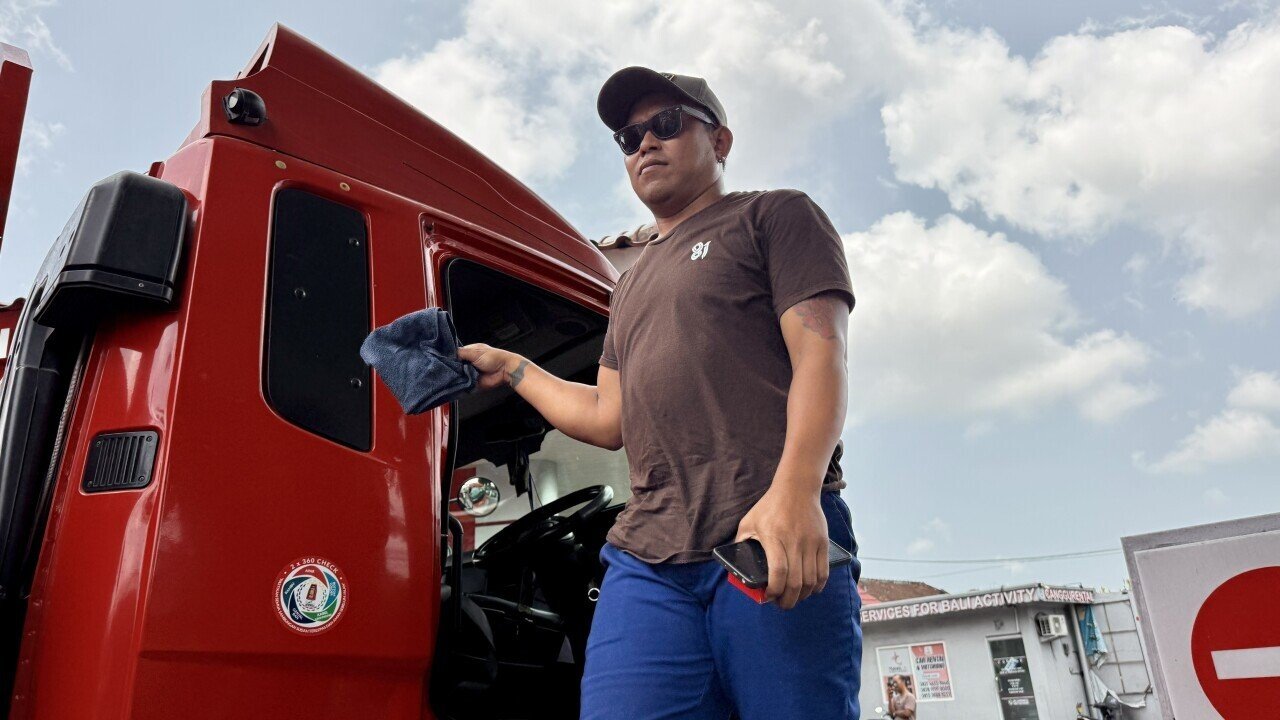
“No bottle! Motor, motor!” he called, waving his hands.
A station supervisor came over and explained that Pertalite could not be sold in bottles.
I tried explaining that my scooter was at home with an empty tank. I couldn’t exactly push it all the way to the station.
But the rules were clear. No motorbike, no petrol.
After nearly five hours, I was about to leave empty-handed.
Then a local man on an older Honda Vario approached.
“I can give you a litre,” he offered. “Just not here.”
He invited me to hop on the back of his scooter.
We rode back to my villa, which was certainly preferable to another long walk in the heat.
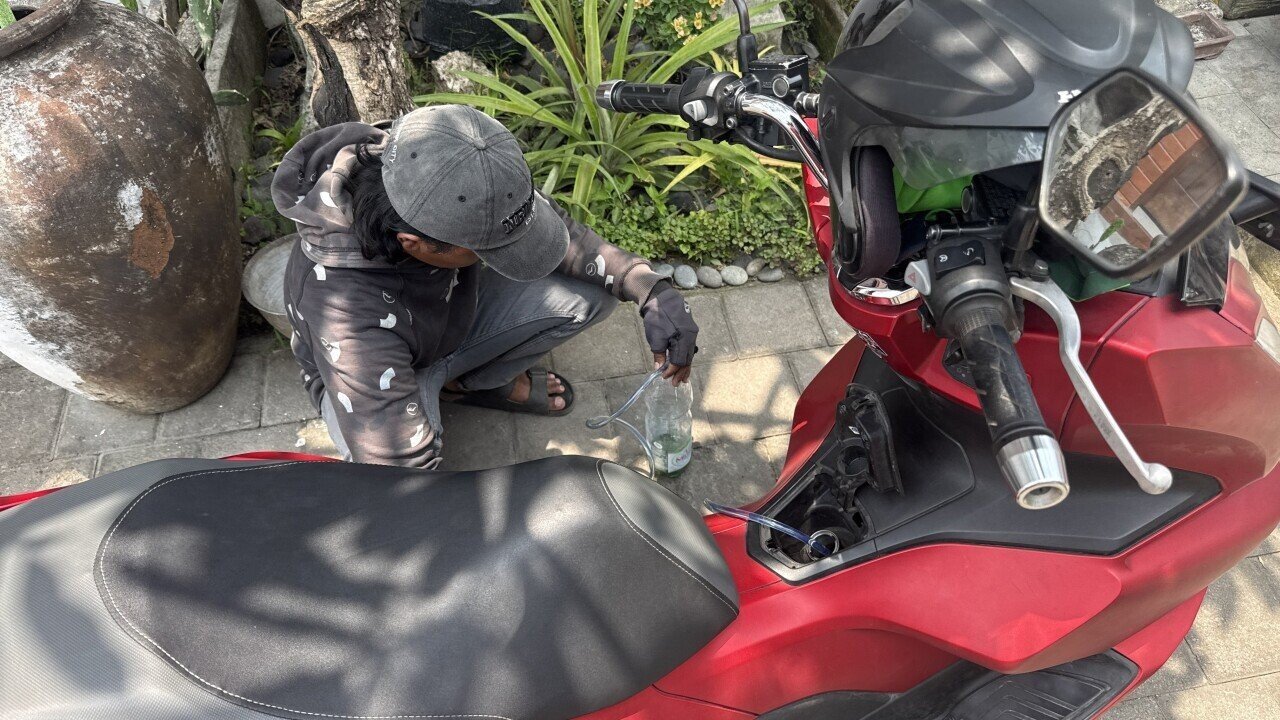
Outside the house, he produced a thin hose, took my bottle and carefully transferred some blue petrol from his tank.
“They don’t allow bottles because there have been too many problems,” he explained. “People are upset about fuel resellers.”
Given the circumstances, the rule was understandable, even if it had made my own situation rather difficult.
Then came the question of payment.
“How much do I owe you, bro?”
“Up to you, boss.”
I handed him Rp100,000. He seemed happy with the arrangement.
We poured the petrol into my Yamaha NMAX. I switched on the ignition.Two bars on the fuel gauge.
Not much, but considerably better than a flashing warning light.
“Now you can ride your scooter to the petrol station and fill the tank properly,” he suggested.
He had a point.
But after spending most of the day in a queue, I had absolutely no intention of joining another one.
Perhaps tomorrow.
Pertamina has attributed the disruption to two factors.
First, a problem with a fuel tanker’s anchor delayed unloading from the morning until late evening. Second, demand for Pertalite had increased.
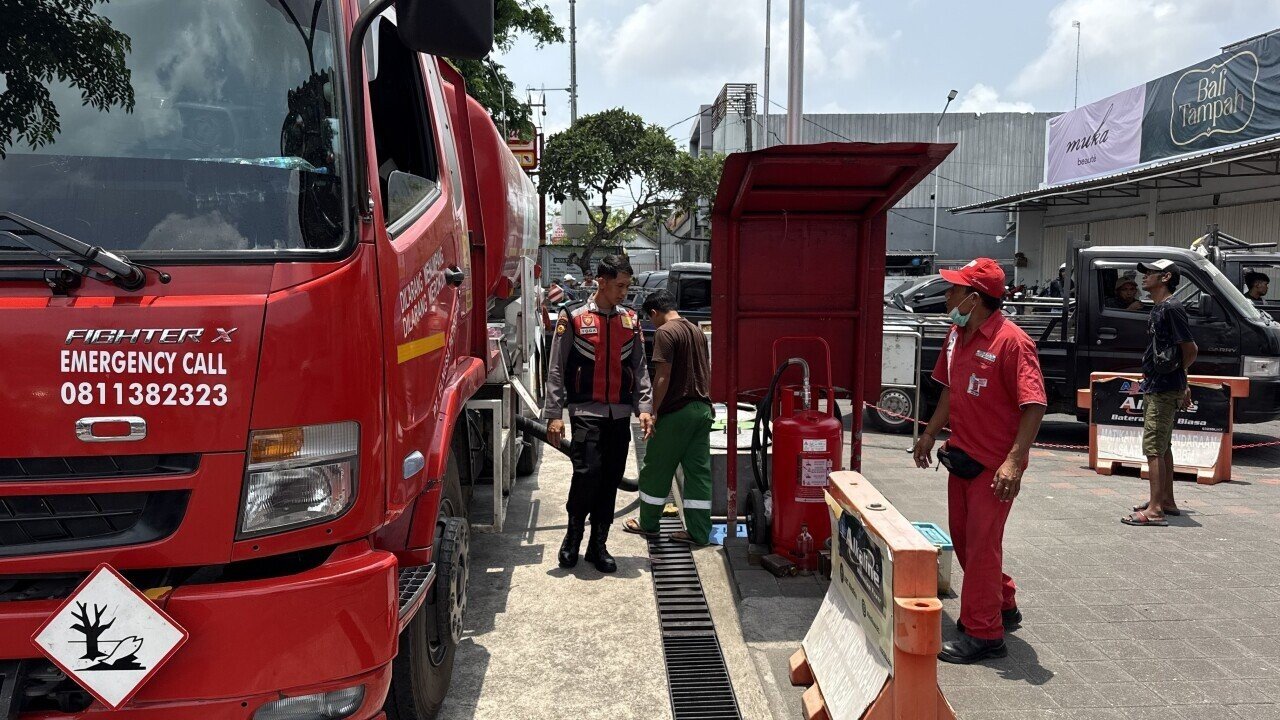
The state-owned energy company apologised to Bali residents for the disruption.
From the evening of 13 October, petrol stations across southern Bali began gradually switching to 24-hour operations. Pertamina also deployed 15 additional fuel tankers to help restore supplies.
Bali Governor Wayan Koster assured residents that the island had enough fuel for the next two weeks.
Nevertheless, queues were still visible on the morning of 14 October. The disruption had become serious enough that kindergartens and schools in Denpasar were instructed to switch to remote learning from 15 October.
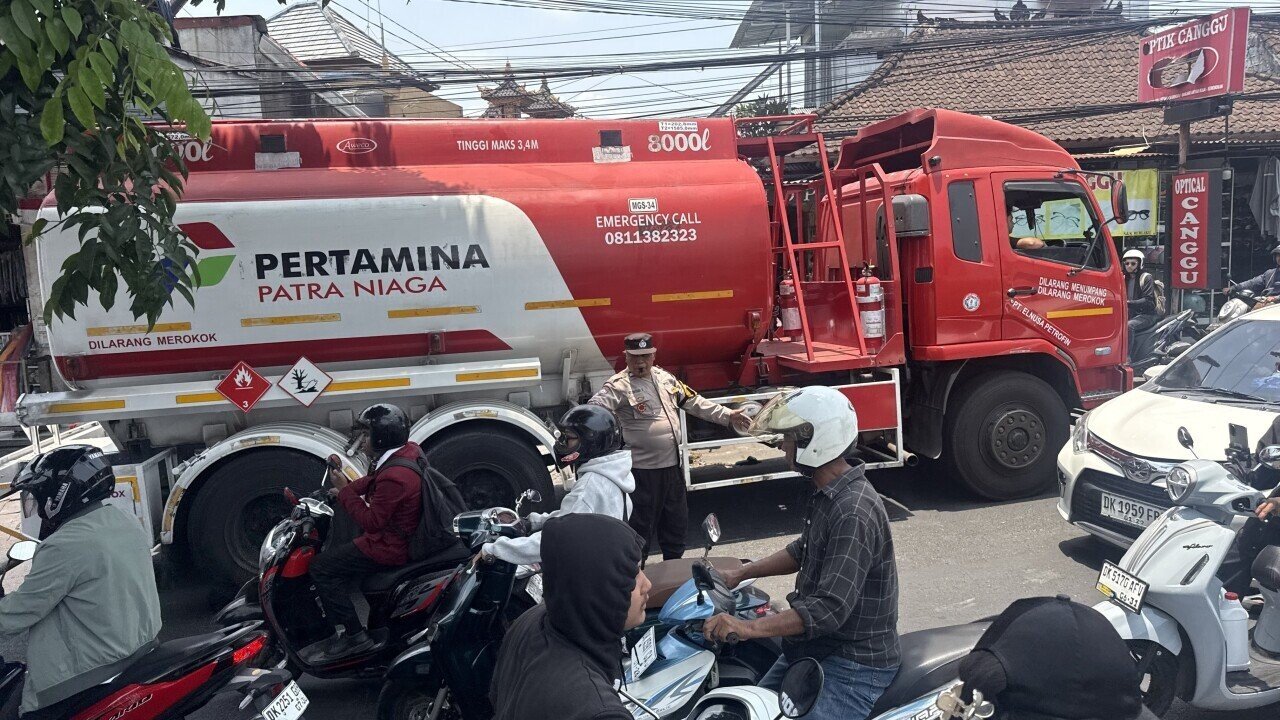
For now, drivers across southern Bali are hoping that the additional deliveries will bring an end to the long queues.
As for me, one litre of petrol, two bars on the dashboard and a little help from a stranger were enough to get home.
Not quite the refuelling trip I had planned.
First-hand account by a Bali resident. Edited by Bali Live.

You can add one right now!