
Still can’t tell Bali’s most popular mango varieties apart? Think green always means unripe? Don’t be fooled by the plain, firm skin — inside, you might find anything from soft, honey-sweet flesh to a crisp, apple-like crunch, or even hints of aged rum.
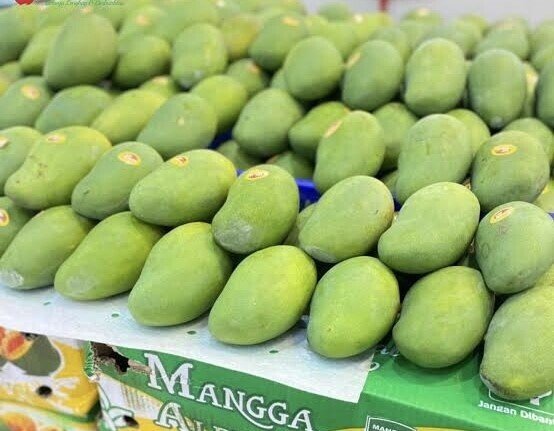
Here’s your guide to mangoes in Bali. And the timing couldn’t be better: mango season starts in just a month.
Mangga Wani (white, or Balinese, mango)
Strictly speaking, this isn't a mango variety but its closest relative — Mangifera caesia: in Bali the fruit is called wani, in Sumatra binjai. It almost never reaches supermarket displays or fruit bowls, yet it turns up regularly at local markets.
It looks utterly unremarkable: large, elongated, with pale greenish-grey skin flecked with brown. Beneath that covering, however, hides milky-white or slightly beige flesh with an absolutely shocking flavor profile.
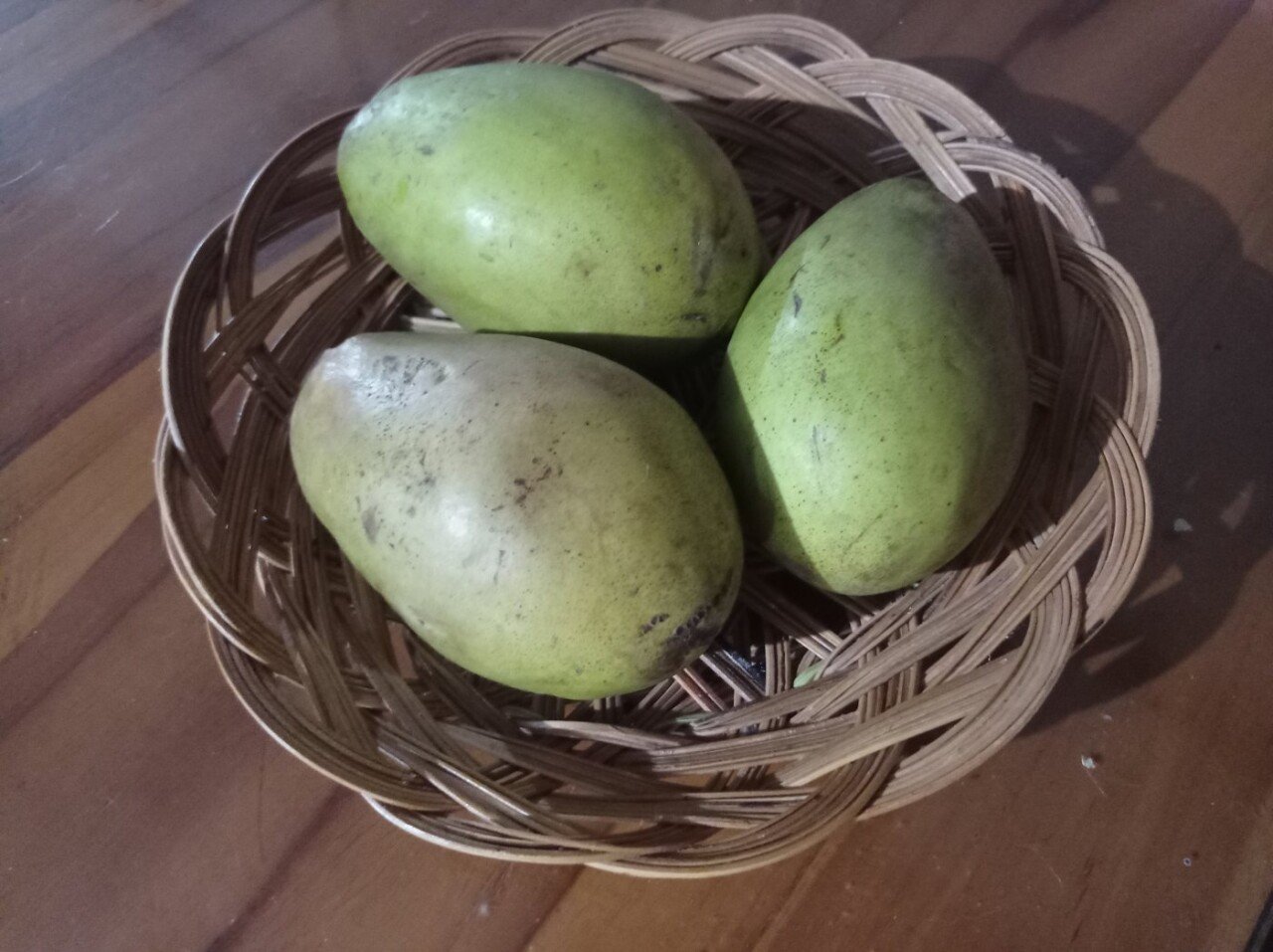
Mangga Wani has a pronounced winey, kefir-like or rum-like note, a complex tropical aroma with hints of spices, and a sharp, memorable aftertaste. Its flesh is incredibly juicy, soft and buttery. A ripe fruit fills the whole room with the smell of resin and tropical perfume, and food enthusiasts from around the world hunt for its rare flavor.
Mangga Brasil (Brazilian mango)
Despite its name, this variety has settled in beautifully on Indonesian farm plantations and has become a frequent sight on Bali's fruit stalls. It's the most photogenic variety on the island: the fruits grow large and heavy, and you can recognize them by their remarkably beautiful skin — an intense pink, purple or violet-red.
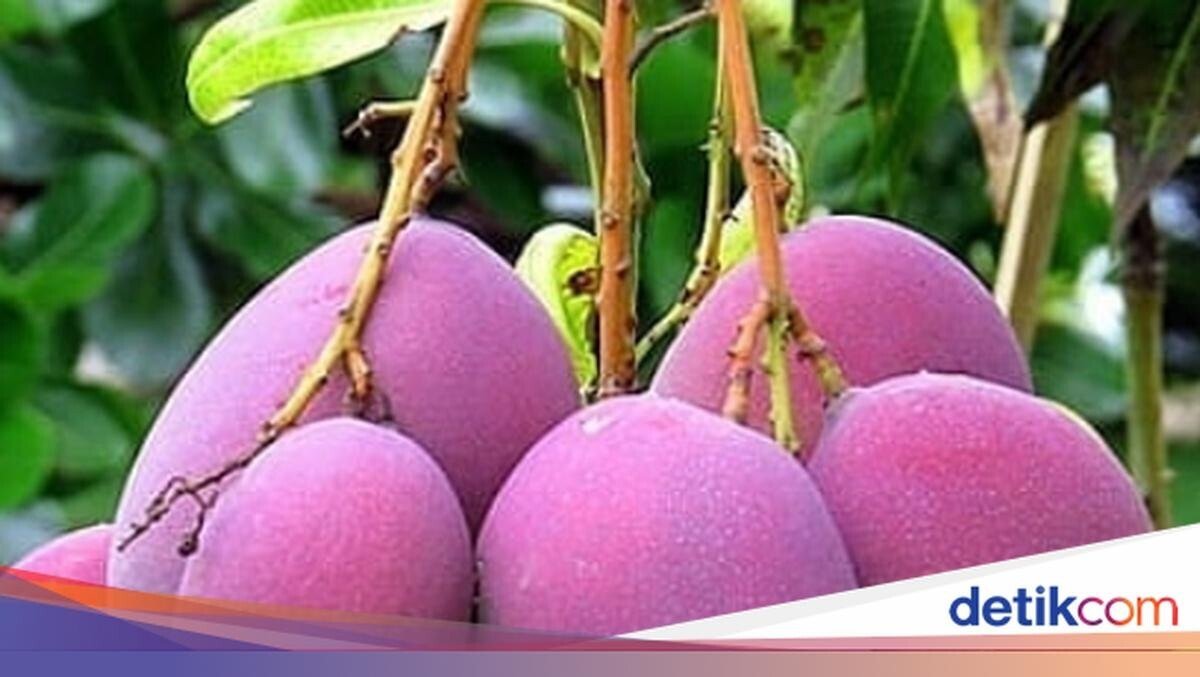
The flavor profile of the Brazilian mango is a balanced tropical dessert, in which deep sweetness is harmoniously offset by a delicate berry tartness. Its flesh is very dense, meaty, silky and almost completely free of tough fibers. Because the variety holds its shape well and has a very small pit, it's most often used for attractive slices in fruit bowls and salads.
Harum Manis (fragrant sweetness)
The name of this variety translates from Indonesian as "fragrant and sweet", which captures its essence 100%. It's the undisputed favorite both among locals and among expats who have lived on the island for years. The main thing about harum manis is the flesh: bright yellow or deep orange, incredibly tender, creamy, with no tough strings at all. It literally melts in your mouth like a cream mousse.
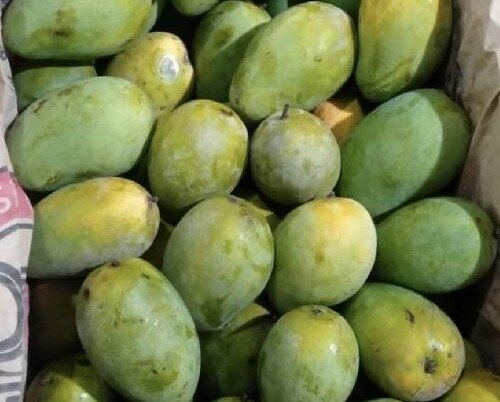
A ripe fruit tastes concentratedly sweet, with deep honey notes and a barely noticeable tartness right at the end that keeps it from being cloying. The aroma is very strong and perfume-like — it fills the entire room the moment you cut into the skin. It's easy to mistake this variety for an unripe one: even at peak ripeness its skin stays dark green, turning only slightly yellow near the stem. If you want to eat your mango with a spoon, this is your choice.
Mangga Manalagi ("I want more")
The variety got its name for a reason. Its remarkable feature is that the fruit turns sweet and refreshing before it even has time to soften. You can buy a fruit that is completely green, matte and firm to the touch on the outside, yet inside it's ready to eat.
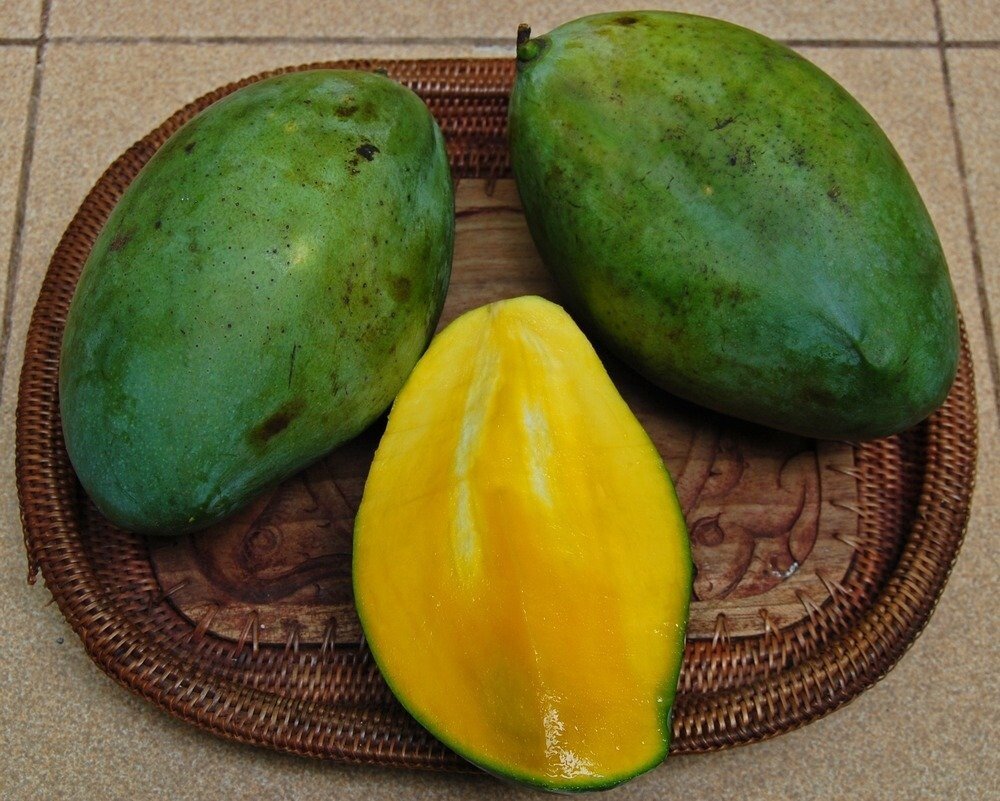
Manalagi's flesh is dense, crisp and slightly dry, with the taste of a ripe juicy apple and a light trail of wildflowers. There's no juice dripping down your elbows and no stringy fibers getting stuck in your teeth. If you're looking for an easy, moderately sweet fruit for a crunchy everyday snack, manalagi is a perfect fit.
Mangga Gedong Gincu
In the days of Dutch colonial rule this fruit was considered a rare delicacy. Its trees grew only in the front gardens of wealthy people, the nobility and officials who lived in substantial brick mansions (gedong). That gave the variety an elite status and the name "mansion" or "gentleman's" mango.
The second word in the name refers to its looks: gincu means "lipstick" in Indonesian, which is how the red blush on the skin of a ripe fruit is described. The variety comes from western Java, from the area around Indramayu and Cirebon.
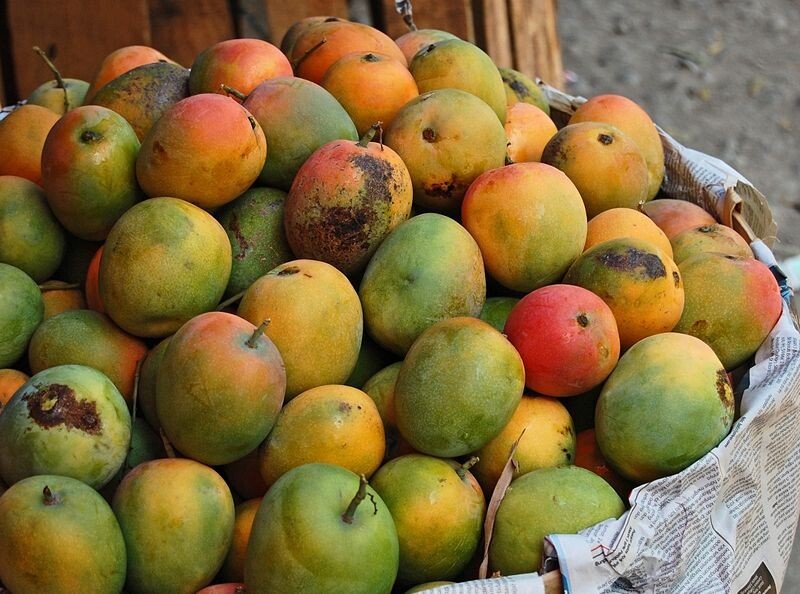
Gedong stands out for its explosive sweet-and-sour tropical flavor with pronounced resinous notes. It's the most fragrant variety in Indonesia: the fruits give off such an intense sweet-spicy aroma that a couple of them on the table is enough to fill the whole house with the scent. Its flesh is juicy and bright orange, but noticeably fibrous, so you'll be chewing longer. Visually the variety is recognizable by its small size, rounded shape and bright red-and-yellow cheeks.
Mangga Madu (honey mango)
Madu's key feature is that it has virtually none of the usual fruit acidity. Even if you pick or buy it firm and slightly underripe, it won't taste sour. And once the fruit reaches full ripeness, it turns into concentrated liquid honey.
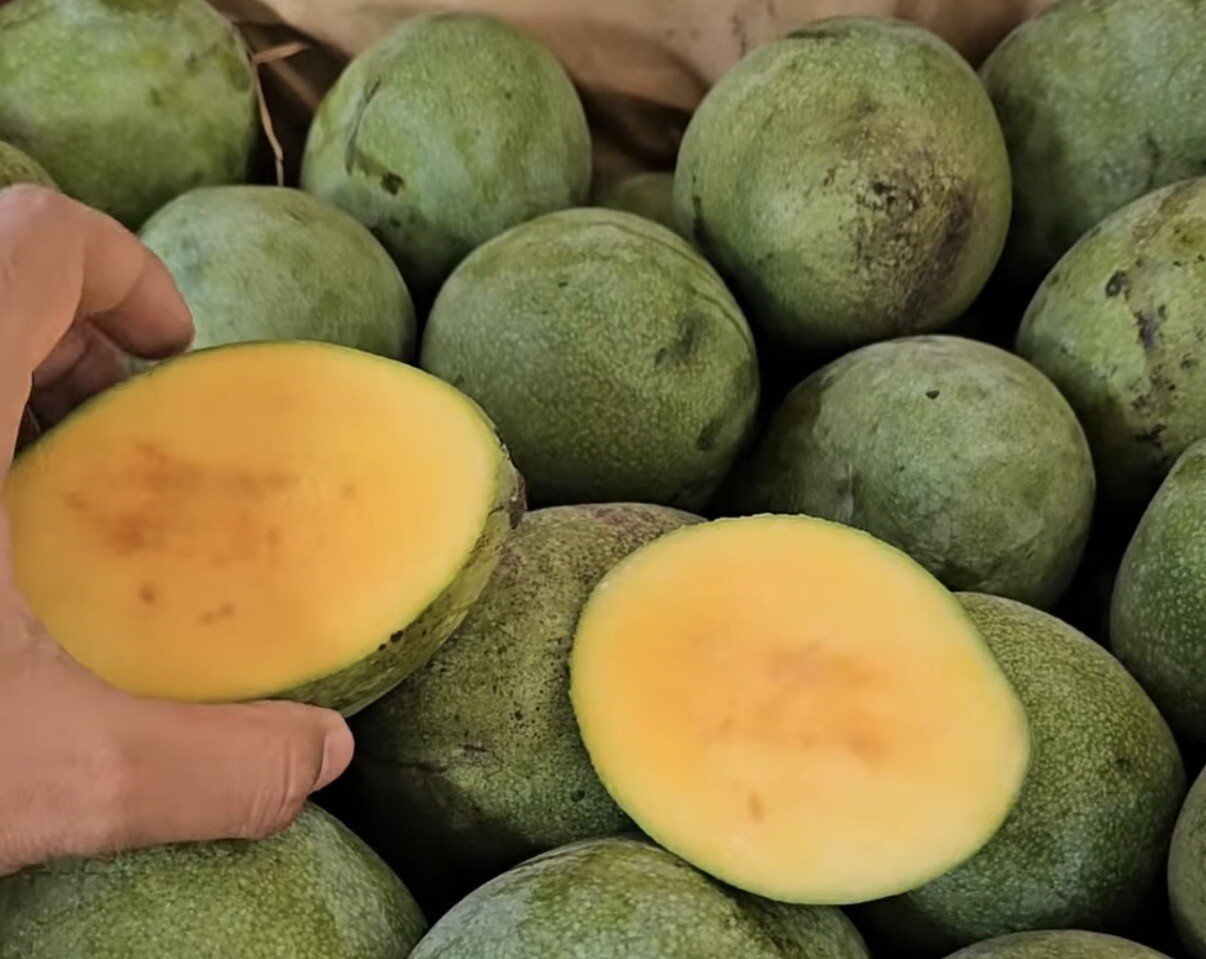
Madu's flesh is bright yellow, shifting to orange closer to the pit — soft, silky, very juicy and practically fiber-free. Since there's no acidity, ripe madu makes the best thick shakes and smoothies, which need not a gram of sweetener or syrup.
Mangga Cengkir (cengkir)
The main appeal of the cengkir variety is that people love to eat it unripe or half-ripe, while the flesh is still firm. Locals call that state mengkal. Unlike other varieties, which set your teeth on edge when green, cengkir stays slightly sweet, with a pleasant refreshing tartness, even when it crunches.
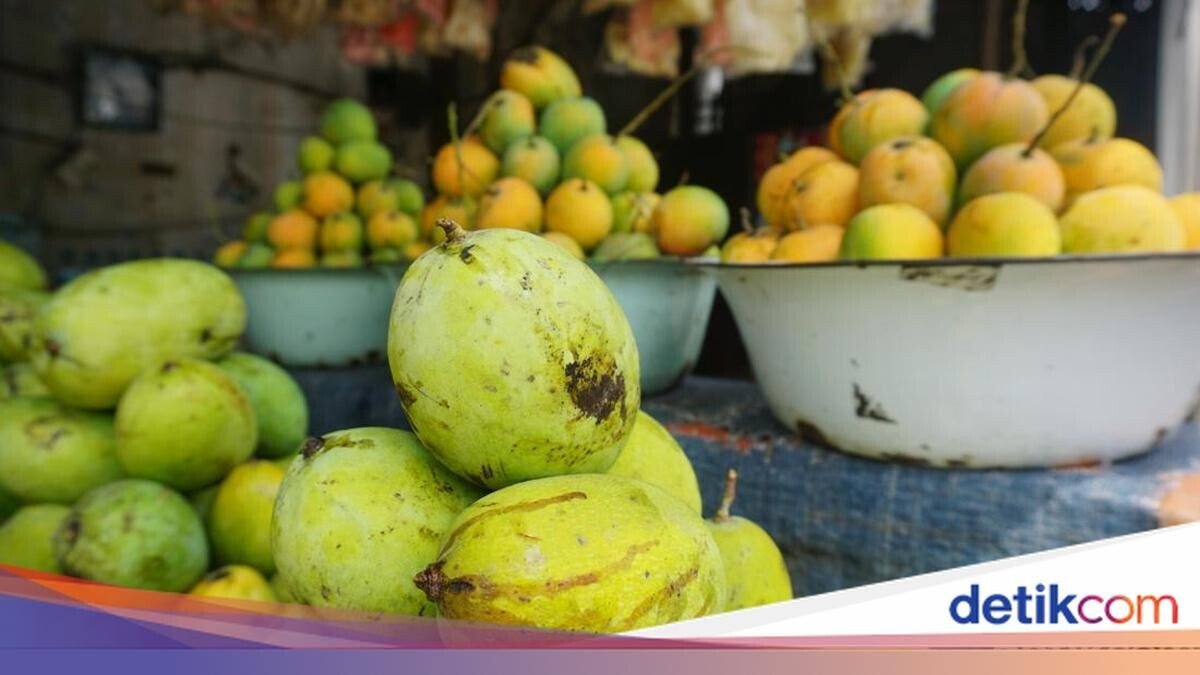
The fruits are fairly large (350 to 500 grams), oval, with thick matte green skin. Dark drops of dried resin often show at the top near the stem — a sure indicator of quality. Thanks to its armored skin, cengkir travels very well and keeps in the heat far longer than the delicate harum manis. Fully ripe, the flesh becomes bright orange, firm and fibrous, with a rich classic flavor.
Mangga Kueni
Another relative rather than a variety: kueni is a natural hybrid of mango and bachang (Mangifera × odorata). It's hard to confuse with anything else because of its intense perfumed, pine-like aroma. Kueni's flesh is dark orange, extremely juicy and very fibrous.
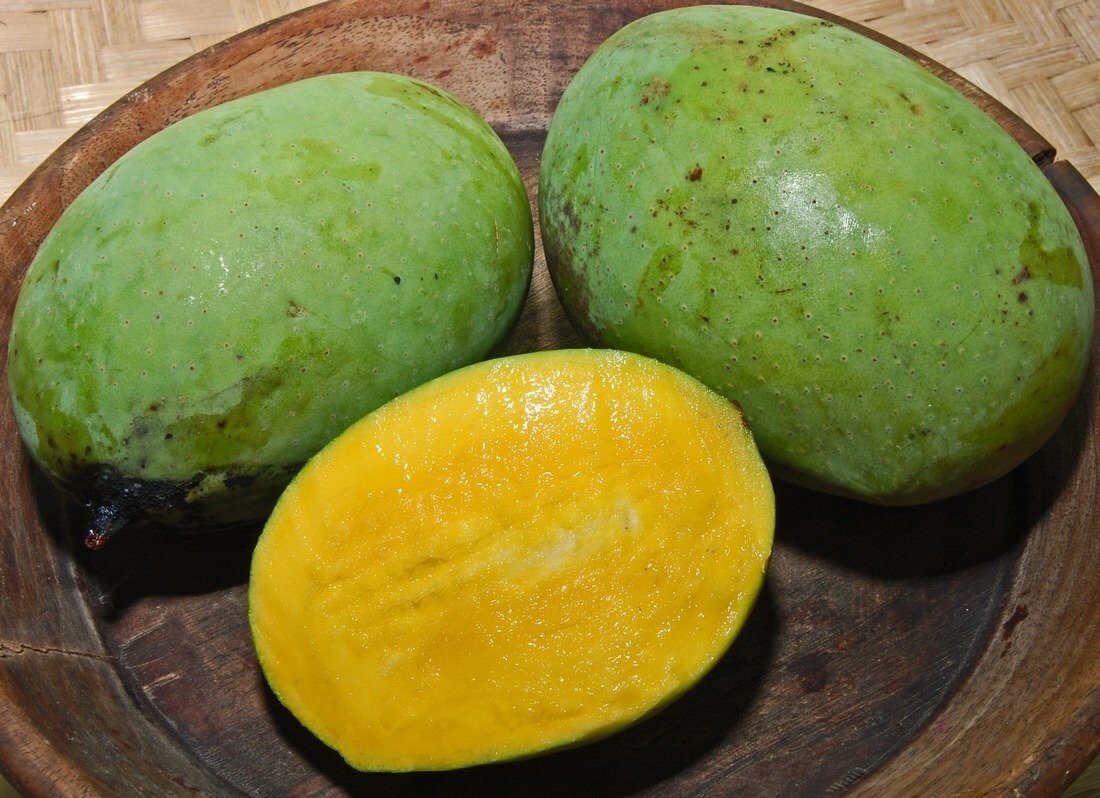
Its flavor is sharp and tangy-sweet, with musky and resinous shades. Because of the abundance of tough fibers and its particular smell, only a few connoisseurs eat it on its own. Balinese, however, love this variety as the perfect base for traditional refreshing iced juices and spicy fruit sauces.
Mangga Golek
A variety you can spot on a stall at first glance: its fruits are elongated and slightly curved, resembling a miniature melon or a firm banana.
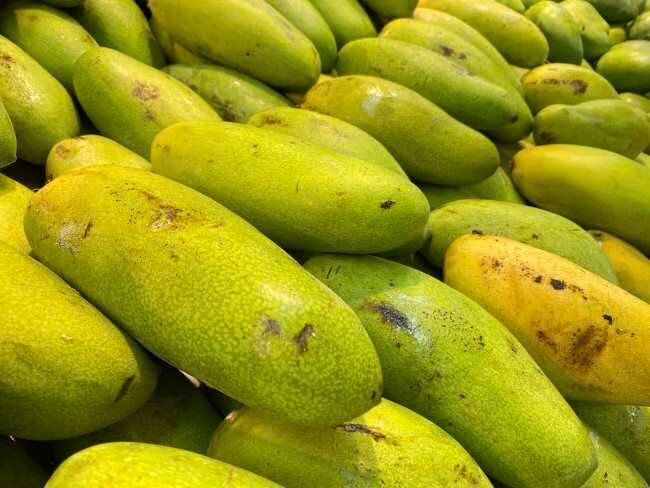
Golek has a classic tropical flavor — moderately sweet, juicy, without any exotic varietal quirks. The flesh is very soft, bright orange, with minimal fiber and a surprisingly thin, flat pit. A single fruit yields a huge amount of clean flesh, so it's often bought for large family platters.
How to avoid a mistake when buying
Don’t rely on color. In Bali, green doesn’t always mean unripe. Harum Manis, Manalagi and Cengkir can be perfectly ripe even when their skin is still completely green.
Smell the mango. Sweet varieties should have a noticeable fruity aroma around the stem. If there’s no scent at all, the fruit may have been picked too early and might not ripen properly at home.
Check the texture. Most sweet mangoes should give slightly when gently pressed, but they shouldn’t feel soft or mushy. Manalagi and Cengkir are different — they’re best when still firm.
Check for sap near the stem. Small traces of dried sap on Cengkir or Gedong mangoes can actually be a good sign. They usually mean the fruit was allowed to ripen naturally on the tree and develop its sweetness.
What people make with mango on the island
Balinese don't stop at simply slicing it up — they make active use of the fruit in local cooking.
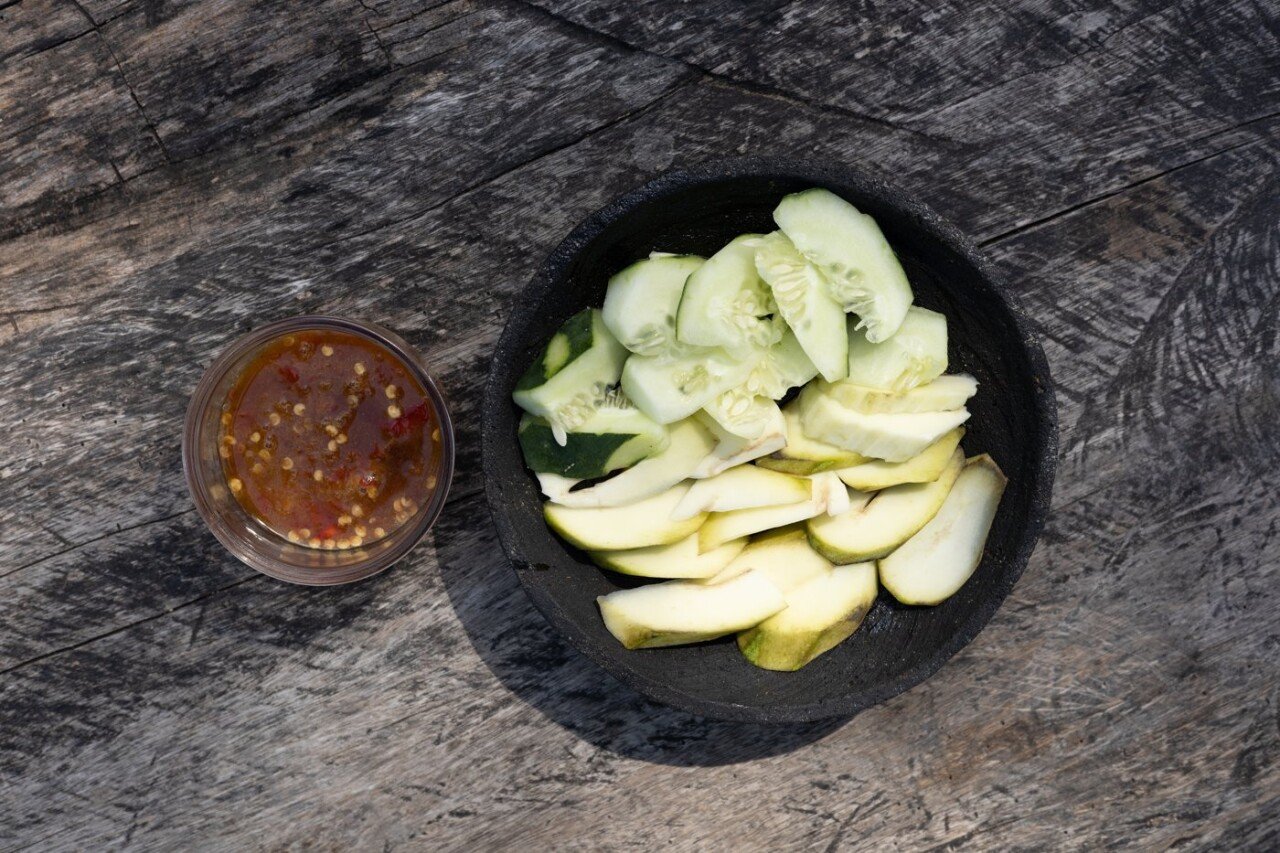
Rujak is a traditional Indonesian spicy salad. Crunchy underripe cengkir or madu fruits are cut into thin slices and generously dressed with a thick sauce of palm sugar, chili, peanuts and tamarind.
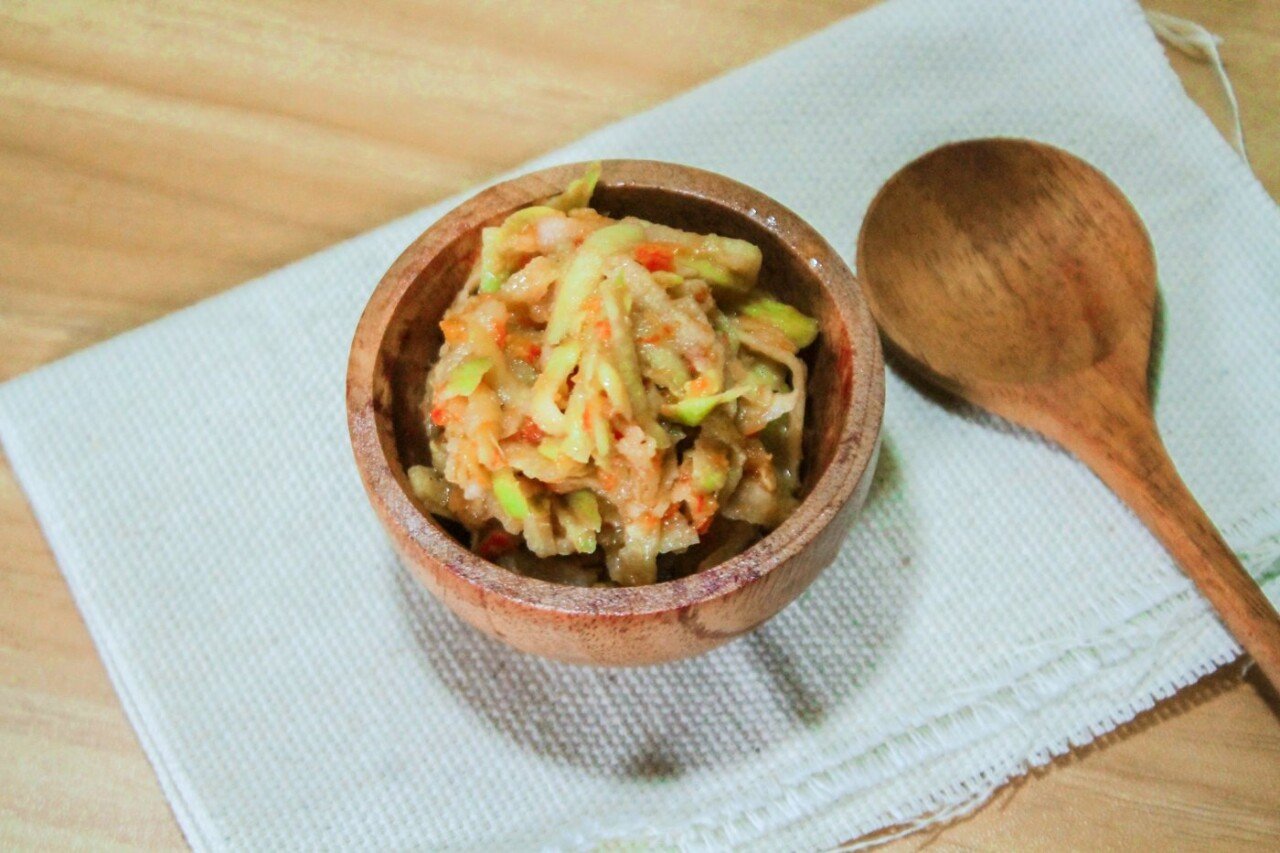
Mango sambal (sambal mangga) is a hot paste of fresh chili peppers, shallots, lime juice and shredded sour mango. It's served as a sharp condiment with grilled fish or seafood.
Where to look
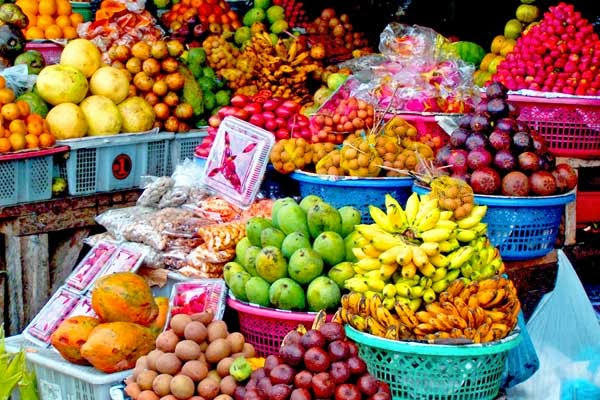
Morning markets (Pasar Pagi) run from dawn until roughly 8:30–9:00 in the morning — Pasar Pagi Kerobokan, for example. They have the widest choice of varieties at the lowest prices, straight from the farmers, but only in season. The large Pasar Badung in Denpasar keeps a different schedule: its fruit rows are open from early morning until five in the evening.
Roadside shops (Toko Buah) are convenient for spontaneous purchases during the day. The sellers know their ripeness well and will tell you which fruit to eat today and which to save for the weekend. Mangoes are around almost all year, but out of season the price often changes, so check it in advance so the final sum doesn't come as a surprise.
Where to look for markets and fruit shops on the island — in a separate article.
In Canggu, people buy mangoes at Guna N Buah on Jl. Raya Canggu: the shop is open from nine in the morning until nine in the evening.
Further north, in Tibubeneng, the same is sold at Toko Buah Jaya on Jl. Raya Padonan.
In neighboring Dalung there's Maolla Buah on Jl. Beringin.
On the Bukit, the most prominent shop is Dewata Fresh Fruit Shop in Ungasan, on Jl. Toya Ning I.
On Jl. Dharmawangsa you'll find Sumber Buah Dharmawangsa.
In Nusa Dua, on Jl. Taman Giri, there's Aneka Buah Segar.
In Ubud, people go for mangoes to Toko Buah Pradnya on Jl. Cok Gede Rai in Peliatan.
Closer to the north of Ubud, on Jl. Tirta Tawar, there's Bali Pure Fresh Fruits.
On the road to Tampaksiring, in Pejeng, there's Rizky Buah 1 on Jl. Pahlawan.
Trucks along the roads: at peak season (October through February) mangoes are sold straight from the beds of pickups on the main roads at very low prices per kilogram.
Details and precautions
Freshly picked mangoes release a sticky sap around the stem that can irritate the skin. Traces may remain on the peel, and people who are particularly sensitive can develop irritation or a rash around the lips. That’s why it’s best to wash mangoes thoroughly before cutting them and remove the area around the stem with a little extra flesh.
Another thing to keep in mind is how quickly mangoes ripen in Bali’s tropical heat. Sweet varieties, especially Harum Manis, can go from perfectly ripe to overripe and starting to ferment in just 24–48 hours. Keep them in a cool place, but don’t leave them in the fridge for too long — the flesh can become watery and lose its distinctive aroma.
The takeaway: Choosing a good mango in Bali isn’t just about finding the ripest fruit. Pay attention to the variety, aroma and texture, buy only what you can eat within a few days, and always wash the fruit before cutting it. Once you know what to look for, it becomes much easier to catch each variety at its best.

You can add one right now!