
Many first-time visitors to Bali make the same mistake: they head to supermarkets such as Pepito and buy familiar-looking yellow bananas. In reality, these are often imported varieties with a fairly ordinary taste, while some of the island’s most interesting bananas can be found in local markets.
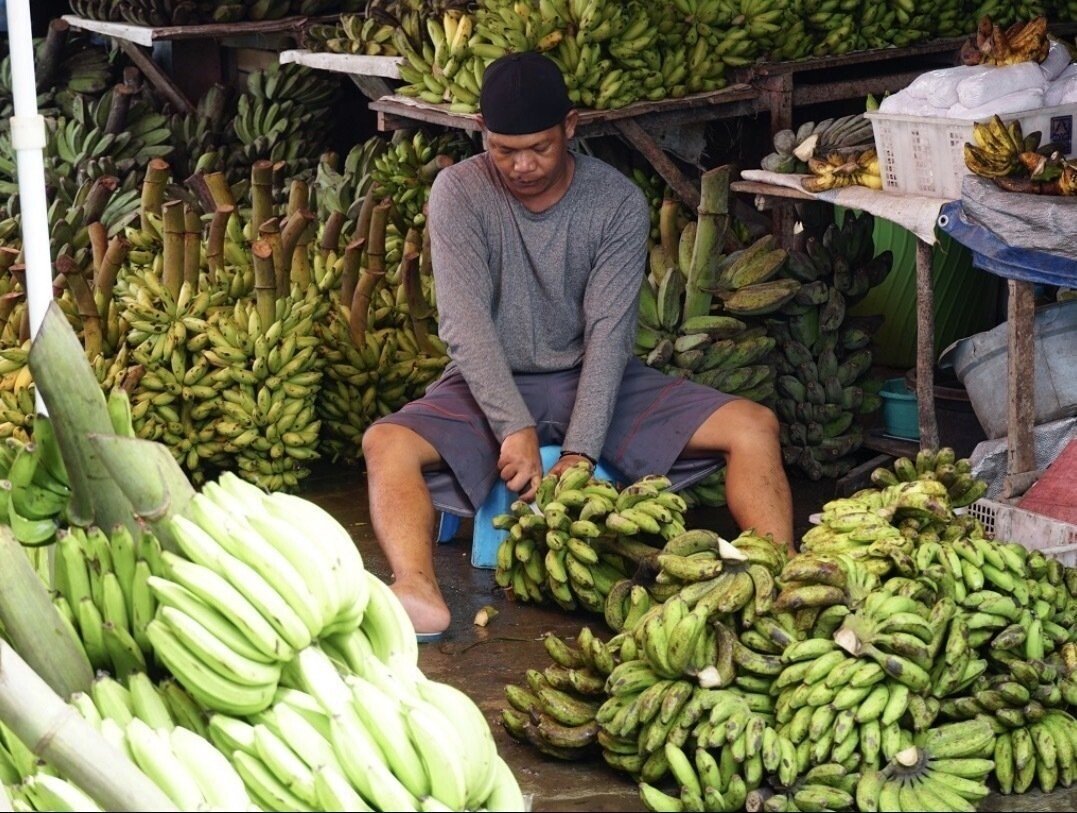
The real Bali is home to dozens of unique local banana varieties — pisang in Indonesian — grown across the Indonesian islands. Some have a texture like a delicate creamy custard, others smell of honey, some have notes of wild strawberry, and a few should not be eaten raw at all.
We have put together a detailed consumer guide to help you navigate Bali’s banana abundance, learn how to choose the ripest fruit, and find authentic banana street food.
A Taste Test of Bali’s Main Banana Varieties
Pisang Mas (Golden Banana)
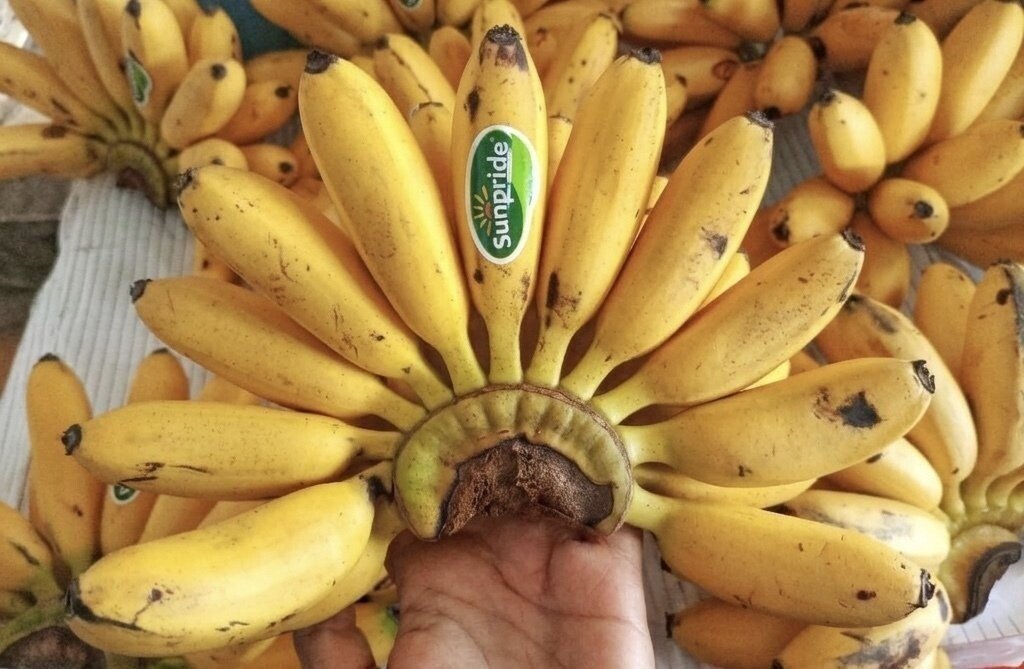
Despite their tiny size, these bananas beat any larger variety when it comes to intensity of flavour. Inside, they have dense, creamy flesh with a bright honeyed aftertaste.
Locals call them “golden” not only because of their rich peel colour, but also because of their high status: this is the main variety used for temple offerings, known as canang sari, as it is believed that the gods prefer the sweetest and purest fruit.
If you see a bunch the size of your palm at the market, you should know: this is one of the most filling, aromatic and energy-rich snacks you can find on the island.
Pisang Susu (Milk Banana)
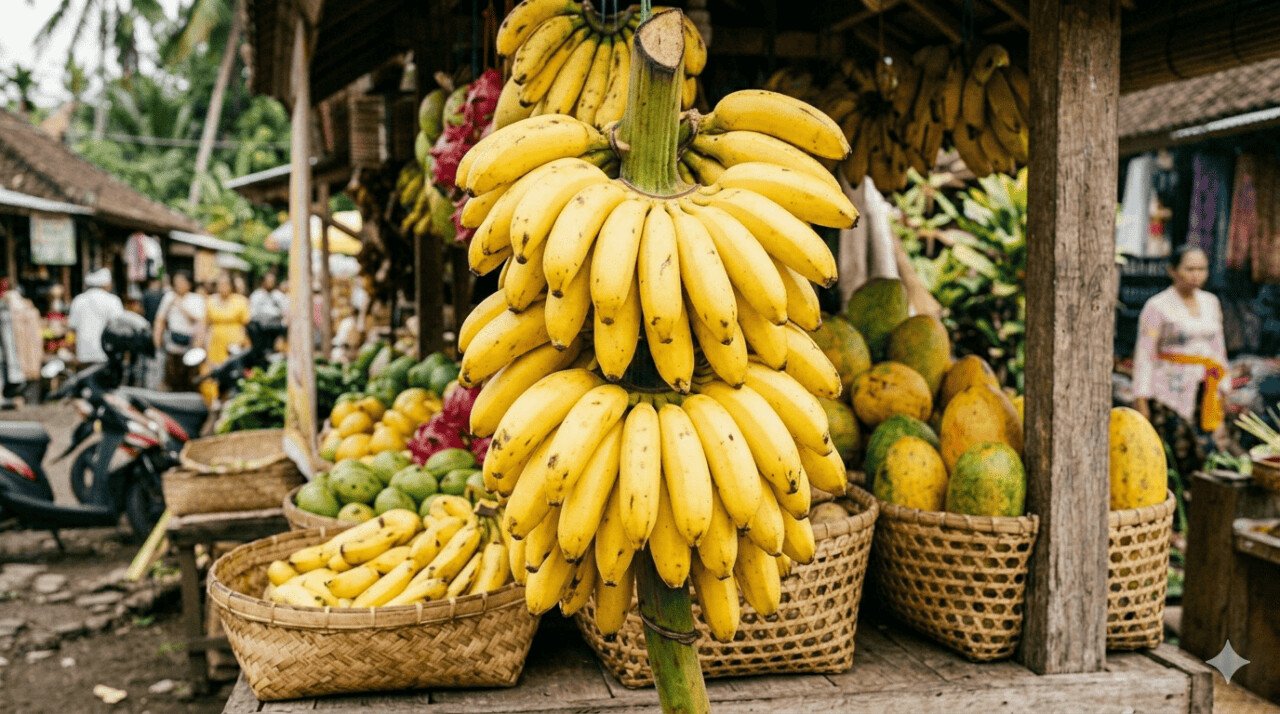
This is probably the most delicate variety on the island. It gets its name from its incredibly soft, pale flesh, which has the texture of a creamy custard, and its light vanilla-and-milk aftertaste.
Unlike other types, its thin skin is often covered with small dark freckles. This does not mean the banana has gone off — quite the opposite: freckles are a sign of peak sweetness. If the “golden banana” is concentrated honey, then susu is a refined pudding in natural packaging.
Pisang Raja (King Banana)
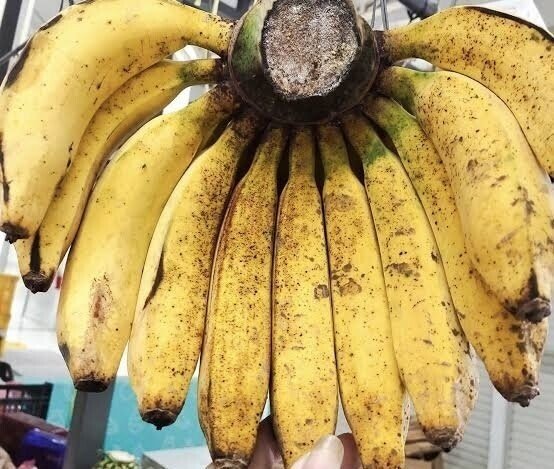
A true king among Balinese bananas — and not just because of the name. It has the brightest orange-yellow flesh and a unique, complex flavour with clear notes of caramel and a light fruity aroma reminiscent of ripe melon.
It is larger and firmer than its relatives, which is why it is valued not only as a dessert banana but also as a key ingredient in more refined cooking: raja is the variety most often baked by chefs or turned into premium fried desserts. It is the choice for anyone looking for the richest, most full-bodied flavour.
Pisang Hijau (Green Banana)
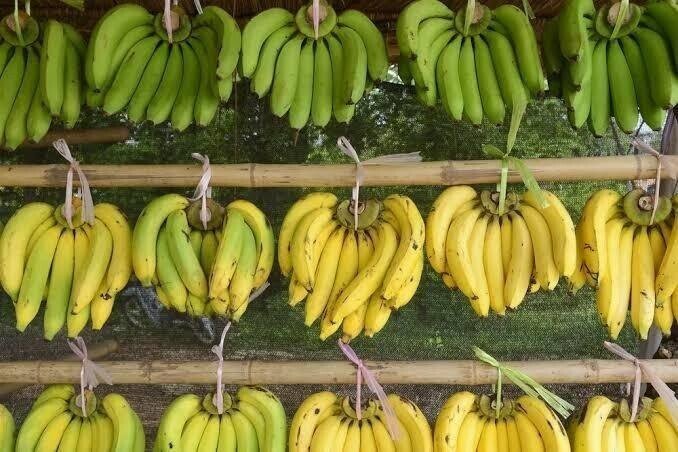
A true master of disguise among Balinese fruit. Its name simply means “green banana”, and its main trick is that even at peak ripeness, the peel remains emerald green. Do not let the colour fool you: inside, it hides surprisingly sweet and tender flesh that tastes like the classic banana-flavoured jelly sweets many people remember from childhood.
In Bali, it is valued for its refreshing taste and is often used in traditional desserts, wrapped in thin green pandan dough or served with sweet coconut milk. It is a perfect example of how looks can be deceptive in the tropics.
Pisang Kepok (Angular Banana)
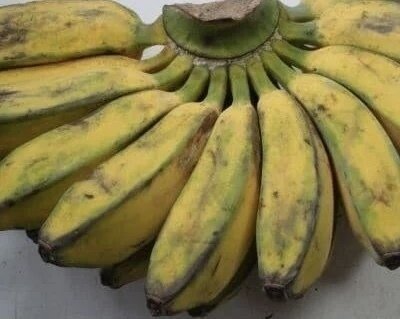
The workhorse of Balinese cuisine. It is easy to recognise by its unusual, almost square, angular shape and very dense, thick peel. If you try it raw, it will disappoint you: the flesh will seem a little dry, firm and starchy.
But once it is cooked, the magic happens. When heated, the flesh becomes tender and creamy, holds its shape, and develops an ideal sweet-and-sour balance. If you want to experience the taste of real Balinese street food, look for this particular “angular” banana.
Pisang Tanduk (Horn Banana)
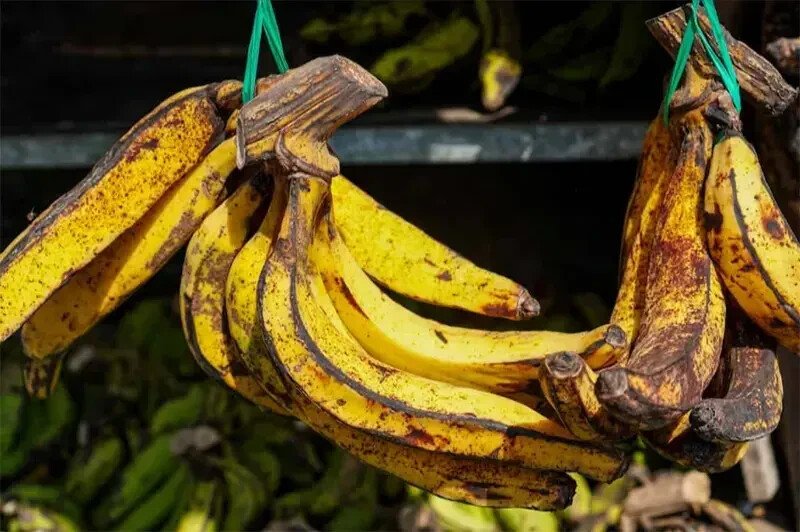
A real giant that can easily be mistaken for a decent-sized courgette because of its shape and size. The variety gets its name, “horn”, from its impressive length — up to 35 centimetres — and its distinctive curve. Trying to eat it raw is a big mistake: it will be hard and astringent.
But when baked or boiled, Pisang Tanduk turns into a luxurious delicacy. It has a very high concentration of natural sugars, which caramelise quickly when heated, giving the flesh a deep golden colour and a custard-like flavour with notes of baked apple.
Pisang Ambon (The Aromatic Classic)
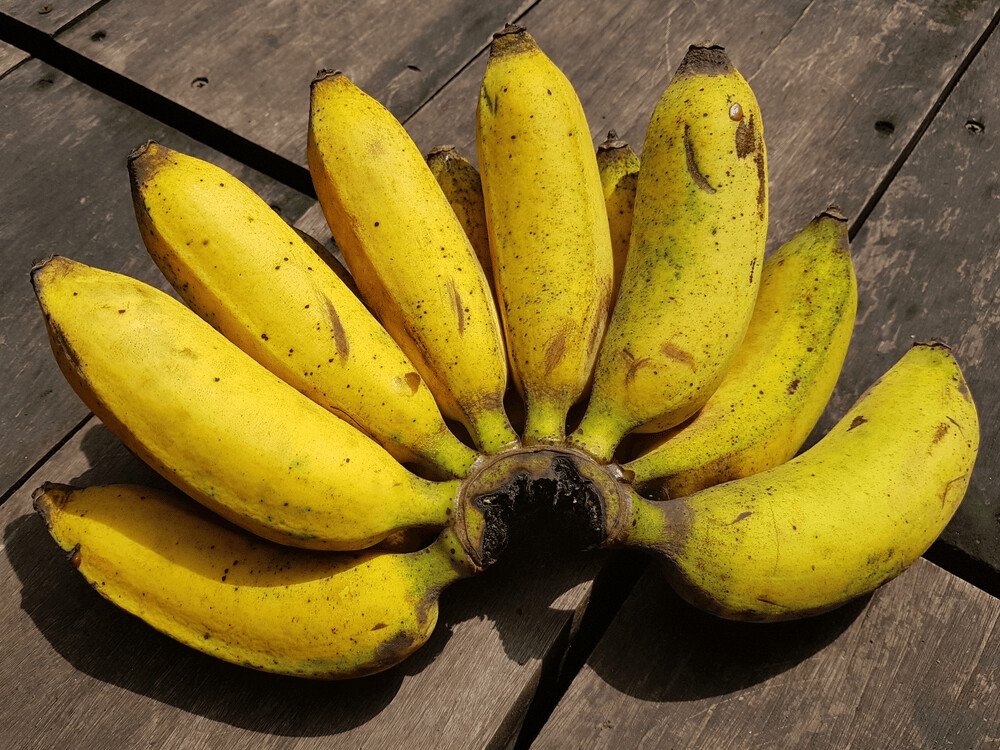
Many people call this variety the “advert banana”. It is the largest of the local dessert varieties, with an ideal elongated shape and a bright yellow colour.
But do not confuse it with the bland imports sold in supermarkets: Balinese Ambon is incredibly aromatic — its scent literally fills the room as soon as you peel it. It has tender, slightly buttery flesh and a classic sweet flavour with a light floral note.
It is an ideal choice for morning smoothie bowls or as a filling snack on the go.
Pisang Merah (Red Banana)
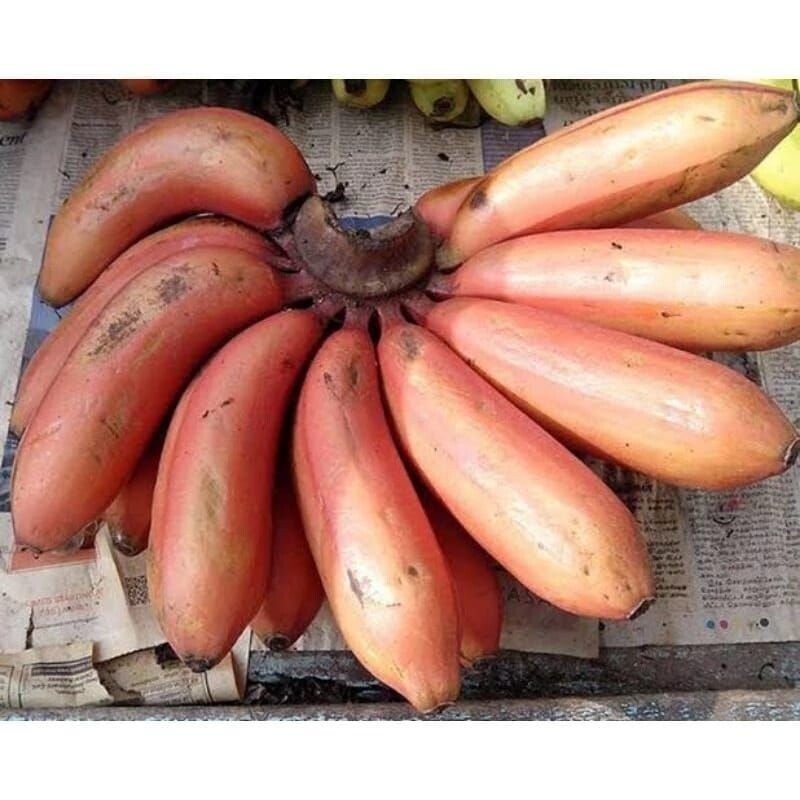
An exotic variety that is not easy to find at ordinary roadside fruit stalls — it is better to look for it at larger markets in the mountain areas, such as Bedugul or Kintamani. It stands out thanks to its thick burgundy-red or brick-coloured peel.
The flesh of the red banana is dense and gently creamy, with a slight pinkish tint, while the flavour has clear, unusual berry notes — something between ripe raspberry and strawberry. It is less sweet than Pisang Mas, but prized for its unique flavour profile.
How to Choose Balinese Bananas
1. Do not be afraid of “freckles”: For Pisang Susu and Pisang Mas, lots of small dark spots on the peel are not a sign of rot, but an indication that the banana has reached peak sweetness. Choosing them perfectly smooth and spotless means missing out on flavour.
2. Check how firm the fruit is: Dessert bananas such as Susu, Mas and Ambon should be soft but springy when gently pressed. If a banana is rock-hard, it was picked too early and will leave an astringent feeling in your mouth. The exception is Pisang Hijau, which stays green but becomes soft when ripe.
3. Buy whole bunches: In high tropical humidity, bananas separated from the main stem spoil much faster, and the cut area immediately attracts small flies. A whole bunch keeps for much longer.
Banana Street Food: What Should You Try?
Balinese people rarely limit themselves to eating bananas raw. The island has a whole culture of banana fast food that is well worth trying:
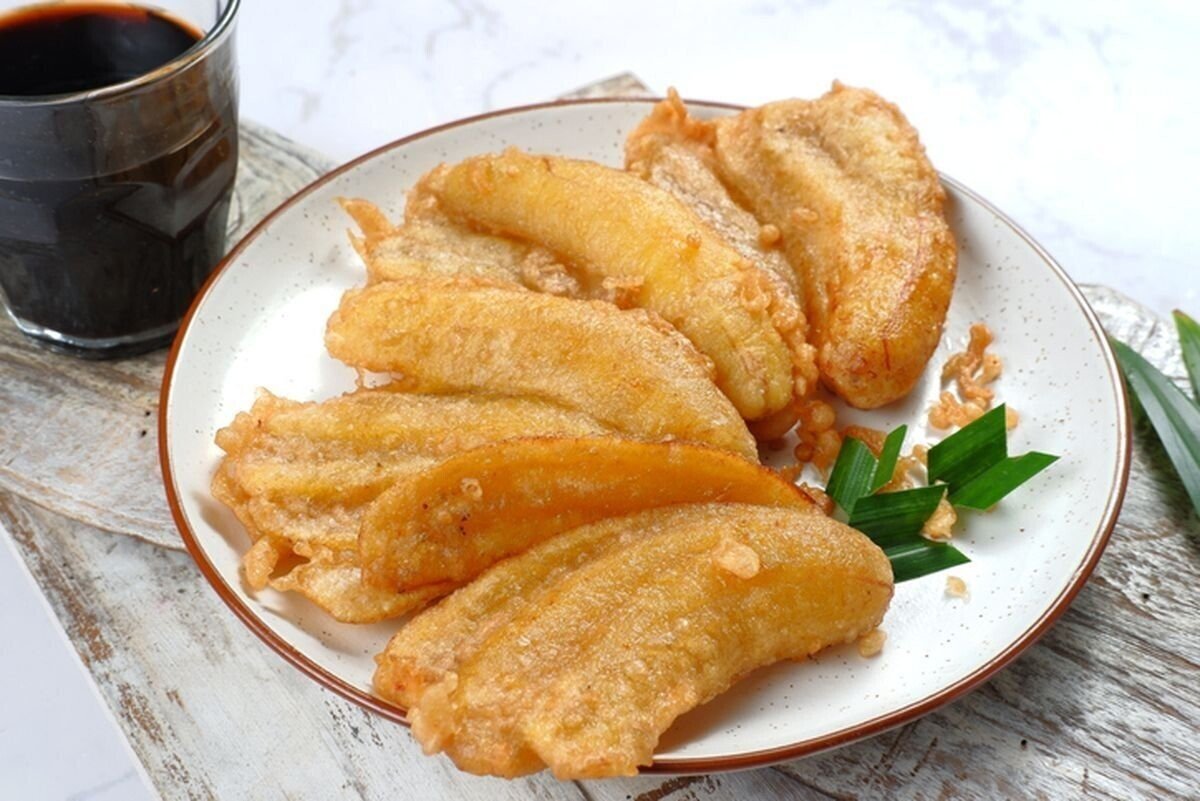
Pisang Goreng : The most popular street food on the island. These are pieces of banana, usually Kepok or Raja, deep-fried in batter. The secret of the perfect version is a rice-flour batter with grated coconut, which makes the crust intensely crisp while the inside turns into the most delicate soufflé. Look for them at local stalls with a Gorengan sign in the afternoon.
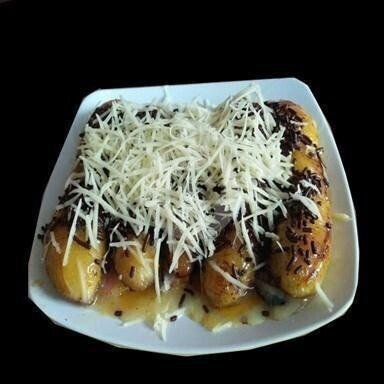
Pisang Bakar (Grilled Bananas): Bananas are grilled over charcoal either in their peel or slightly flattened and cooked on a grill. The wildest and most popular local serving style is Pisang Bakar Keju: a hot caramelised banana generously topped with grated salty cheese and drizzled with condensed milk. The contrast between sweet and salty works brilliantly.
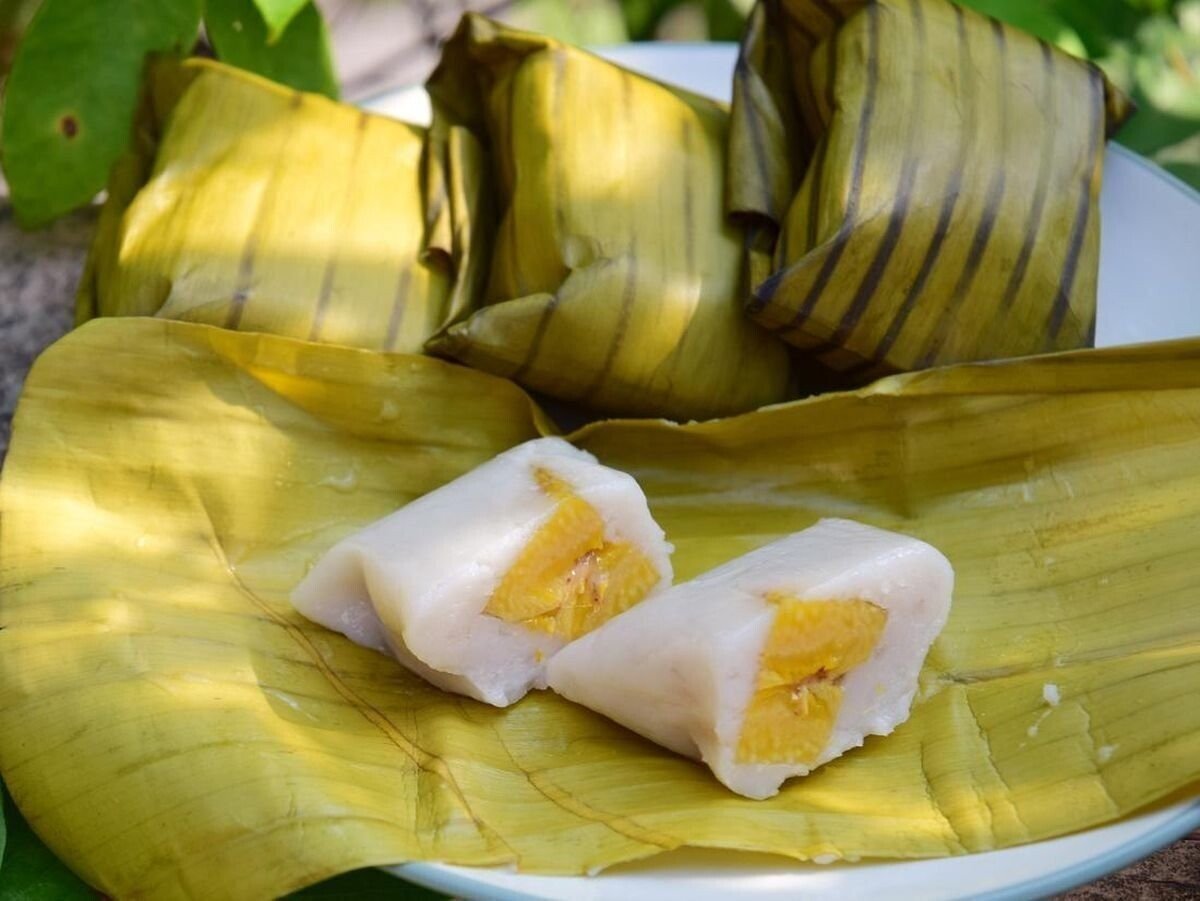
Nagasari: A traditional soft cake made from rice flour, coconut milk and sugar, with a piece of ripe banana inside. It is wrapped in a banana leaf and steamed. You can buy it early in the morning at traditional markets in the local sweets section, known as Jajanan Pasar.
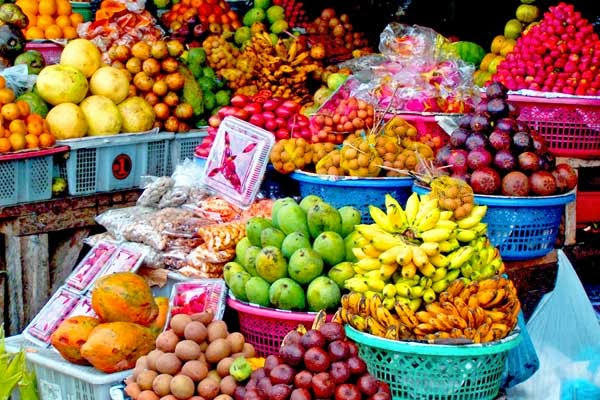
Where to Buy Bananas
Local morning markets (Pasar Pagi): These usually operate from around 5 am to 8 or 9 am. This is where you will find the widest choice of authentic varieties, and bananas are sold in huge bunches for next to nothing. Bargaining is appropriate and welcome.
For example: Pasar Pagi Kerobokan
Fruit stalls (Toko Buah): Small roadside stalls that are open throughout the day. A great option for a spontaneous purchase. The bananas here are always fresh, and the local seller will be happy to tell you which variety is best that day.
Specialist banana stalls: in Bali, you will often see stalls selling only bananas. These banana stalls are exactly where you can find almost all the varieties covered in this guide.
A few locations:
The Risks of Balinese Bananas: What You Need to Know
Uninvited guests in the bunches: Dense banana bunches are an ideal cool and humid shelter for small Balinese wildlife. When you bring home a large bunch from the market, you may easily find a colony of ants, a hiding gecko or a small spider inside.
The main rule: once you bring bananas home, immediately rinse the whole bunch thoroughly under a strong stream of running water.
A sugar and potassium hit: Small local bananas such as Pisang Mas can be deceptive. Because they contain very little water and have a high concentration of sugars, they are extremely calorie-dense. Eating a whole bunch in one go without noticing is a heavy load on the pancreas and gives you an excess of potassium. Enjoy them in moderation.
Rapid overripening: In Bali’s heat, bananas can go from “perfect” to “black and leaking” in just 24 to 36 hours.
Tip: Do not store bananas in plastic bags. To slow down the release of ethylene, the gas that makes fruit ripen, tightly wrap the shared base of the bunch, or “stem”, in ordinary foil or cling film and keep the bananas in a well-ventilated place away from direct sunlight.

You can add one right now!