
Losing loved ones is always a tragedy. However, different peoples cope with grief in their own ways. On the Indonesian island of Sulawesi, there has long been a tradition that shocks outsiders, yet helps locals deal with the pain of loss and not part with a loved one after death.
On Sulawesi, the body of the deceased is left unburied for several months or even years; afterwards, it is laid to rest with honours, and then, with striking regularity, the body is taken out of the tomb again to meet once more with the person who is dear to them.

On Sulawesi, people believe that after death, a person’s body does not need to be laid to rest immediately. It can remain in the home for as long as the family sees fit. The deceased are treated as if they were still alive — believed to be sleeping or ill, yet still able to hear and feel everything.
Families keep them company, avoid leaving them alone, and even leave the light on in their room. The body is carefully looked after: clothes are changed, it is washed from time to time, and food, water, and even cigarettes are left for the deceased.
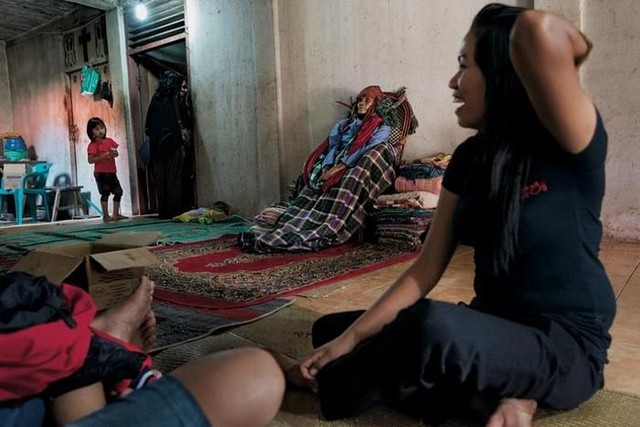
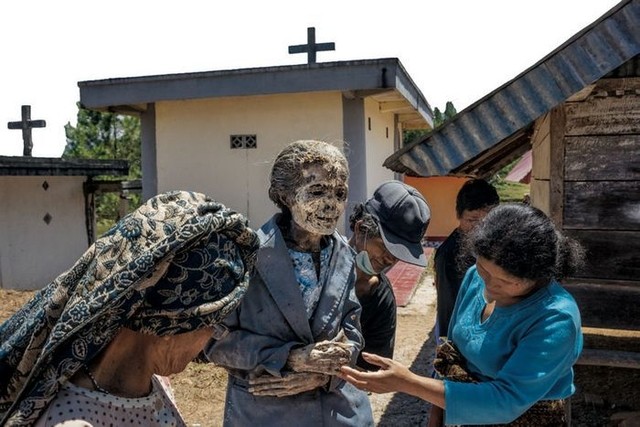
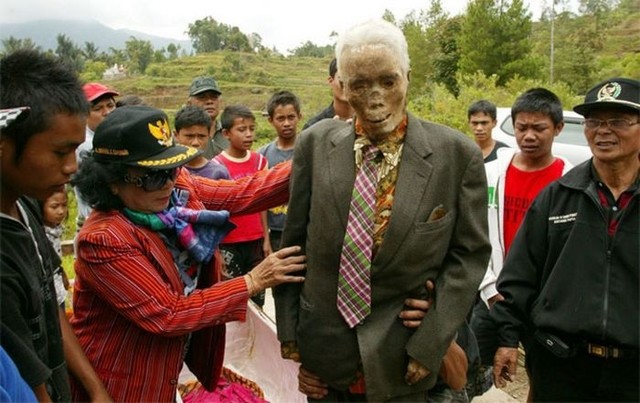
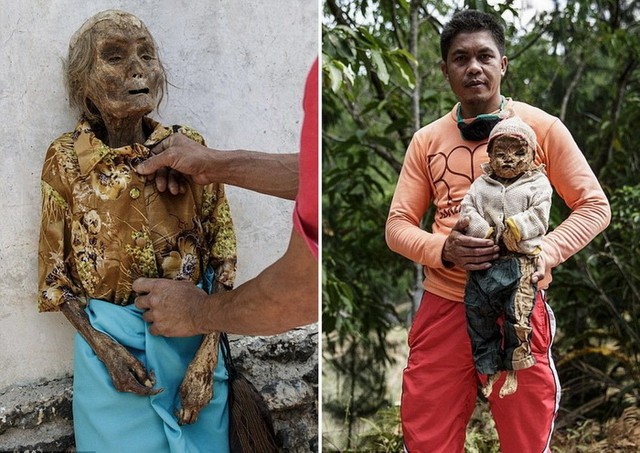
Over time, the deceased begin to resemble mummies.
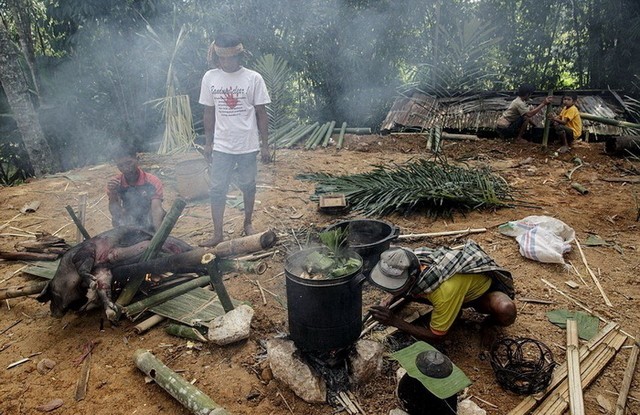
When the family finally decides they are ready to lay the body to rest — more precisely, to place it in a tomb — preparations for the funeral begin. The ritual traditionally includes songs, dances, and the sacrifice of buffaloes. On Sulawesi, people believe that buffaloes help the soul of the deceased cross into the afterlife, so many animals are slaughtered, cooked over an open fire, and shared with everyone who has come to see their loved one off on their final journey.
Burial on Sulawesi follows a path that may seem unusual to outsiders: instead of being buried in the ground, the body is placed in tombs carved into natural caves scattered across the mountains. For families, however, this is not a final farewell — they know they will return again and again.
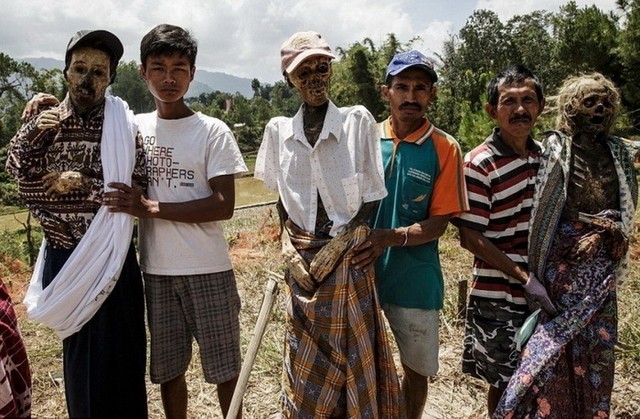
This tradition, known as Ma’nene, or “the cleansing of the dead,” takes place every two or three years. Families visit their loved ones, gently take them out of the tomb, clean and dress them, take family photos, spend time together, and then lay them back to rest. Both adults and children take part.
To them, the dead are not something to fear — they are simply in an eternal sleep, and the connection between the living and the dead continues long after death.

At Ma’nene ceremonies, friends and relatives bring treats and cigarettes to the dead, and lovingly wash and tidy them up. Then they pose with them for a new family portrait.
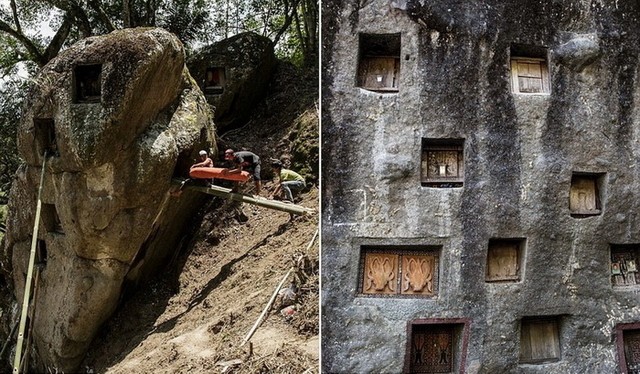
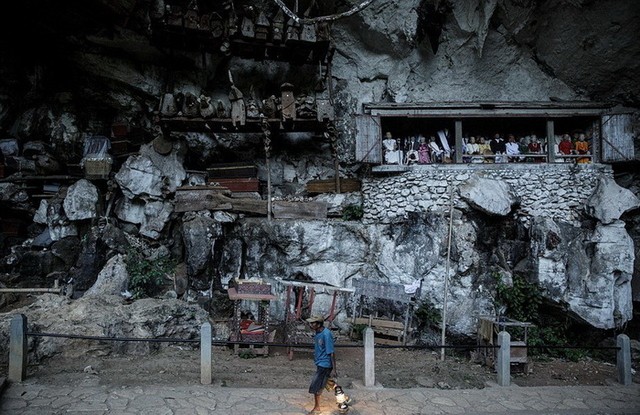
Next to the tombs, handmade dolls carved from wood are обязательно placed. These figures are “copies” of the deceased; they are often dressed in similar clothing, and sometimes even given a wig made from the deceased person’s hair.
These dolls are called tau-tau; essentially, they are the equivalent of the photos that we commonly place on a headstone. Such dolls are very expensive—around USD 1,000—but locals do not spare the money. It is worth noting that funerals are not cheap either; they are almost the most expensive event in the life of every Sulawesi resident.
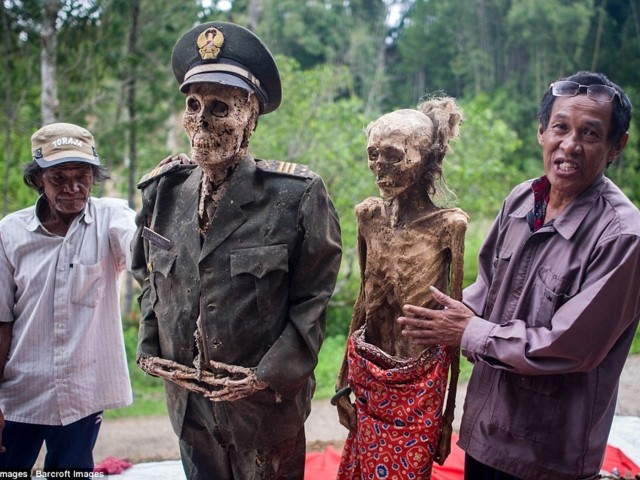
To the rest of the world, these traditions may seem barbaric. However, the principles behind them may not be so different from those in other cultures. Many of us try not to forget our dead. It’s just that on Sulawesi, they approach it in a completely different way.

You can add one right now!