
Spring is one of the most beautiful times of year in Japan. This is when hanami—the cherry blossom season—begins across the country, and cities are literally covered in pink clouds of flowers. People head to parks, have picnics under the trees, and simply go for walks, enjoying this short but truly magical moment of Japanese spring.
If you live in Bali and are planning an Asia itinerary, a trip to Japan for cherry blossoms is one of the best ideas for a spring getaway. The key is to plan your route properly and prepare in advance.
First, sort out the visa. You can apply for a Japan visa directly in Bali, but only if you have a KITAS—this is an important requirement when applying from Indonesia. The documents are usually fairly standard: your passport, a valid KITAS, a bank statement, a 3×4 photo, and proof of travel (for example, a hotel booking or flight tickets). Legal Indonesia can help you put the documents together and submit the application to the consulate to avoid mistakes and unnecessary hassle.
-preview.jpg)
When do cherry blossoms bloom?
The main thing about sakura is that it doesn’t bloom for long at all. Sometimes the peak bloom in a city lasts only 6–7 days, after which the petals start falling quickly. Intercity trains and shinkansen in Japan are very fast and convenient, but quite expensive. Many people plan their route so they fly into Tokyo and fly out of Osaka, so they don’t have to go back and can see cherry blossoms in several cities.
If you miss the bloom in Tokyo, don’t worry—you can go, for example, to Lake Kawaguchiko or to Toyama, where the cherry blossoms open a little later.
In early April, Fujikawaguchiko hosts the beautiful Fuji Kawaguchiko Sakura Matsuri festival. At this time, small street markets with food, souvenirs, and local produce open along the Lake Kawaguchiko promenade, and hundreds of cherry trees bloom along the shore. The promenade offers one of the most beautiful views of Mount Fuji.
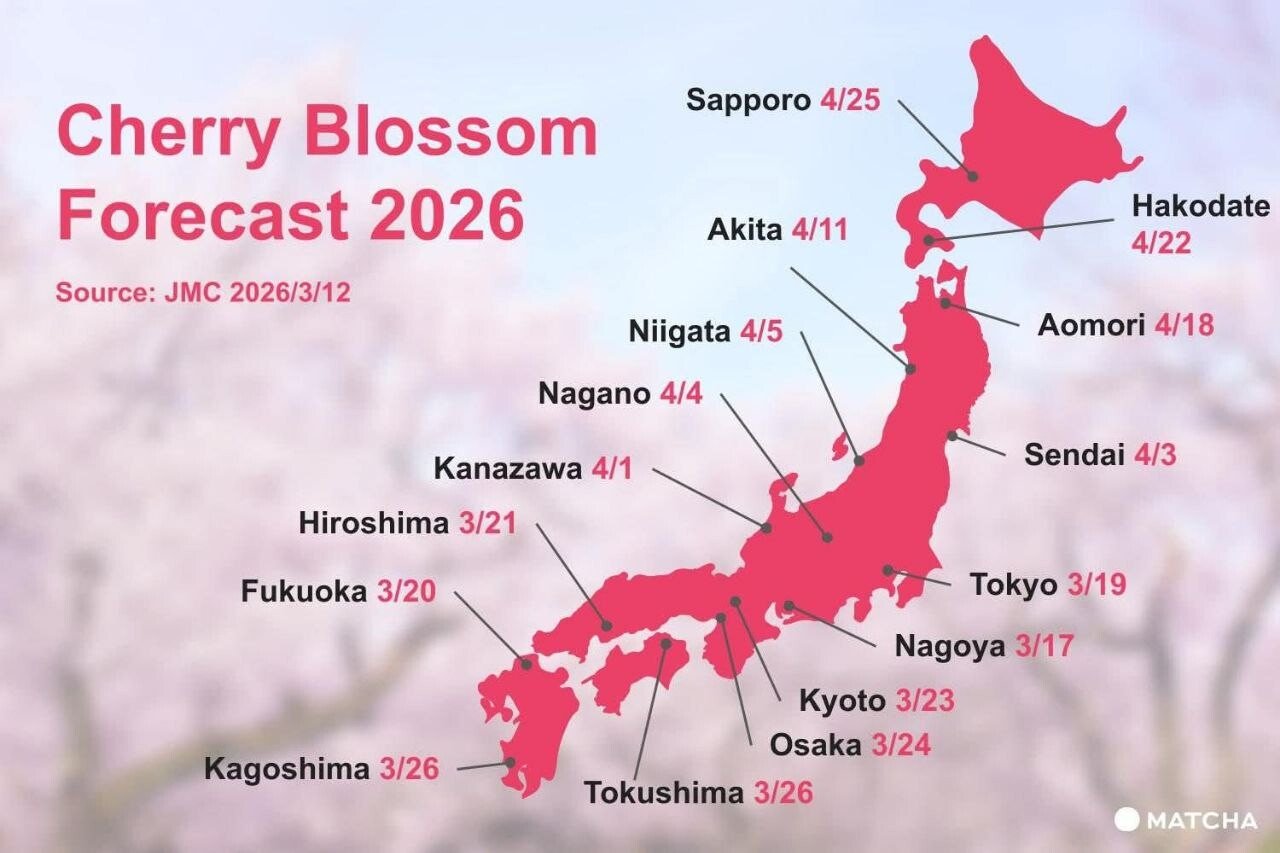
An approximate blossom map usually looks like this:
- Tokyo – late March / early April
- Kyoto and Osaka – early April
- Areas at the foot of Mount Fuji and mountainous regions – mid-April
How to choose the best time for walks
The best time for a walk is early morning. Seriously. In popular spots like Ueno Park in Tokyo or the Philosopher’s Path in Kyoto, it’s already very crowded by 11 am. So it’s better to go either early in the morning or closer to the evening. Ideal time: 6:30–8:30—soft light and fewer tourists. After 17:00 it’s calmer, and the evening light is beautiful. In many parks, the trees are lit up in the evening—this is called yozakura. Lanterns light the trees, and the atmosphere becomes completely different, almost theatrical. It looks especially beautiful in Maruyama Park in Kyoto or along the Meguro River promenade in Tokyo.
One more thing many people only realise once they’re there: the most beautiful cherry blossom spots aren’t always the most famous. For example, in Tokyo most tourists head straight to Ueno Park. It really is beautiful, but it can be extremely crowded. You can find equally scenic views along the Sumida River promenade, where rows of cherry trees stretch along the water and Tokyo Skytree rises in the background. Shinjuku Gyoen National Garden also has a lovely atmosphere: several different cherry varieties grow there, so the bloom lasts longer. And near Yasukuni Shrine there is the so-called “imperial cherry tree”. It’s this tree that is used to officially announce the start of the season in Tokyo.
Sometimes the most memorable walks are simply along small canals or quiet streets—for example, along the Kanda Canal in the Iidabashi area, where cherry trees form long pink tunnels.
Weather in Japan: what to wear and how to keep warm
Spring weather in Japan can surprise you too. During the day it can be quite warm, around +18–20°C, but in the morning and evening it can easily drop to +8°C. So it’s best to bring a light jacket and comfortable shoes—because you end up walking a lot in Japan, and it’s easy to cover 5–7 kilometres in a day. You can buy warm clothes in Bali at Uniqlo in Beachwalk or Icon Bali shopping centres—they have light jackets and good thermal underwear.
After long walks, it’s really nice to go to an onsen—a traditional Japanese bath with hot springs—especially if you get a bit cold after Bali’s tropical climate. One important thing to know in advance: not all onsens allow tattoos. In Japan, tattoos were associated with the yakuza for a long time, so older onsens still follow strict rules. However, many modern onsens officially allow tattoos. You may be asked to cover them with a plaster or a special sticker. Make sure you check the rules before you go.
There are also drink vending machines all over the country, and on a cold morning you can buy hot coffee, tea, or cocoa in a can. It’s a small but very cosy part of everyday life in Japan.
Other tips
One more simple tip is about food. In Japanese supermarkets after 20:00, ready-made meals are often sold with discounts of up to 50%. Many locals buy dinner at that time. This might surprise you, but there are genuinely very few bins on the streets in Japan, so many Japanese people simply carry their rubbish with them until they find a bin in a shop, at a station, or at home. Cleanliness is an important part of the culture. From childhood, people are taught to tidy up after themselves and not leave litter in public places.
If you’re travelling solo, capsule hotels can be a great option. They’re clean, safe, and cheaper than regular hotels. There are also capsule hotels for women only.
A place many people always add to their itinerary is teamLab in Tokyo or Kyoto. It’s one of the most unusual museums of contemporary digital art: huge interactive spaces with light, projections, and water, where the exhibition literally changes around you.
And a final tip from experienced travellers: it’s best to fly to Japan with an almost empty suitcase. Many things are cheaper there, and the quality is excellent. Shops offer tax-free shopping on purchases from 500,000 yen, right at the till, but you always need to have your passport with you.
If you plan the trip in advance and leave room for spontaneity, travelling to Japan during cherry blossom season can become one of the most atmospheric experiences of your life!
Contact us in whichever way is convenient for a consultation!

You can add one right now!