
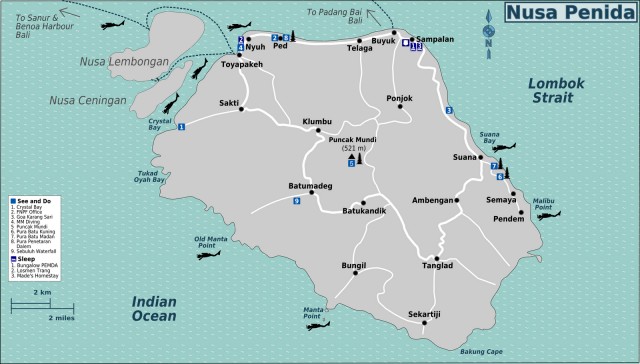
On Nusa Penida, the island next to Bali, an underwater cave has been discovered that could shed light on the region’s early settlement history.
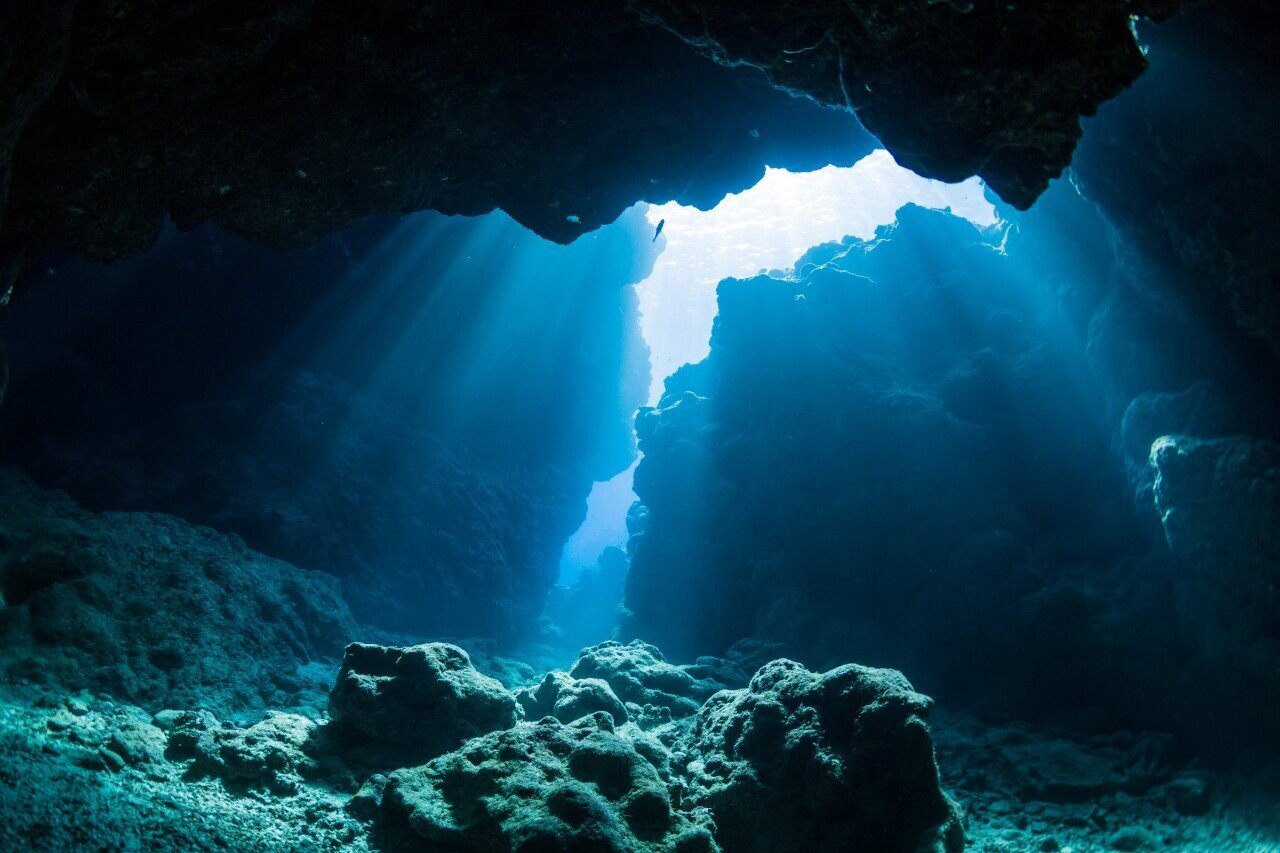
Studies suggest that the Song Toyapakeh cave once lay above sea level, and that in different periods ancient people and various animals could live there comfortably. After the Ice Age, sea levels rose, and the cave—along with its archaeological secrets—disappeared underwater. Today it lies at a depth of 16 metres.
The first scientific paper on the discovery was published on ScienceDirect back in 2023, but the wider public has only heard about the cave now.
The findings of the study entitled “New evidence of prehistoric occupation at Song Toyapakeh, an underwater cave in Nusa Penida, Bali” were released by Indonesia’s National Research and Innovation Agency (BRIN).
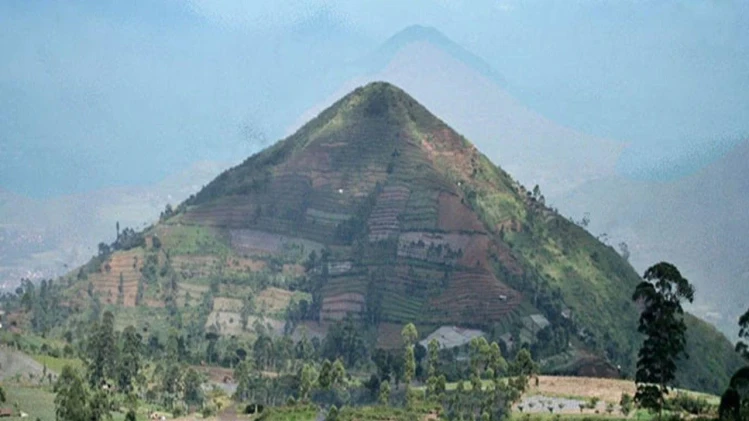
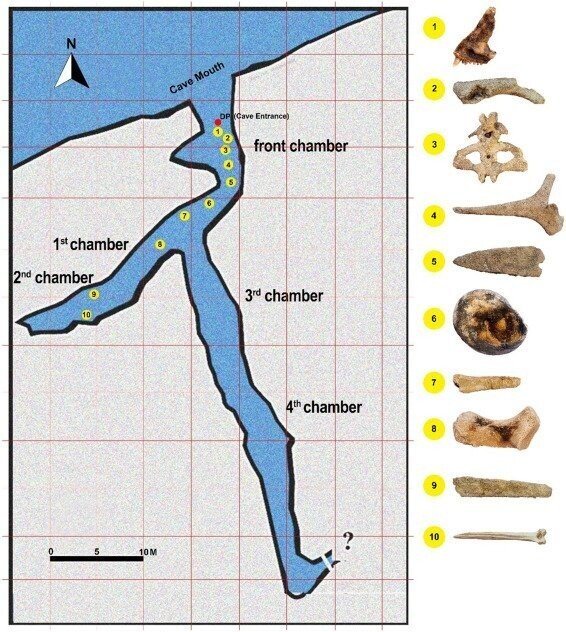
Scientists found fossilised remains of vertebrates in the cave (bones of mammoths, turtles and deer), as well as sharp stone tools resembling arrow or spearheads, which were very likely made by humans. This confirms that people used this area in prehistoric times.
To collect the data, the team used two methods: scuba dives and sampling. During the dives, they documented the cave’s structure and collected samples of fossil animal bones that were thought to have been used by humans. Divers who explored the cave describe it as gently sloping and terraced, with an entrance about five metres wide and around two metres high.
Alongside traditional hand mapping, modern underwater scanning technologies were also used to study the cave’s structure and the location of the finds more accurately.
The discovery helps link current ideas about ancient human migrations with early settlements on Nusa Penida. It also supports the hypothesis that a land bridge existed between Bali and Lombok and that people used a route through the Wallacea region. Of course, this wasn’t a motorway connecting the islands; rather, sea levels were so low at the time that it was possible to travel between them on foot.
Unfortunately, the cave is currently closed to visitors. To be honest, not everyone has the required certification—or the desire—to dive in underwater caves. It takes serious training and a particular mindset: many people break into a sweat just watching videos of dives like this.
Scientists are considering opening the cave and the nearby onshore archaeological areas to tourists in the future, but no final decision has been made yet. In any case, the island already has plenty of great spots both for diving and for getting around on land. No wonder the photo of the famous Kelingking Beach is probably familiar to almost everyone on Earth.

You can add one right now!