
Videos of the Anak Krakatau eruption have been circulating on social media for several days now.
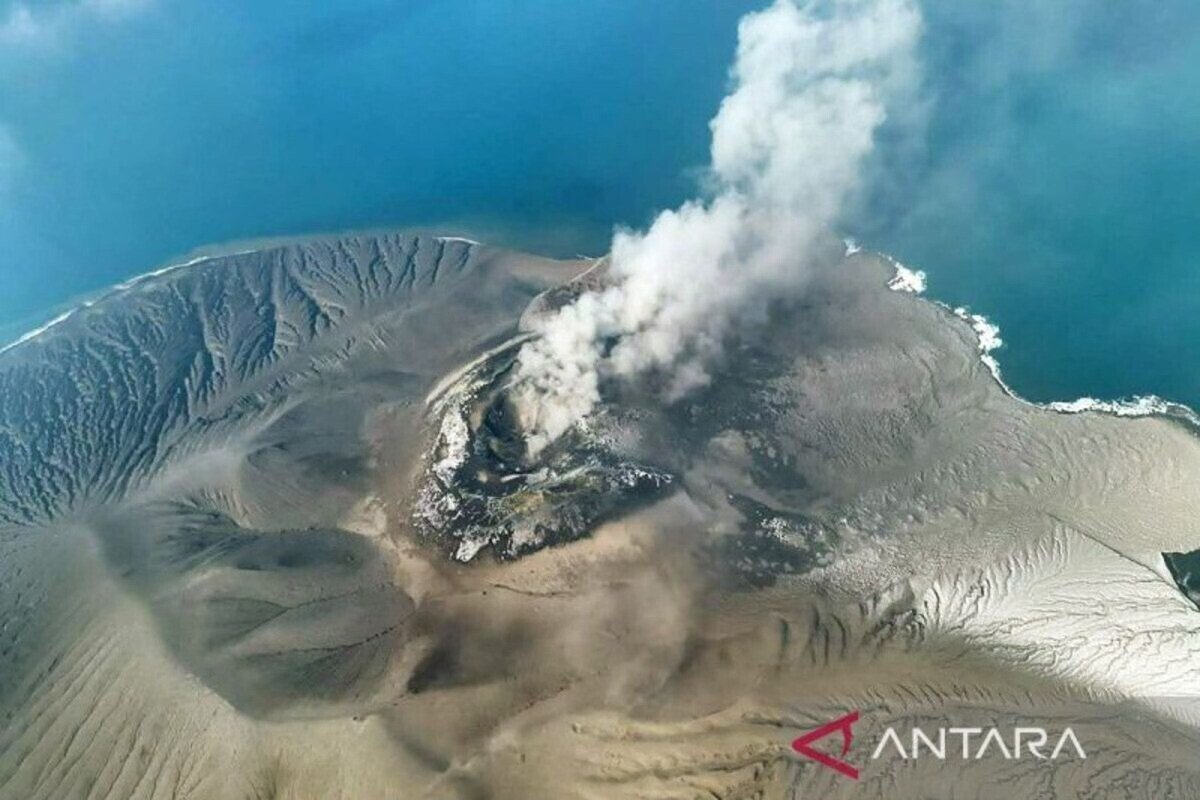
Alongside them come alarming claims about a possible major earthquake. Experts in Bali are urging people not to panic: there is no direct link between a volcanic eruption and seismic hazard.
The eruption of Anak Krakatau did indeed go on for several days. It began on September 4 and only died down on September 6. The continuous phase lasted about 25 hours.
It was after this that social media once again started buzzing about a powerful earthquake that could strike in the subduction zone, where one tectonic plate slides beneath another.
However, the head of the Bali Provincial Disaster Management Agency (BPBD), I Gede Teja, has urged people not to connect two entirely different natural processes. According to him, a volcanic eruption can trigger volcanic earthquakes, which are caused by the movement of magma and changes in pressure within the volcanic system.

A mega-earthquake has different causes.
That said, it would be wrong to claim that Bali faces no threat from strong earthquakes. The island lies in a region of high tectonic activity. Earthquake sources are located both to the south of Bali, in the subduction zone, and to the north, in the area of the Flores Backarc Thrust.
In the first eight months of 2026, Indonesia's Meteorology, Climatology and Geophysics Agency (BMKG) recorded 852 earthquakes in the Bali area and neighbouring territories. Most of them were minor: 802 had a magnitude of no more than 3.0. Another 50 earthquakes fell in the range between 3.0 and 5.0. No earthquakes of magnitude 5.0 or above were recorded during this period.
Even so, as Teja stressed, a large number of small earthquakes does not mean that a strong tremor is about to happen.
There is another important point for Bali: the island itself is currently seeing no increase in volcanic activity. It has two active volcanoes — Agung in Karangasem and Batur in Bangli — but the BPBD reports that their status remains normal.
As for Anak Krakatau itself, its eruption has indeed affected the situation in other parts of Indonesia. Volcanic ash was carried in different directions depending on the wind. According to BMKG, on September 8 the ash spread from Lampung towards the southwestern part of Banten and on towards the Indian Ocean.

You can add one right now!