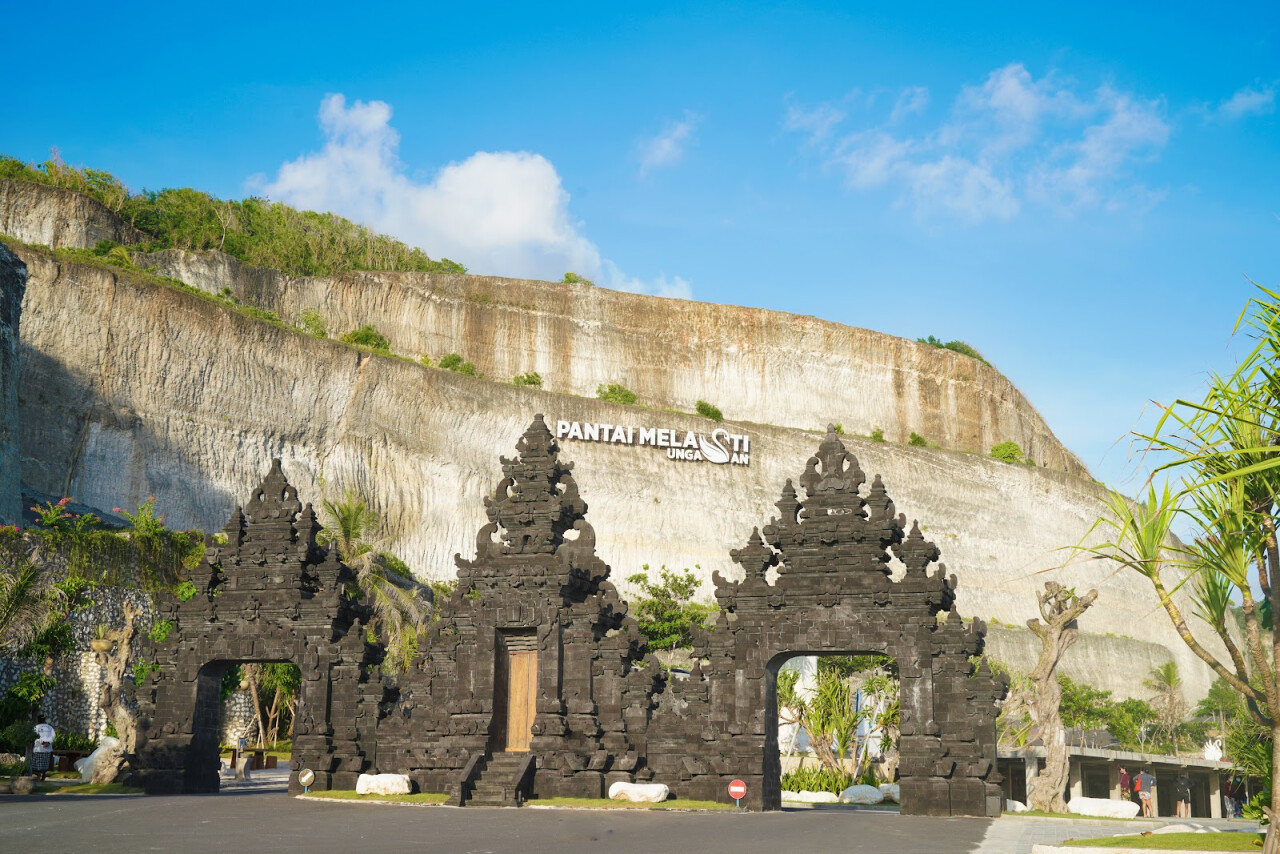
Gunung Payung is a reef break on the southern shore of the Bukit Peninsula, about 300 metres east of Pandawa. Thanks to its direct exposure to the open ocean, it gathers swell better than almost any other spot in Bali. The beach is very beautiful, reached by a descent of a couple of hundred steps. It's usually not crowded.
The wave & conditions
There are several peaks with a good right that barrels in the right conditions — the peaks shift around. The outside is powerful, with a steep take-off and short punchy walls. The inside is calmer, with a long ride, but powerful clean-up sets come through now and then. Sometimes there's a left too, but it's lower quality. On an offshore (N) the wave stands up tall before it throws the lip — which lets you make sections that looked impossible. At low tide the take-off is softer and the inside section stands up with barrel potential. There's no channel — paddling out on a big swell can be a problem. In the dry season it usually doesn't work: a strong cross-shore wind and too much swell.
Conditions & tips
The best months are March, April, October and November, when the wind is light and the swell moderate. When the Canggu and Nusa Dua spots are dirty with runoff after the rains, Gunung Payung often stays clean. A strong current pulls toward Nusa Dua, so you have to keep checking your position. The paddle-out: walk to the headland toward Pandawa and paddle from there; in the middle of the reef at low-to-mid tide it's very shallow and you get stuck on the coral — wait for a lull between sets and paddle out hard past the lineup. The reef is sharp and live.
Hazards: sharp reef, strong current, no channel