
In Bali’s heat, something interesting happens quite quickly: you get used to it and stop noticing it. In the morning you hop on your scooter, stop for a coffee, then head to the beach, then somewhere else… The day just unfolds, and at some point you simply forget how long you’ve been out in the sun.

And that’s when the unpleasant part starts. Not immediately, but closer to the evening: you feel sluggish, oddly tired, sometimes a bit light-headed. It’s not like you’re ill, but you’re not exactly full of energy either.
Before you start buying vitamins and supplements by the kilo, or decide that “the climate doesn’t suit you”, make sure it’s not just simple overheating. In other words, your body has lost more fluids and salts than you’ve managed to replace.
In the tropics it’s easy to let your guard down. You don’t notice how much you’re actually sweating, how much water you’re losing in a day, and how quickly it adds up. So the point isn’t just to “drink more”, but to understand what exactly you’re losing and how to replace it.
And that’s where electrolytes come in — not as a trendy drink, but as a tool that’s useful in specific situations, not all the time.

What you actually lose through sweat
When we sweat, we don’t lose just water. The main losses are water, sodium and chloride. Potassium is lost too, but usually less. Magnesium and calcium are not the things that suddenly “drop” after a couple of hours in the sun. So in most cases the issue isn’t a “vitamin deficiency”, but that you’ve lost fluid and salt and haven’t replaced them.
And there’s an important point people often miss: sometimes water isn’t enough. If you’re in the sun for a long time and moving a lot — surfing, walking, riding a scooter, or playing padel — water doesn’t always fix it. You replace the fluid, but not the salt. That’s where the feeling comes from: “But I drank — why do I still feel bad?”
Water is needed to maintain blood volume and cool the body. Sodium helps retain fluid in the body and is needed for normal muscle and nervous system function. Chloride helps maintain fluid and electrolyte balance.
But the opposite extreme is real too. When you force yourself to drink too much plain water, it dilutes the sodium in your blood and can cause sodium levels to drop, especially with exertion and excess fluid. This has happened to athletes more than once, particularly long-distance runners. In Bali, an extra bottle of water obviously won’t kill you, but it can make you feel worse.
When electrolytes are actually needed

In everyday life in Bali — if you’re just living here, running errands, sitting in cafés, and occasionally going to the beach — most of the time water and normal food are enough. Electrolytes aren’t essential. They start to make sense when there’s sustained effort with sweating: surfing, workouts, hiking, long rides in the sun. That’s when it’s reasonable to add a drink with sodium and a small amount of carbohydrates. Carbs in isotonic drinks aren’t there “for health” — they’re for energy and absorption. So these drinks aren’t just water with salt; they’re a tool for when you’re under load.
By the way, if you notice that after a long scooter ride in the sun water just doesn’t “go down” and doesn’t bring relief, that’s a typical sign it’s time to have an electrolyte drink.
Isotonic drinks
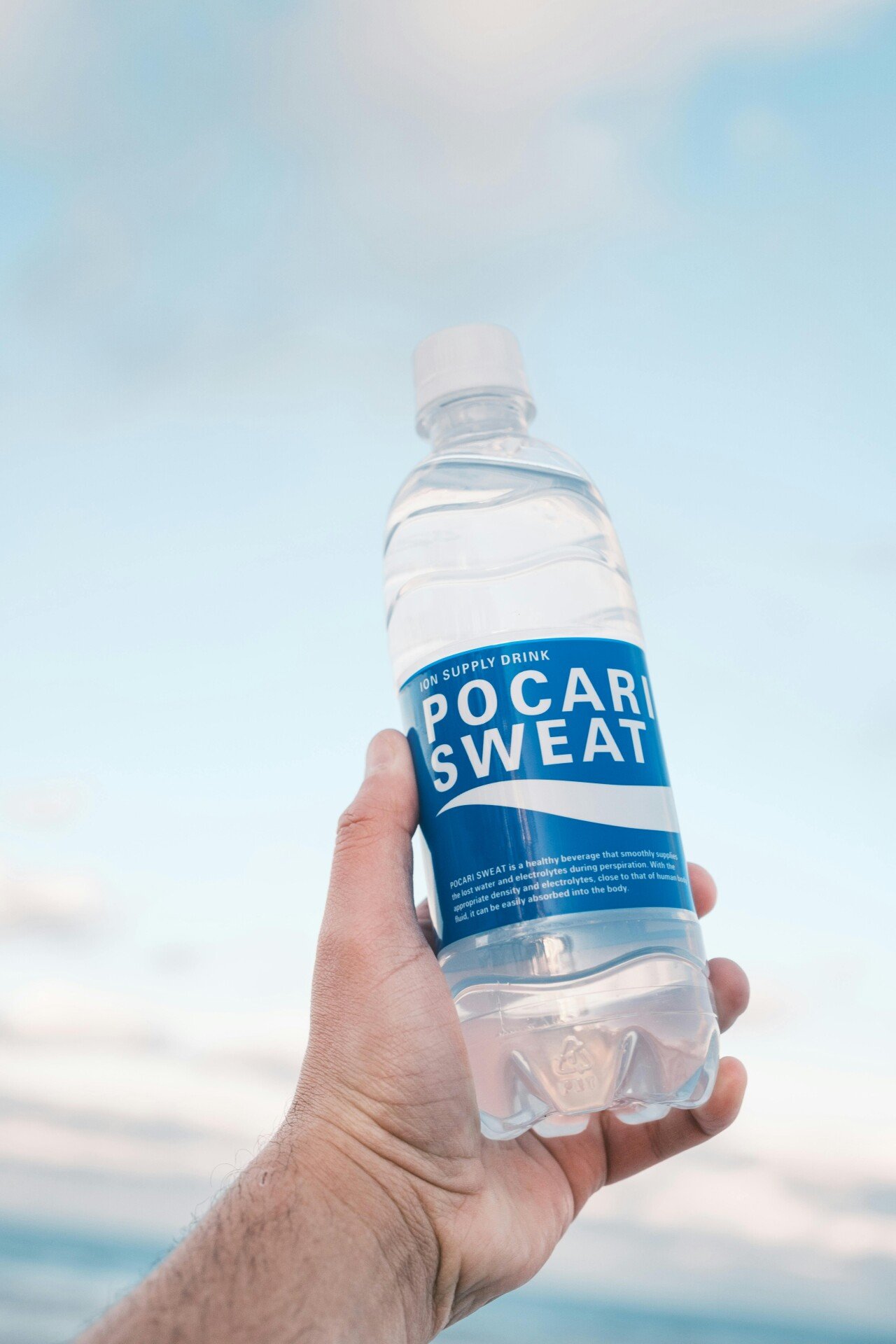
The most popular isotonic drink in Bali is Pocari Sweat. It’s sold in all supermarkets on the island in bottles with a blue label, in 350, 500 and 900 ml. It’s best to sip an isotonic drink little by little but regularly, roughly 500 ml per 1.5–2 hours. And definitely don’t replace all your water with isotonic drinks.
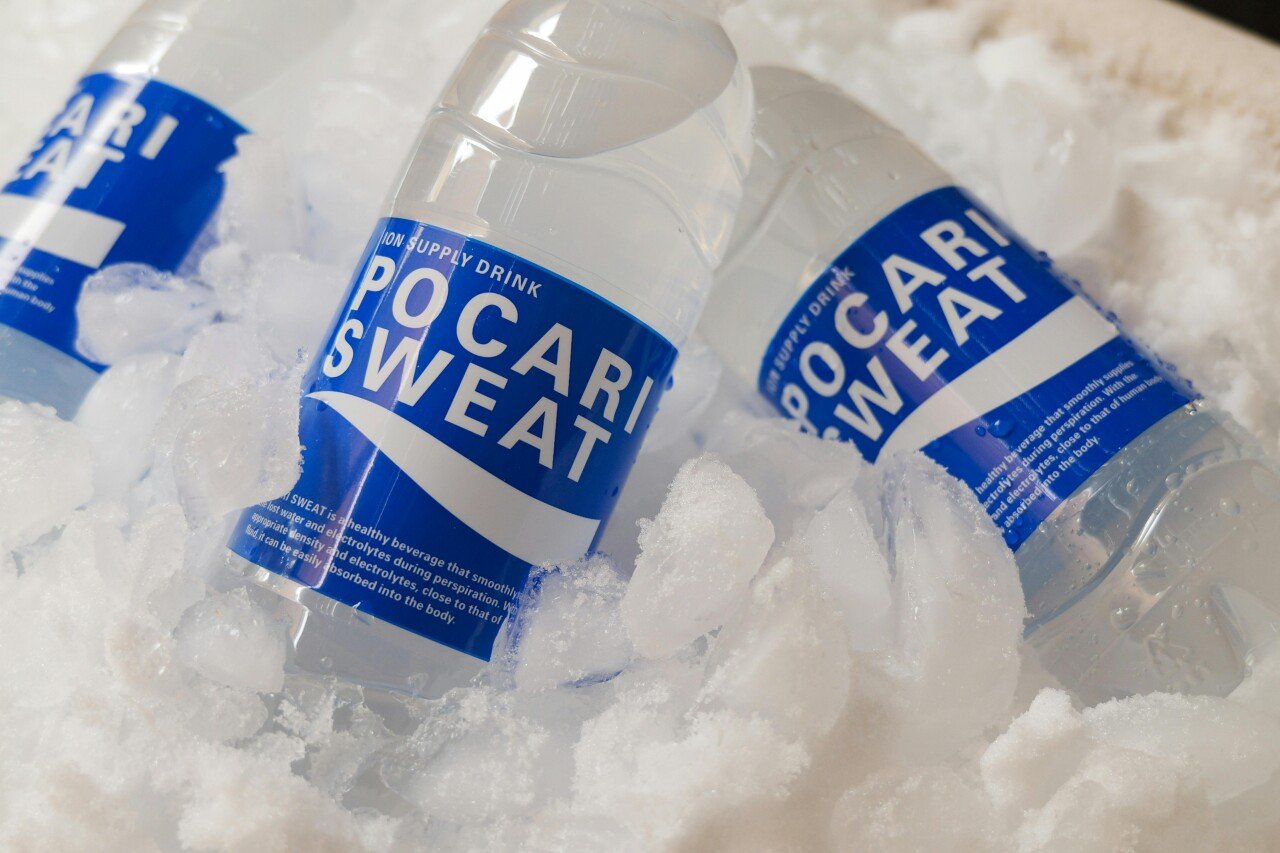
Pocari also has a “lighter” version — Ion Water — with reduced sugar. It tastes less sweet, and many people find it better in the heat. It’s also often used not only after sport. In Bali it’s almost a universal “when you feel rough” drink — after overheating, when you feel weak, and also during illnesses like dengue, when it’s important to maintain fluid and electrolyte levels.
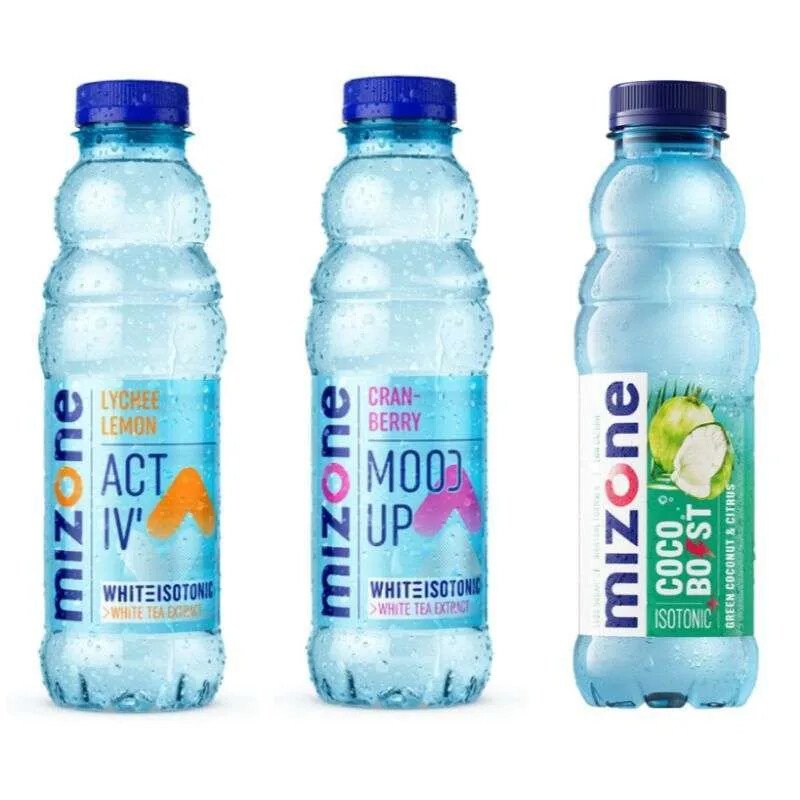
The choice of isotonic drinks in Bali is huge. In Indomaret and Alfamart you can almost always find Mizone, Isoplus, Hydroplus or, for example, 100 Plus — a classic sports drink that’s popular across South-East Asia. Essentially, they’re all the same category: water + electrolytes + a bit of carbohydrates. The differences are mostly in the details.
Mizone is the most “lightweight” option of them all. It usually has a mild taste, loads of flavours (apple, lychee, orange, even some really odd mixes), and people often buy it simply as a refreshing drink. It contains B vitamins.
Isoplus and Hydroplus are closer to what people usually mean by a sports isotonic drink: sweet, with a strong flavour and a solid set of electrolytes. They’re more often taken specifically after activity — surfing, sport, or long periods in the heat.
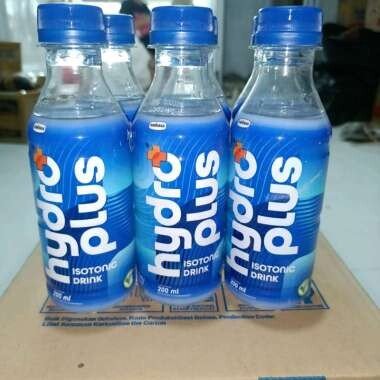
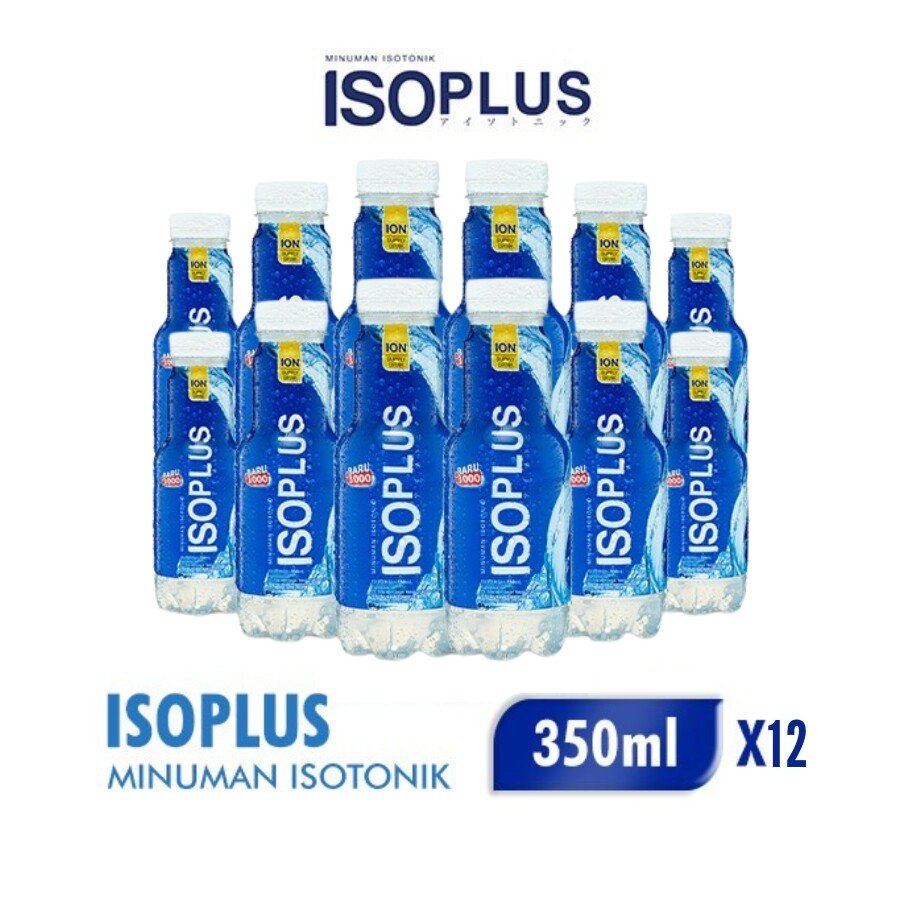
Photo: lazada
100 Plus is an old, reliable option popular all over South-East Asia. It has a “cleaner” taste without heavy flavouring, and many people see it as the most classic, no-frills isotonic drink.
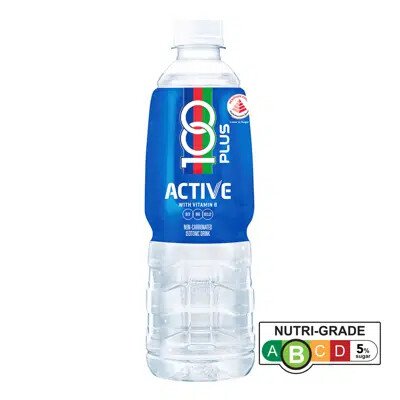
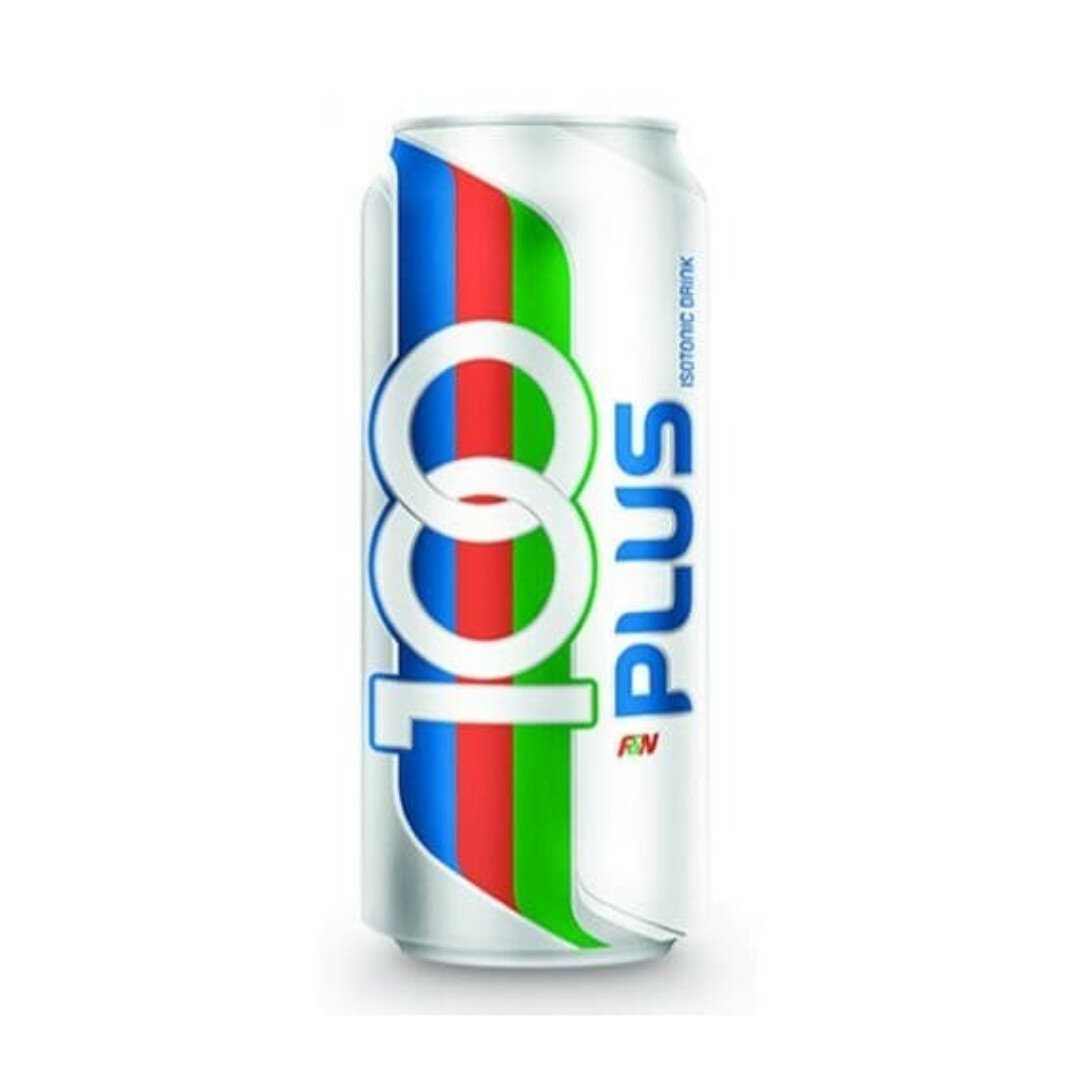
Photo: shopee
If you’ve genuinely overheated or sweated a lot, any of them will do the job more or less the same. What matters isn’t the brand, but whether you actually need an isotonic drink at that moment.
How to tell when you need an isotonic drink
There are a few fairly clear signals that it’s not just about water anymore:
— water doesn’t quench your thirst. You drink, but the thirst quickly comes back or doesn’t go away at all — a common sign you’re short on sodium
— a strange, “cotton-wool” kind of weakness appears — not like normal post-exercise tiredness, but an overall wiped-out feeling: no energy, heavy body, everything feels slowed down
— mild dizziness or weakness, especially when changing position — you stand up and it goes a bit blurry for a second
— your sweat becomes noticeably salty, it stings your eyes, leaves white marks on your skin or clothes, and your skin feels sticky after drying
— the sense that water “isn’t helping” — the simplest and most honest guide: you’re doing everything right, but you don’t feel better
— you feel better after an isotonic drink — within 10–15 minutes you get mental clarity and your energy comes back — that’s almost a direct sign you were missing electrolytes specifically.
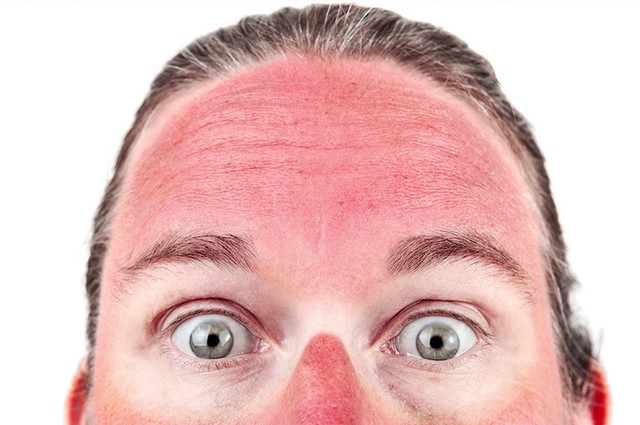
If water helps, keep drinking water. If it doesn’t, it’s probably time to add electrolytes.
For reference, the popular Bali drinks with a rhino (Larutan Penyegar Cap Badak or Cool Rhino) don’t contain electrolytes — they only provide a cooling effect and a feeling of freshness. They don’t have a proper amount of sodium, which is what we lose in sweat, so after surfing, hiking, or a long scooter ride such a drink won’t replace an isotonic like Pocari Sweat.
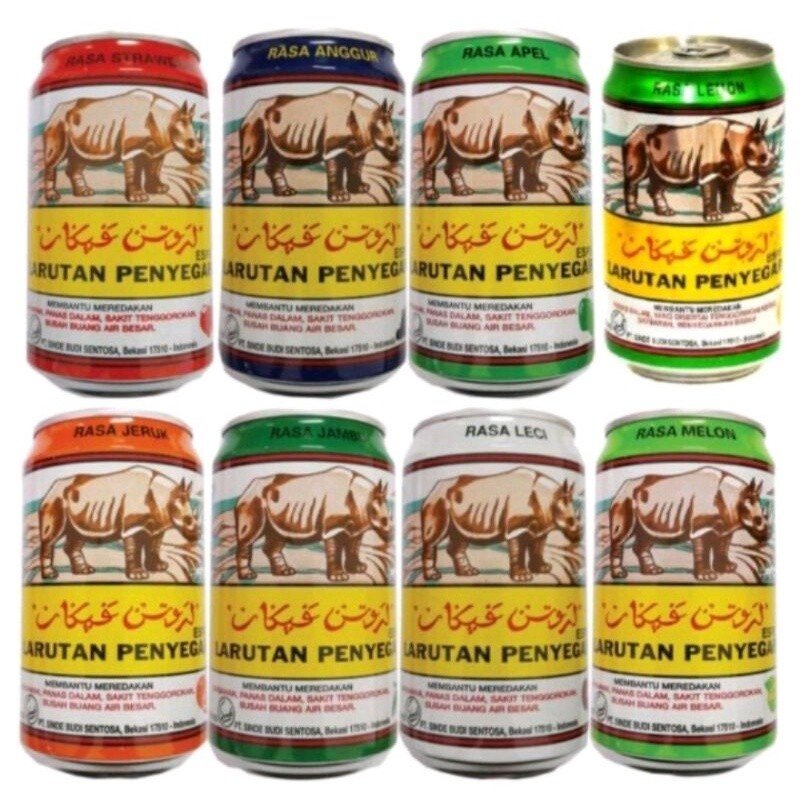
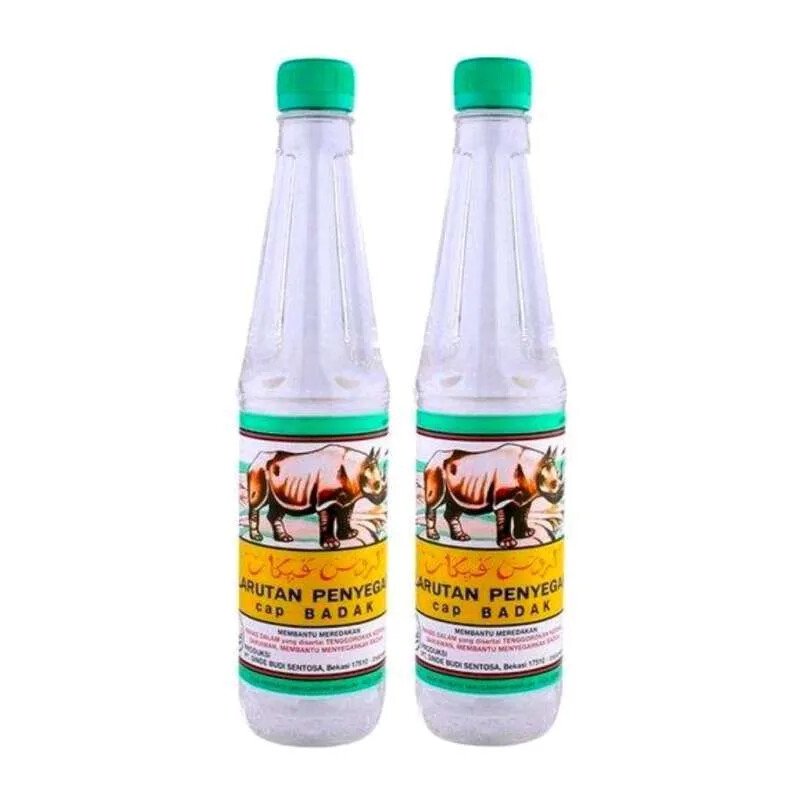
Photo: tokopedia
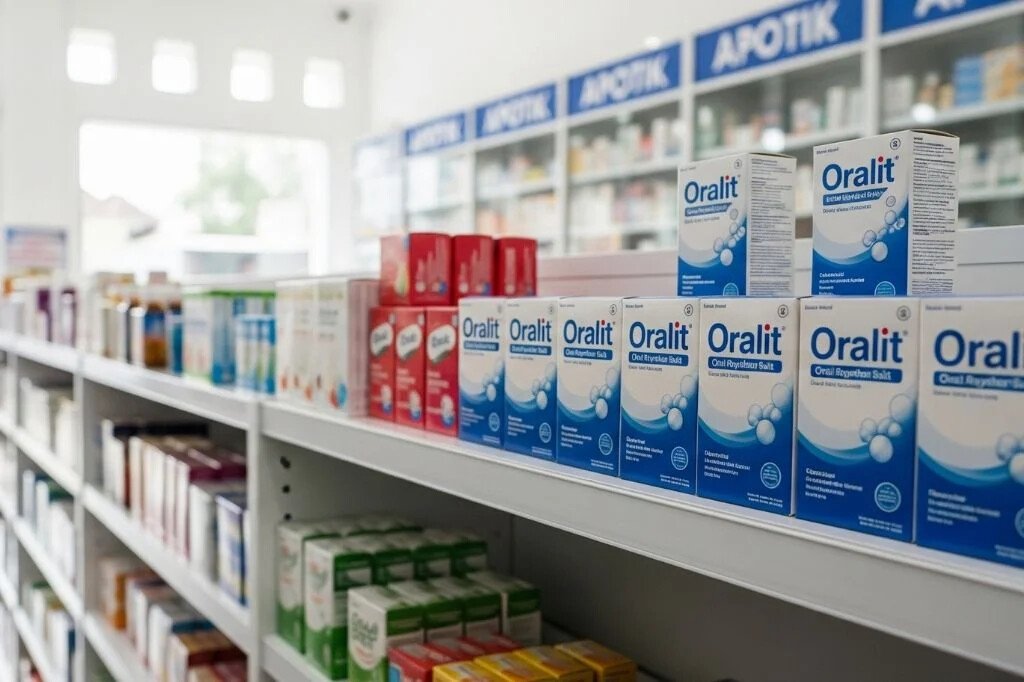
If it’s not about heat and sport but, for example, food poisoning, vomiting, or diarrhoea, then you don’t need isotonic drinks — you need pharmacy rehydration solutions like Oralit or Pharolit. They’re more concentrated and designed specifically for recovery after fluid loss.
Oralit isn’t just an electrolyte drink — it’s a rehydration solution. It contains glucose, sodium chloride, potassium chloride and citrate. This formula makes sense when there’s significant fluid loss, but making Oralit your everyday drink “just in case” isn’t a great idea.
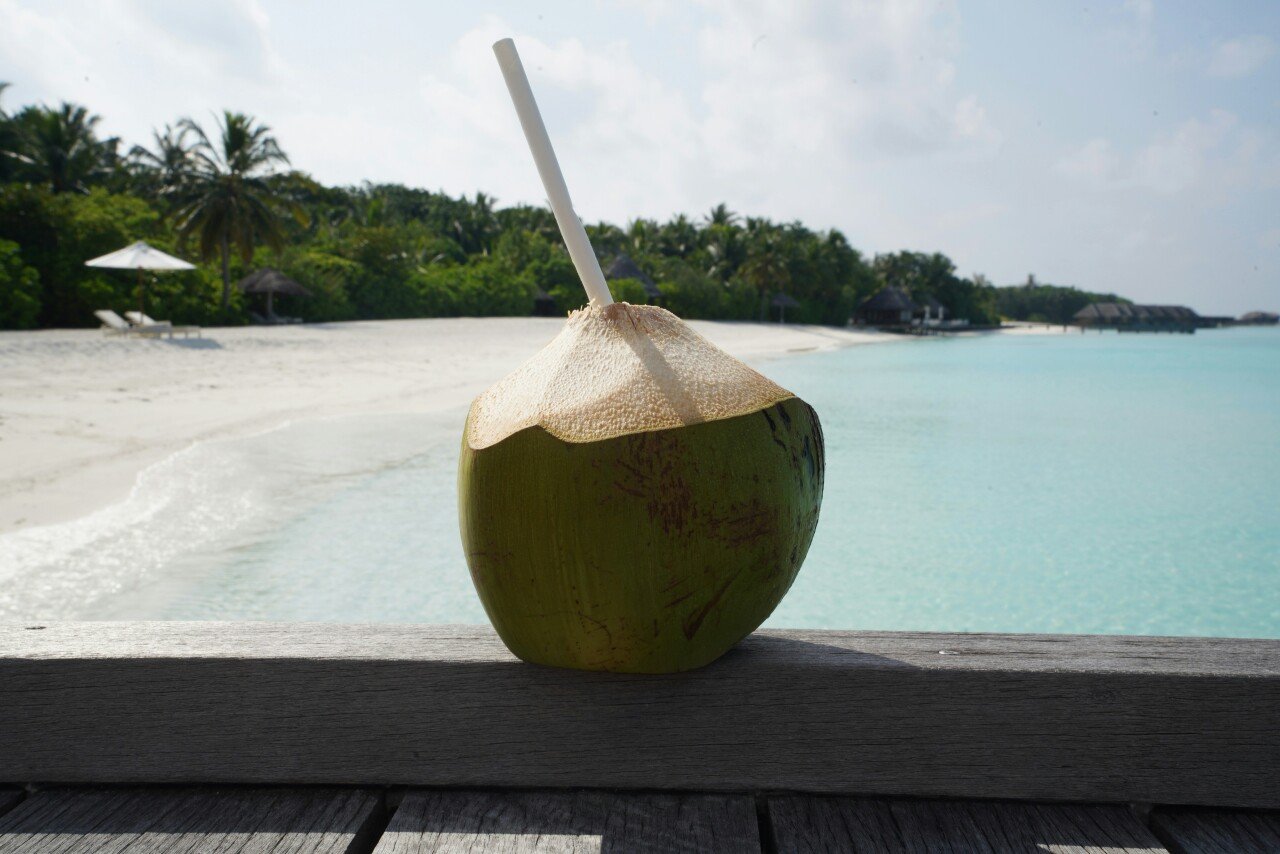
Coconut water is a pleasant and healthy drink, but it’s higher in potassium and low in sodium. And after heavy sweating, sodium is what matters more. Studies show that potassium on its own doesn’t offer an advantage over a regular isotonic drink. So it’s a good additional option, but not a full replacement for an isotonic.
If you’ve got nothing to hand, you can make a simple version yourself: water, a pinch of salt, a bit of sugar or honey, and lime. That’s a workable option after a hot day.
Who should be cautious
If you have kidney or heart problems, significant high blood pressure, sodium or potassium restrictions, or diabetes, it’s better not to turn these drinks into an everyday habit. This is especially true for pharmacy solutions like Oralit — they’re more concentrated for a reason.
It’s also important to remember that many isotonic drinks aren’t just “water with minerals”. They often contain quite a lot of sugar, because it’s needed for energy and absorption. Under load, that’s fine — but if you drink them just because, throughout the day, nothing good will come of it.
On a normal day, it’s best to drink plain water. With exertion and heavy sweating — an isotonic drink (small portions along with water!). With diarrhoea, food poisoning, or Bali belly symptoms — pharmacy rehydration solutions.

You can add one right now!