
Waste management in Bali is becoming increasingly challenging. The situation is made worse by the halt to transporting organic waste to the Suwung landfill in Denpasar from 1 April 2026.
Bali residents are having to find their own solutions for dealing with waste — from reducing plastic use to burning rubbish.
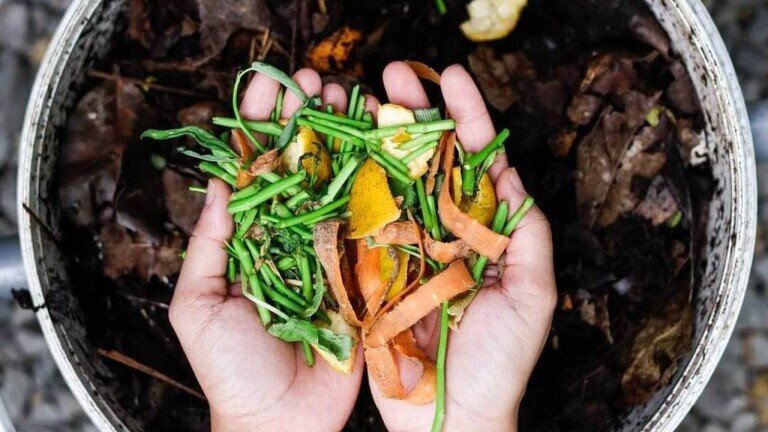
How waste sorting works in Indonesia
Indonesia has a three-tier household waste sorting system under the national programme “Indonesia Without Waste”. All waste is divided into three categories: organic (food scraps, peelings, leaves) — processed into compost or biogas at household level; recyclable non-organic (plastic, glass, paper, cardboard, metal, aluminium, Tetra Pak) — taken to waste banks (bank sampah) or recycling drop-off points; hazardous and non-recyclable (nappies, medical masks, medicines, aerosols, light bulbs) — require special disposal and must not be thrown into the general bin.
The core principle is sorting at the source — in each household — before waste gets mixed together. The government’s goal is to recycle 70% of waste and reduce waste generation by 30% through a source-to-final-disposal strategy. A particular focus is on processing organic waste at home — via composting, vermicomposting and other methods widely used by gardeners and farmers. Organic waste can be processed at home or taken to dedicated processing points.

Food waste disposer
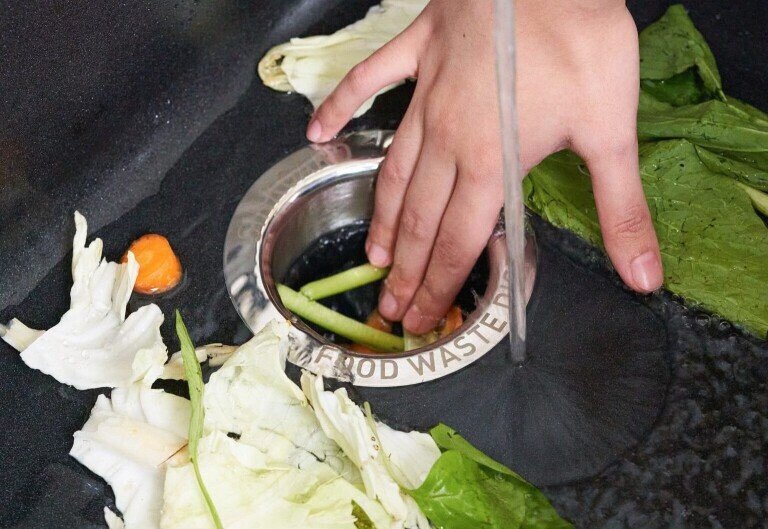
A food waste disposer is basically a small grinder under the sink. It turns organic waste into a slurry, and water flushes it straight into the drainage system. No bags, no smells — just rinse it away and you’re done. With your villa owner’s approval, you can install one under the kitchen sink.
In Indonesia the disposer market is small, but there are options. SinkGard is an Indonesian brand with an official store on Tokopedia. For example, the Deluxe 0.75 HP model delivers 560 W, is designed to last 8 years and costs around 7 million rupiah. Among European models, German Franke and Blanco are available — they are often sold as part of a bundle with a granite sink. The cheapest options are Chinese MIUI or JIQI models, costing around 3–4 million rupiah.
Kitchen composter
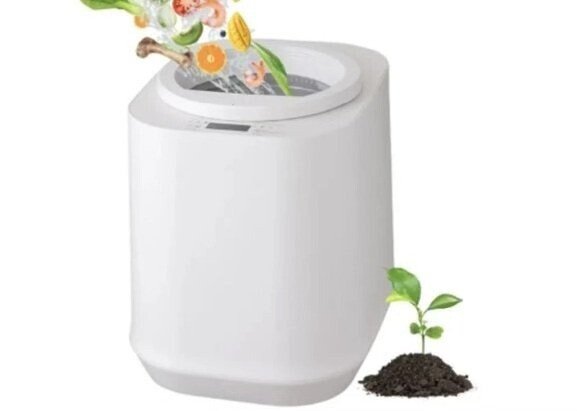
An automatic electric composter is a countertop kitchen appliance about the size of a small bin. Composters come in different types:
Dehydration-based models are basically a mini-oven with a grinder. They grind organic waste, dry it and heat it to 60–80°C, and after a few hours produce a dry, odourless powder. It’s fast and convenient, but it’s not real compost — the material needs to be buried in soil, where it will finish breaking down naturally.
A bio composter works differently: inside, a colony of bacteria continuously ferments whatever you add. You add organic waste in small batches each day, and the finished compost gradually builds up and is removed every few weeks. The result is a proper fertiliser you can apply directly to the soil. The downside is that the bacterial culture needs topping up from time to time, and the unit runs continuously rather than switching off between cycles.
Different composter models are available on local marketplaces, starting from 1 million rupiah and up.

Trench composting
This is one of the simplest ways to dispose of organic waste directly in the ground, without any containers. Dig a trench about 20–30 cm deep in the garden or in a future bed. Place food waste (peelings, grass, leaves, bread) in a layer around 10–15 cm thick, moisten slightly if needed, and cover with soil or ash. Then fill the trench in completely. After 1–2 months, the waste decomposes and enriches the soil. It’s important not to add meat or dairy products, so as not to attract pests. It’s convenient to use the method in rotation: first bury the waste, then plant in that spot the next season. Only bury peelings, without seeds — otherwise you’ll get “uninvited guests” such as watermelons, avocados, mangoes and other fruit.
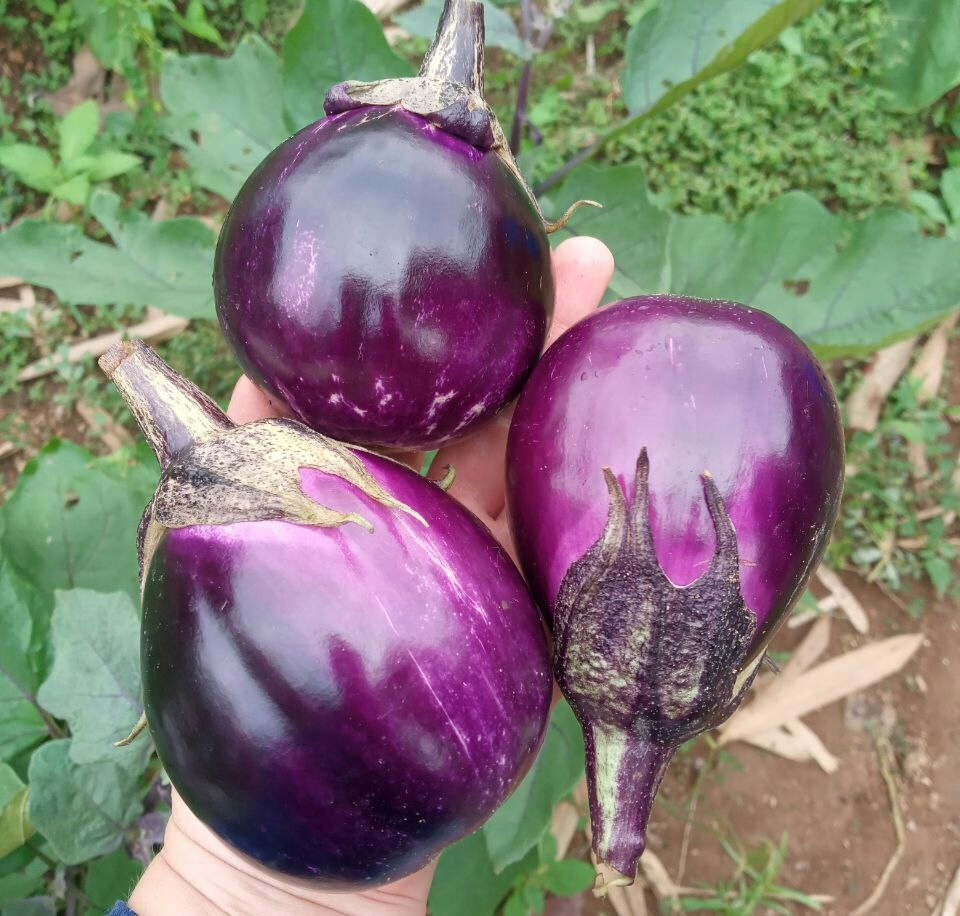
Compost pit
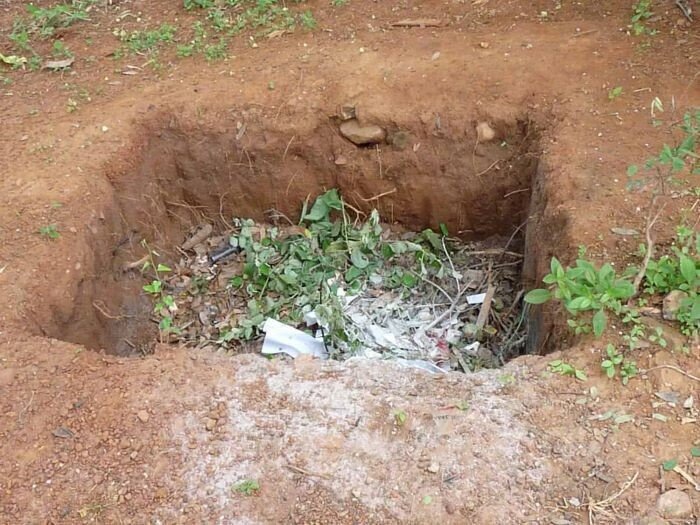
This is a more traditional way to make fertiliser. Place the pit or container in the shade, away from the house. Add organic waste, alternating “green” (wet, such as peelings and grass) and “brown” (dry leaves, cardboard) layers in a ratio of roughly 1:2. The contents should be moistened occasionally (it should feel like a damp sponge) and turned every 1–2 weeks to let air in. After 2–4 months you’ll have finished compost — dark, crumbly and smelling like soil. Do not add meat, fats, dairy products or diseased plants.
Liquid organic fertiliser (Eco Enzyme)
This method processes waste into a multi-purpose liquid. To make it, use fruit or vegetable peel, sugar (or molasses) and water in a 1:3:10 ratio. Put the mixture into a plastic container, close it without sealing it airtight, and leave it to ferment in the shade for about three months. During the first week, release the gases daily, then once a week. After fermentation, strain the liquid and use it as a fertiliser or household cleaner, and add the remaining pulp to the compost.
Bokashi fertiliser

This method is based on fermenting waste using effective microorganisms (EM4 in a yellow bottle, sold in garden shops and on marketplaces). Chop the organic waste, moisten it with a solution of EM4, sugar and water, then pack it tightly into an airtight container with no access to air. The process takes 10–14 days. Drain off the liquid that forms and dilute it with water for watering plants. The finished mass has a slightly sour smell and is buried in soil, where it matures for another two weeks or so. It’s important to keep air out, otherwise it will start to rot.

Biopores (Teba Modern)
This method is suitable for plots with soil. Make a vertical hole in the ground (with an auger or crowbar), optionally insert a pipe to support the sides, and fill it with organic waste. Cover the hole with a lid. This system not only processes waste, but also improves water absorption in the soil, preventing waterlogging and boosting fertility. You just need to add organic waste periodically and make sure the hole doesn’t get blocked.
Feed for livestock and poultry
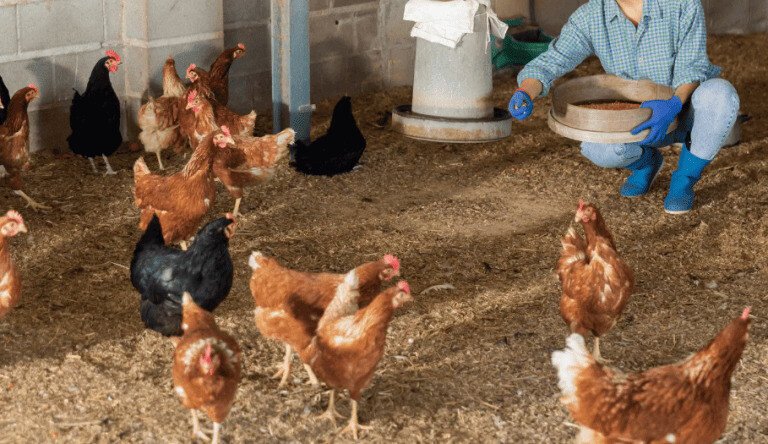
Some kitchen waste can be used as animal feed — for example, vegetable and fruit scraps or rice. It’s important that the food is fresh, with no mould or harmful substances. This approach is especially convenient if you or your neighbours keep chickens, ducks, quail, goats or cows. Kids usually find the process particularly fun!
Maggot composting (BSF larvae)
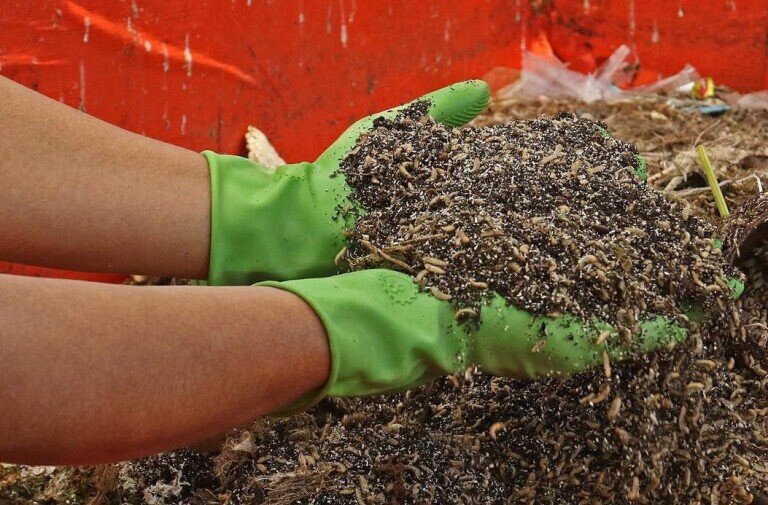
One of the most effective ways to process waste. It uses black soldier fly larvae, which quickly eat almost any organic matter, including meat and cooked food. For this you need a ventilated container with a way to collect the liquid. The larvae process the waste within a few weeks, after which they crawl out to pupate. The result is protein feed (the larvae), solid fertiliser and liquid for watering. Optimal conditions are warmth (+25 to +35°C), moderate humidity and shade. The system requires almost no maintenance and works very fast. The larvae can be used to feed fish and poultry. Black soldier fly eggs can be bought on local marketplaces (telur maggot).
Worm composter
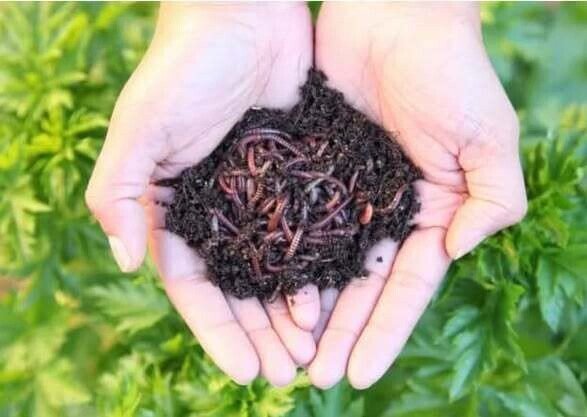
This is a system using earthworms that turn organic waste into nutrient-rich vermicompost. Typically, two containers are used: the top one with holes for the waste and the bottom one for collecting liquid. Add damp bedding (cardboard, leaves), introduce the worms, then feed them gradually with food scraps. Don’t add meat, fats or too many acidic foods. It’s important to keep it moist and place the container in cool shade. After 2–3 months, you’ll have finished fertiliser, and the liquid (“worm tea”) can be used for watering plants. Live worms can also be used as feed for birds and fish, and as fishing bait. Worms are sold by weight at worm farms and on marketplaces; 1 kg costs 60,000–100,000 rupiah (search for cacing tanah or cacing hidup 1 kg).

You can add one right now!