
In recent weeks, foreign bloggers in Bali have felt a little more nervous than usual when posting yet another Reel. The Immigration Service has reminded them that a free villa in exchange for Stories, filming content for a brand, or a barter deal with a hotel may be considered work, and therefore a breach of tourist visa conditions.

While some are debating where the line lies between leisure and work, Indonesia’s immigration system is preparing a separate visa category for content creators.
A new category has appeared on the official website of Indonesia’s Directorate General of Immigration (Direktorat Jenderal Imigrasi): the C5A Visa Kunjungan Konten Kreator, a visa for content creators. It is listed separately from the C5 journalist visa and other creative categories, including visas for performers and musicians.
So far, there are few details. The C5A page does not include a description of the requirements or application conditions. However, the very appearance of a separate category shows that the authorities have begun treating content creation as a distinct area of activity.
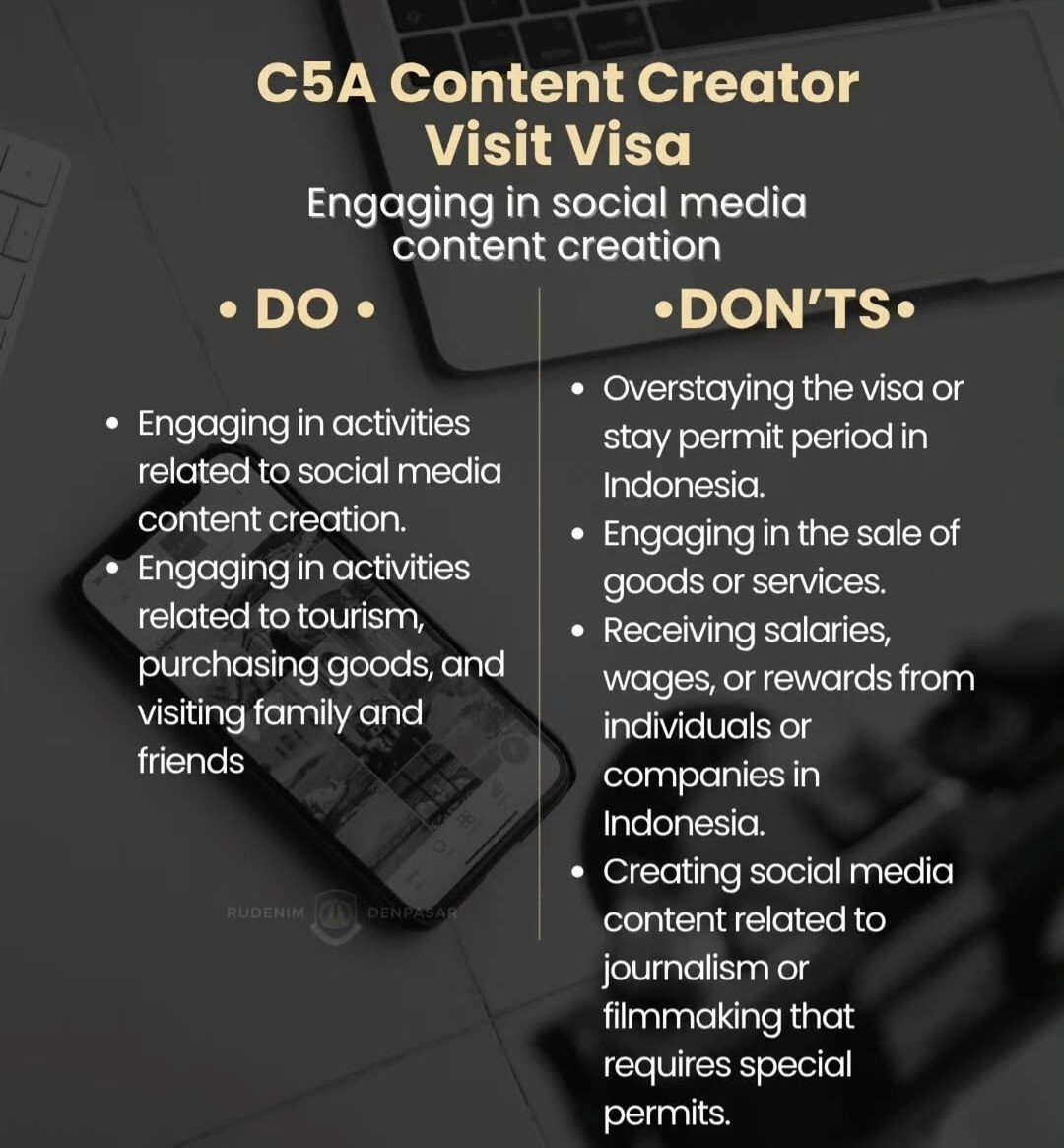
Interest in the new visa emerged after recent clarifications from the Immigration Service. The agency warned foreign nationals that tourist and socio-cultural visas are not suitable for activities that may be interpreted as work or commercial promotion. Bloggers, photographers, videographers, influencers and other professionals who create content or provide services while staying in Indonesia have come under particular scrutiny.
As an example, officials cited a foreign make-up artist who did a model’s make-up for free for a video shoot. Despite there being no payment, immigration authorities considered this a violation of visa rules because the project participants received professional and promotional benefits.
Against this backdrop, Indonesian visa consultants have started actively discussing the C5A category. According to them, it is intended for bloggers, influencers, photographers, videographers, YouTubers and other creators of commercial content.
Some visa companies also state that the C5A category may allow stays of up to 180 days with the possibility of extension, although these conditions have not yet been officially confirmed.
The main question remains open: who exactly does Indonesia consider to be a content creator? The authorities have not yet published the criteria or explained where the line lies between a tourist sharing holiday impressions and someone creating content as part of a commercial collaboration.
Until the authorities publish detailed rules for the C5A, foreign bloggers and content creators should continue to choose their visa carefully. This is especially important when it comes to advertising integrations, barter collaborations, shoots for businesses, or other projects that may be interpreted as commercial activity.
Legal Indonesia recommends consulting specialists on visa matters in advance and choosing a visa type that matches the specific format of work, rather than assuming that a tourist visa will be sufficient.
It seems that, after a series of warnings and deportations, Indonesia is trying not only to tighten control over foreign influencers but also to create a separate legal framework for their work. What remains is to wait for the official rules and see who will actually be able to obtain the new visa in practice.
Sources: Imigrasi.go.id

You can add one right now!