
The Bali provincial parliament is drafting a law that would require hotels and restaurants to buy farm produce from Balinese farmers and fishermen — between 40 and 80 percent of everything that goes into the kitchen. The document is still at the justification stage, and lawmakers hope to pass it before the end of the year.
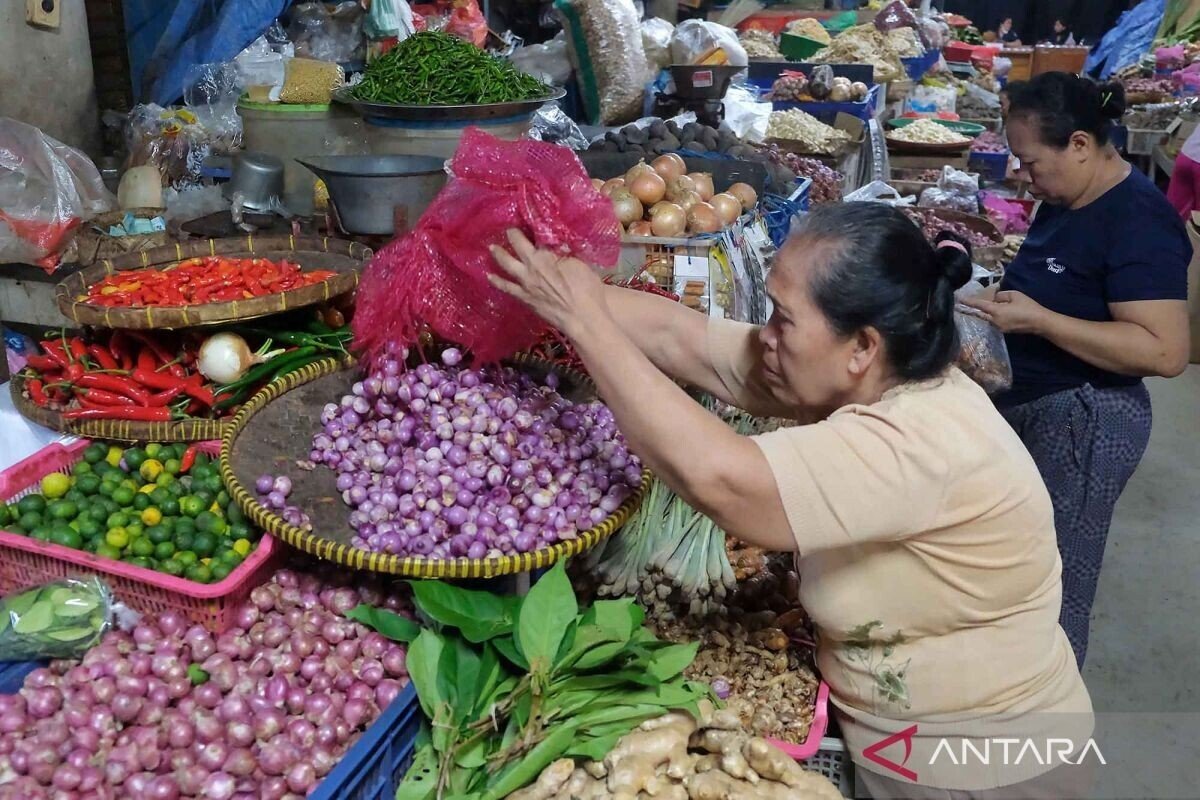
The initiative comes from Agung Bagus Pratiksa Linggih, who heads the relevant parliamentary commission. He proposes rewriting governor's regulation No. 99 of 2018 as a provincial law and broadening it. A governor's regulation carries no penalty for non-compliance, so it can be ignored without consequences. A provincial law can spell out penalties.
The current regulation and governor's decree No. 5774 of 2019 already require hotels and restaurants to source at least 30 percent of their farm and fish products and at least 20 percent of their local manufactured goods locally, measured against their own needs.
Supermarkets are told to keep at least 60 percent local farm produce on their shelves, along with 20 percent fish and local manufactured goods. Purchases made directly from farmers, fish farmers and artisans must be at least 20 percent above cost price and paid in cash; if payment is deferred, it goes through the provincial enterprise.
Local manufactured goods also cover drinks. Arak has been promoted as a separate line since 2020, when small-scale production was brought into the legal sphere, and it has since made its way into hotel bars and the duty-free shops at the airport.
The reason for the new law lies in farmers' welfare figures. The farmers' terms of trade index (Nilai Tukar Petani) shows whether the prices a farm receives for what it sells are outpacing the prices it pays for what it buys: a reading above one hundred means the farmer earns more than he spends.
In June 2026 the index in Bali stood at 104.47, down 1.35 percent over the month, while the national average held at 127.65. That is a gap of around 23 points: the prices paid for produce from Balinese farms fell over the month, while the farms' own costs rose.

In March the farmers' index stood at 104.94 and the fishermen's index at 104.36 — for fishermen, the first reading above one hundred since November 2023. Both consistently lag behind the national average.
To make the requirement work, parliament is discussing a provincial food enterprise that would buy up harvests from farms and then deliver them to hotels and restaurants. A dedicated working group has been proposed to oversee compliance.
The hotel industry has no objection to buying local, but runs into supply problems. I Gusti Ngurah Rai Suryawijaya, head of the local branch of the Indonesian Hotel and Restaurant Association, says giving priority to local products is not difficult, but a kitchen needs consistent quality, competitive prices and continuity: "this week there's a delivery, tomorrow there isn't" — no hotel can work on that kind of schedule.

The taste of a dish can be adjusted, he says, but there is no way to conjure up an ingredient that isn't in the kitchen. Hence the demand for an intermediary — a cooperative or a municipal company that would collect harvests from smallholdings and take responsibility for volume. For now, produce from other islands fills hotel and restaurant kitchens alongside local supplies.
Land is a separate motive. Ajus Linggih explained that the law is also needed to preserve rice fields and orchards: Balinese farms hold small plots, and there is little incentive to work them.
The purchasing share is to be raised in stages. The form of the sanctions is still under discussion: the commission has not decided whether it will be a fine or something else.

You can add one right now!