
Indonesia's Constitutional Court has issued a landmark ruling in case No. 282/PUU-XXIII/2025, completely striking down the Criminal Code articles that carried up to three years in prison for publicly insulting the government and state institutions.
What the court decided
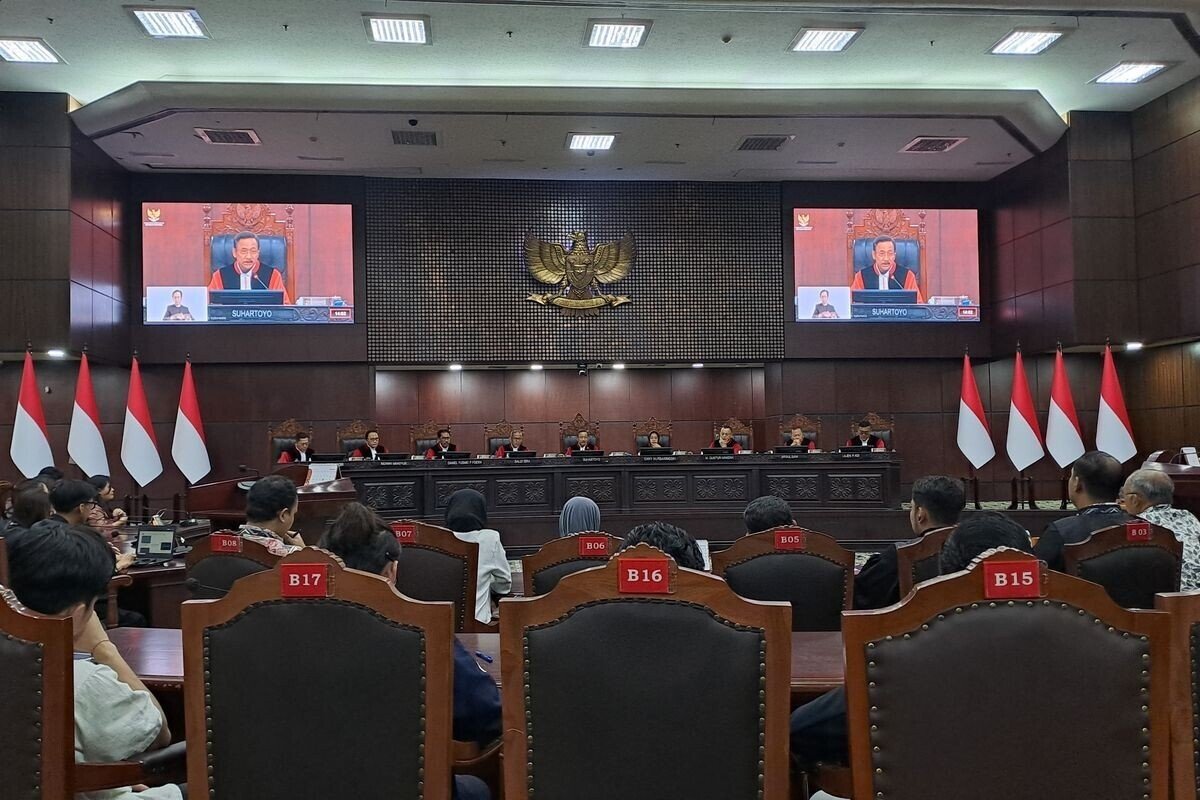
At the hearing, Chief Justice Suhartoyo announced the verdict, under which Article 240 together with its explanatory note and Article 241 of the new Criminal Code Law were found to contradict the 1945 Constitution and to have lost legal force. The claim was filed by a group of citizens.
"State institutions have no feelings"
The court's key argument was the statement by Judge Adies Kadir that state bodies fundamentally cannot be equated with living people when it comes to protecting honor and dignity.
The court ruled that any institution, including state bodies, is a legal entity that has no feelings and is incapable of perceiving praise, censure or insult.

In the court's view, the standing of state bodies should be upheld by officials doing their job effectively rather than by criminal penalties, since in a democratic state the authorities must remain open to public scrutiny by the people as the sole holder of sovereignty.
The risk of criminalization and the chilling effect
The Constitutional Court agreed with the plaintiffs' argument that the vague wording of the articles left room for subjective interpretation by law enforcement. Priscila Oktaviani, representing the plaintiffs, pointed to the absence of clear criteria for distinguishing lawful criticism, academic assessment or political satire from criminal offenses.
The court acknowledged that the threat of prosecution and imprisonment over value judgments generated strong fear in society, making people wary of expressing their thoughts openly.
What this means in practice
Open sources have not reported any high-profile convictions or imprisonments under these particular new articles, since the updated Criminal Code took effect only very recently — in January 2026 — and by August the Constitutional Court had cut these provisions off at the root.
The articles were preventive in nature and instilled strong fear in society even before the system had a chance to launch mass prosecutions. The lawsuit was filed pre-emptively: a group of students and activists demanded that the provisions be repealed, seeing them as a threat to freedom of speech, and the court blocked the dangerous articles right at the outset.

Lawyers note that this important ruling removes dangerous punitive provisions from the new Criminal Code, but does not fully solve the problem. Similar vague wording can still be found in other Indonesian laws — for example, in the rules governing the internet and social media.
If you find yourself in a difficult situation, run into legal problems in Indonesia, or need professional help in dealing with the police and the courts, you can always turn to the specialists at Legal Indonesia for legal support and protection of your interests.

You can add one right now!