
In the village of Bayung Gede in Kintamani, there’s a place that’s barely mentioned in tourist guides. Random travellers rarely end up here. Now and then, it’s visited only by those who already know Bali well and are looking for less obvious spots that are very different from the usual routes.
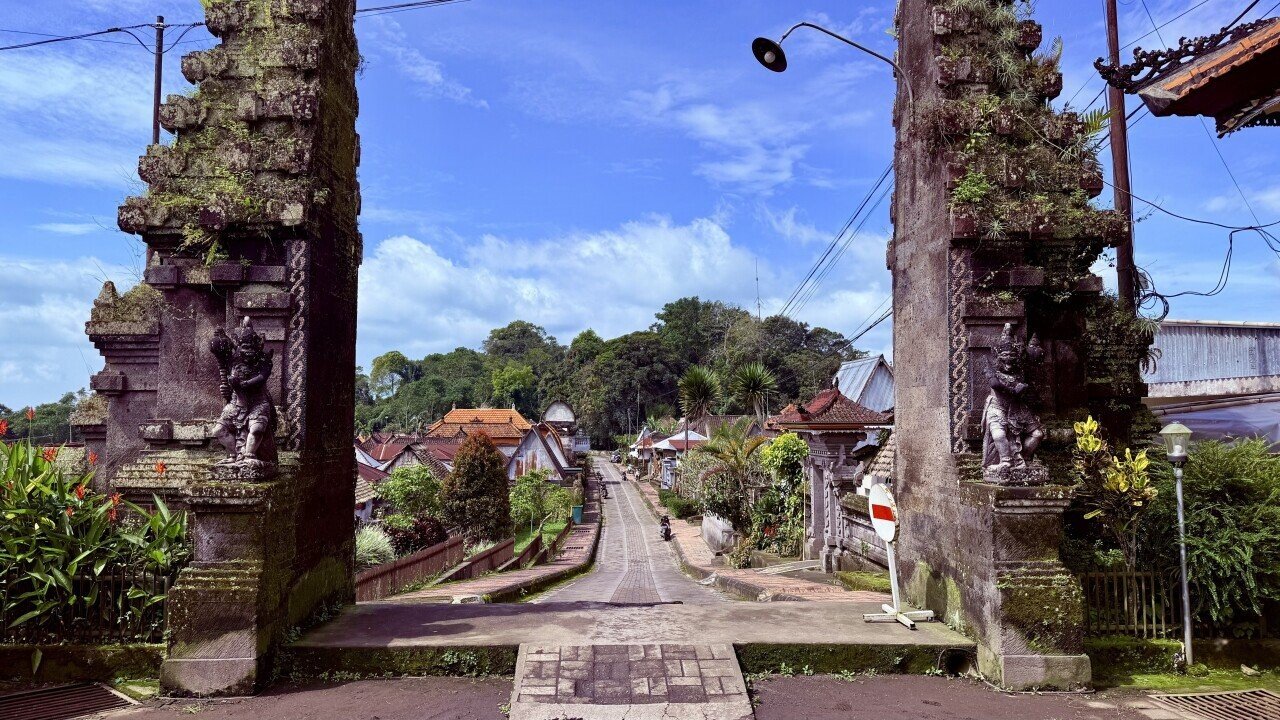
At first glance, it’s just a charming local village, with the same friendly people you find all over Bali. But the most important place lies on the edge of the village, away from the homes—a small sacred forest.
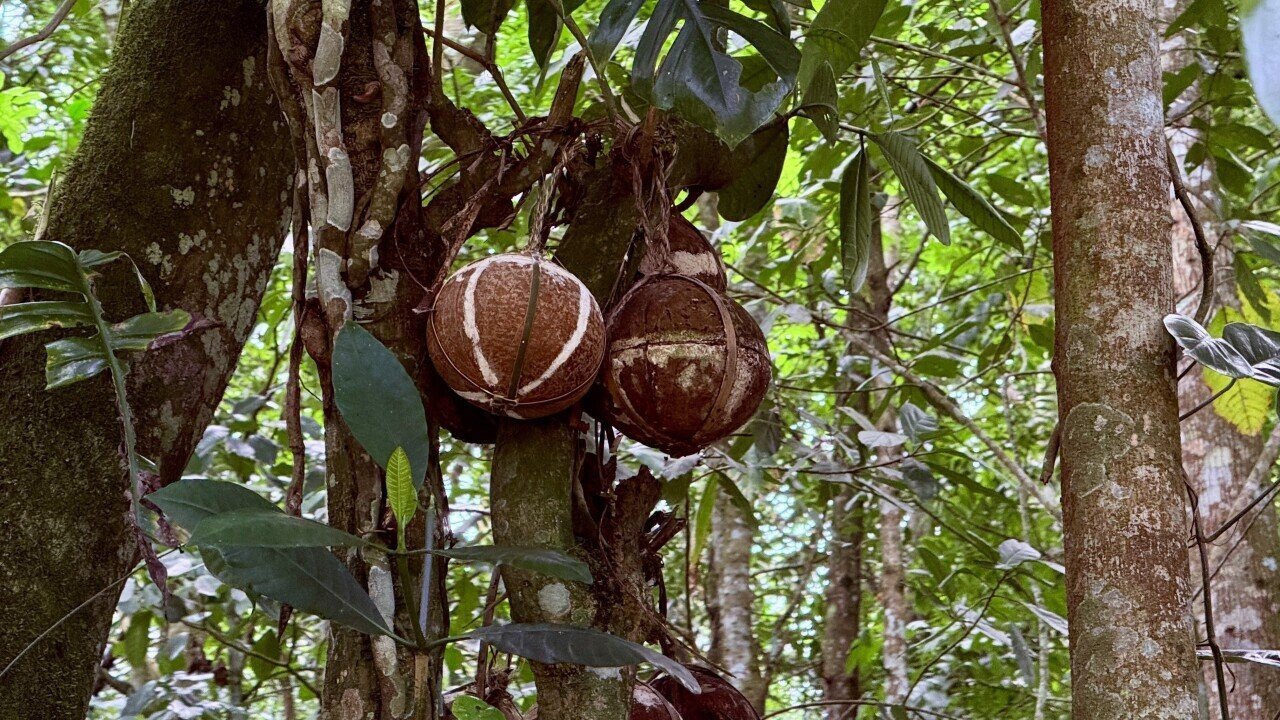
In this forest, known as Setra Ari-Ari, coconut shells hang from the branches, each containing a placenta. Here, instead of burying it as is common on the island, they hang it up. This tradition has strict rules and its own explanations.
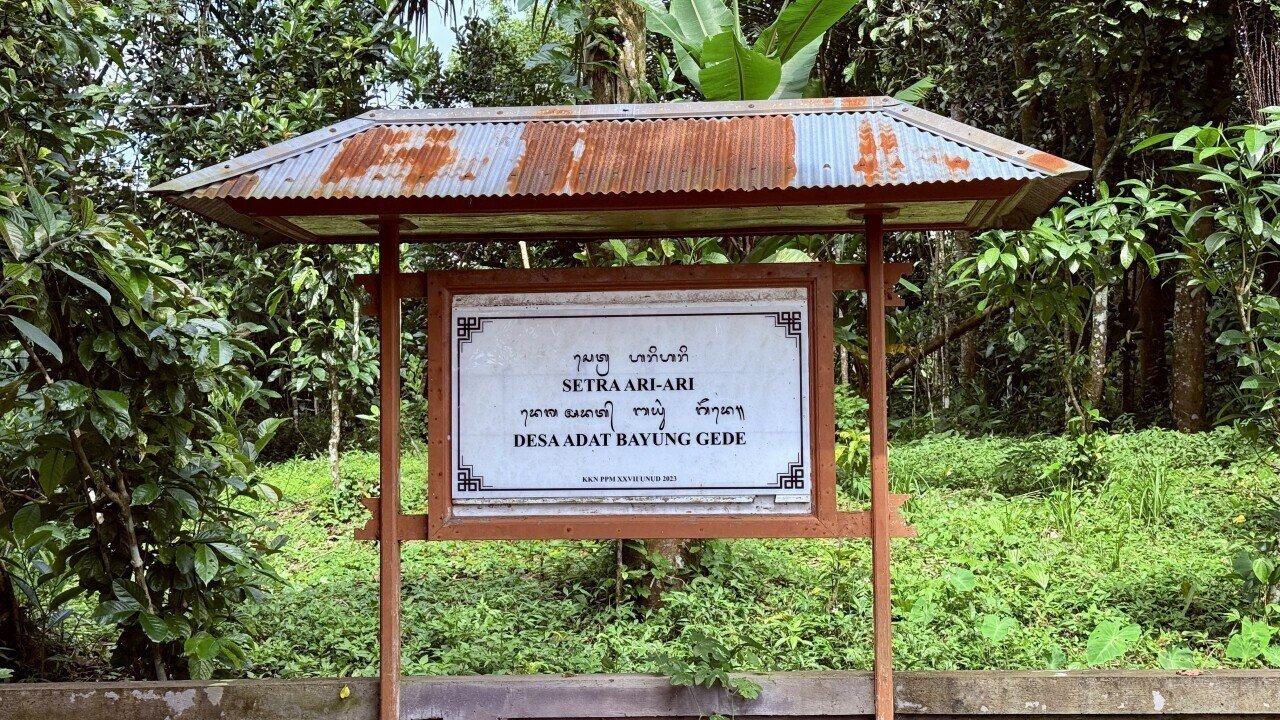
The word Setra means “cemetery” in Balinese. Ari-Ari means “placenta”. So the name can be translated literally as “placenta cemetery”. But the striking thing is that it doesn’t look like a cemetery in the usual sense. It’s an ordinary forest: dense trees, cool air. Only if you look closely—and know what to look for—do you notice something unusual.
In Bali, after a child is born, the placenta is usually thrown into the ocean or buried in the home courtyard, and a small ritual is performed. In Bayung Gede, this is forbidden. Locals see the courtyard as a sacred space connected with serving the deities. The placenta, however, belongs to the category of leteh—spiritually “impure”. That’s why a separate place was set aside for it: an entire forest to the south of the village.
For locals, it’s not only the location that matters, but also the ritual of taking the placenta there after childbirth. First, the placenta is cleansed, then placed in half a coconut. Ash, pepper, and rice husks are added inside. When everything is ready, the shell is closed, coated with lime, and marked with the tapak dara symbol—a cross. After that, it’s tied with a bamboo rope.
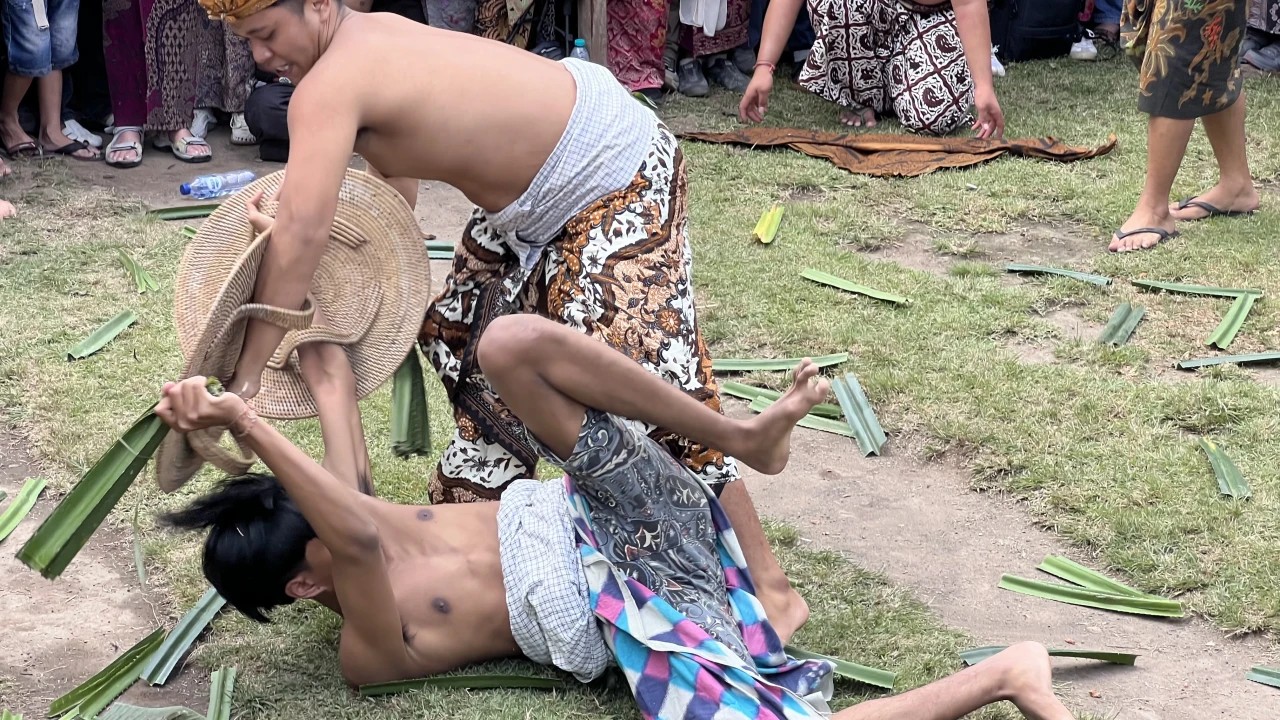
Then comes the most important part. The child’s father puts on traditional clothing, purifies himself, and personally carries the placenta to the forest. He must hold it only in his right hand—it’s believed this will give the child a good destiny. In the forest, he chooses a cerbera tree (Cerbera manghas) and hangs the shell from a branch. This plant is considered sacred and is known for its poisonous fruit.
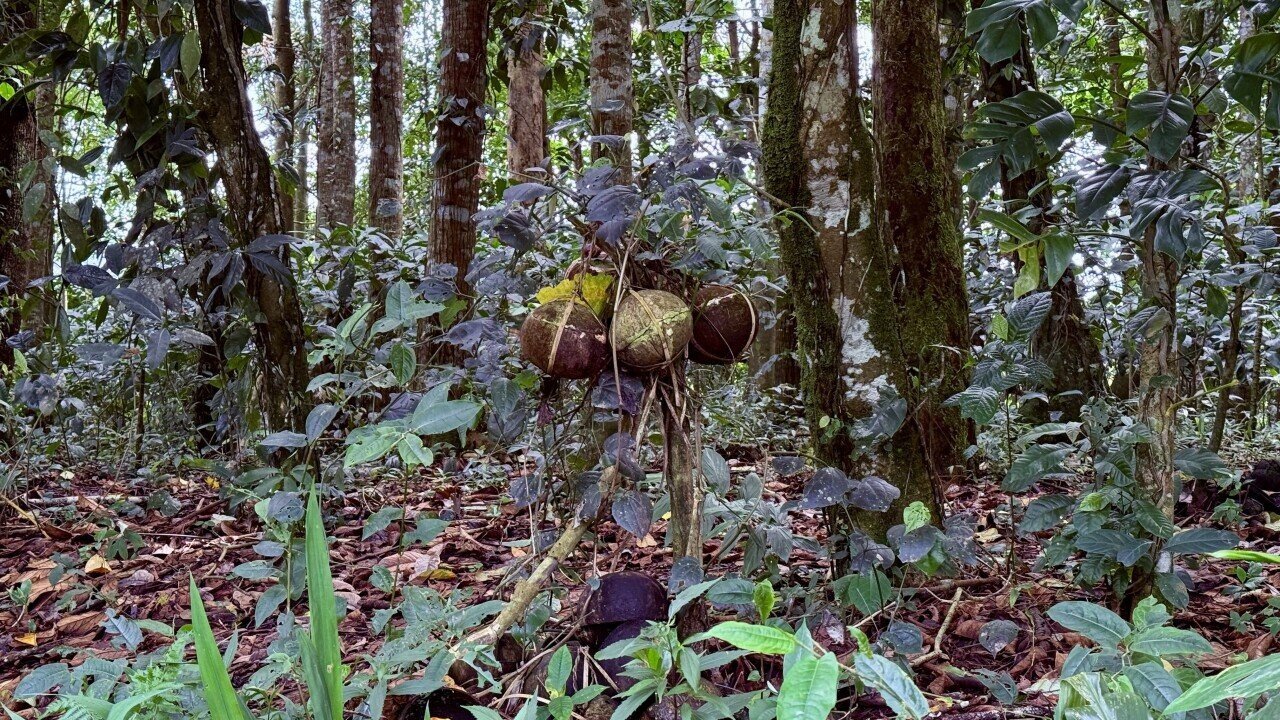
Interestingly, all the shells hang in clusters. This isn’t by chance. Locals believe that if a placenta is placed near others, the child will grow up more open and find it easier to get along with people. If it’s hung separately, the child may become withdrawn.
After the ritual, the father returns home with fern leaves and places them by the entrance. It’s a sign that a baby has recently been born in the family.
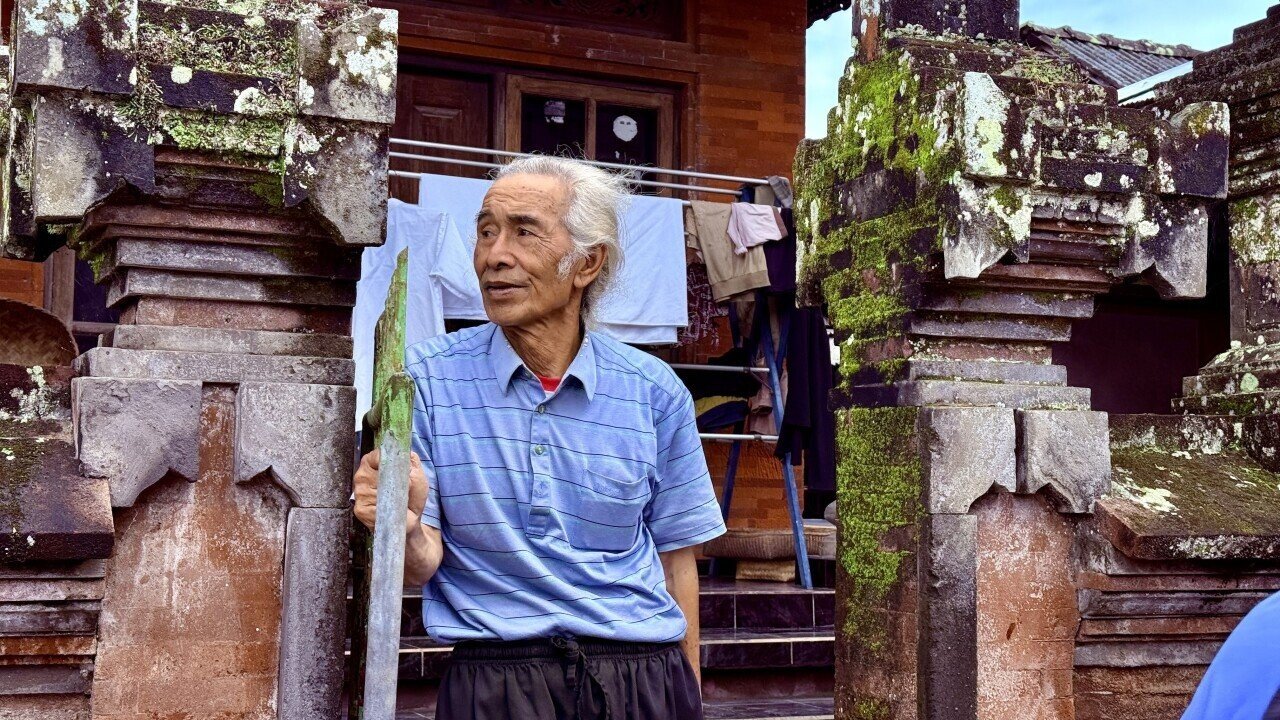
The forest itself is considered sacred. It’s fenced off, and locals can’t just go in whenever they want. But this rule seems not to apply to tourists. The man clearing leaves near the entrance offered to let us in himself. And when we asked, “Are there any snakes?”, he replied, “Not today.”
The tree used for hanging the coconuts with placentas wasn’t chosen by accident. From a practical point of view, it’s about the smell: its flowers contain essential oils that mask unpleasant odours. But for locals, a different explanation matters more—mythology.
It’s believed that the ancestors of this village came from the base of a tree brought to life by sacred water (tirta kamandalu). That’s why the placenta is taken to the forest as a symbol of returning to the “invisible mother”. In this belief system, the placenta is part of the concept of Catur Sanak—the four “companions” of a person, along with blood, amniotic fluid, and the umbilical cord. How they are treated is believed to affect the child’s protection.
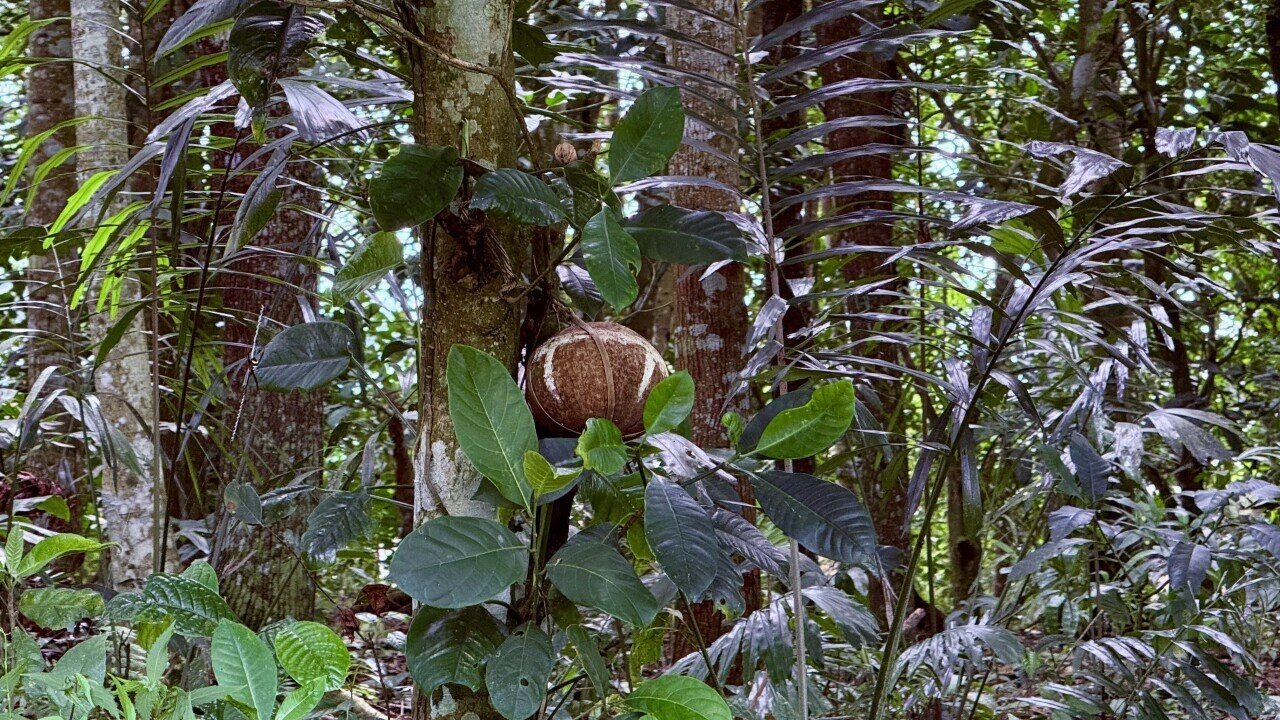
This forest is not cut down. Under local customary laws, doing so is punishable by fines and the obligation to plant new trees. But it’s not just about the rules—residents themselves are convinced the forest must not be touched, and that doing so would be a serious violation with bad consequences for one’s karma. That’s why the placenta cemetery remains untouched: the trees grow thickly, the air is cool, and you can feel that this is a space with its own rules—set long ago and still observed today.
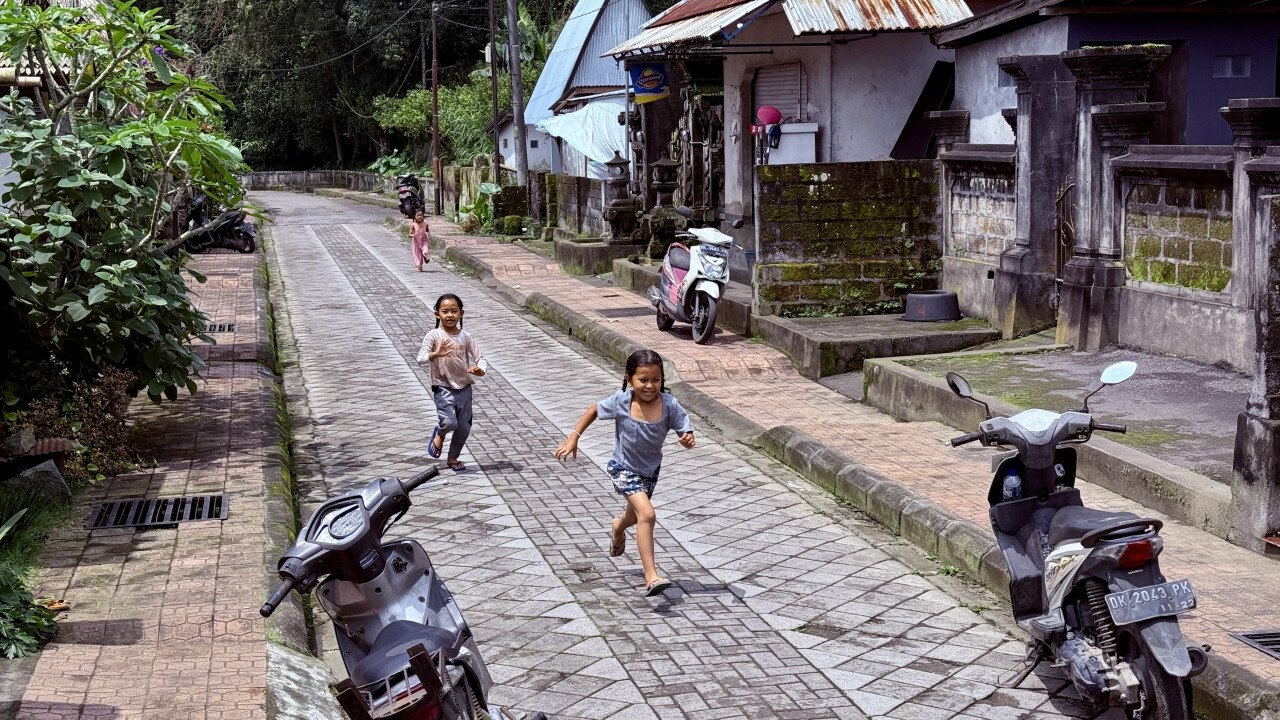
Usually, a coconut shell hangs on a branch for about 5–7 years, then eventually falls and stays on the ground. There aren’t many of these “coconuts” in the forest right now, but the village itself is small. Over time, the rules within the community have become less strict, and families are no longer always formed only within it, but the tradition remains.
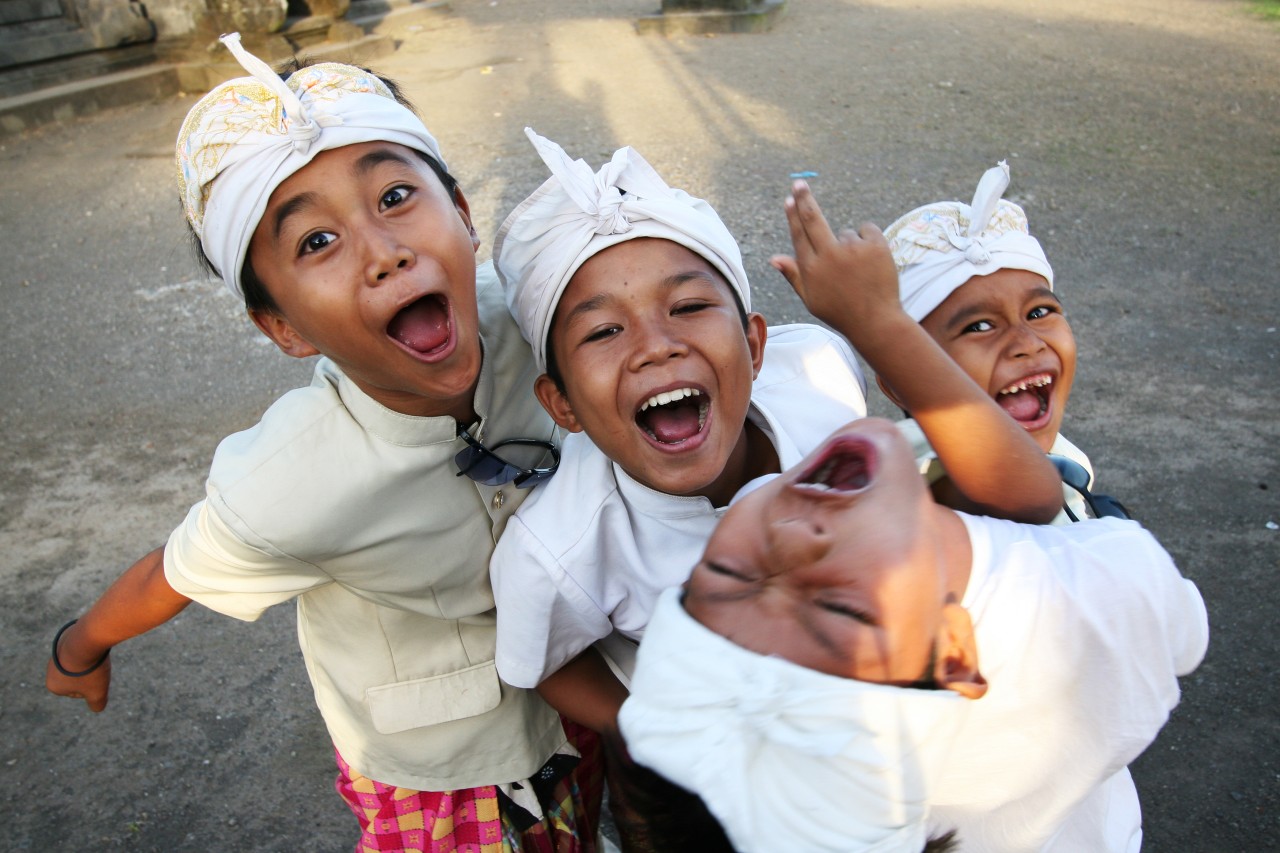
Even this year, several new shells have appeared in the trees, which means the practice is still being followed. Judging by how many children are running around the village—and by the fact that new placentas were recently brought into the forest—this tradition is continuing.

You can add one right now!