
A real natural disaster unfolded on Mbadokai beach in the Rote Ndao regency. This is one of Indonesia’s southernmost areas, in the East Nusa Tenggara province. A huge pod of 55 short-finned pilot whales (Globicephala macrorhynchus) washed ashore. Pilot whales are large oceanic dolphins found in tropical and warm waters, growing up to 7 metres long. They can be recognised by their darker colour, short fins and rounded head.
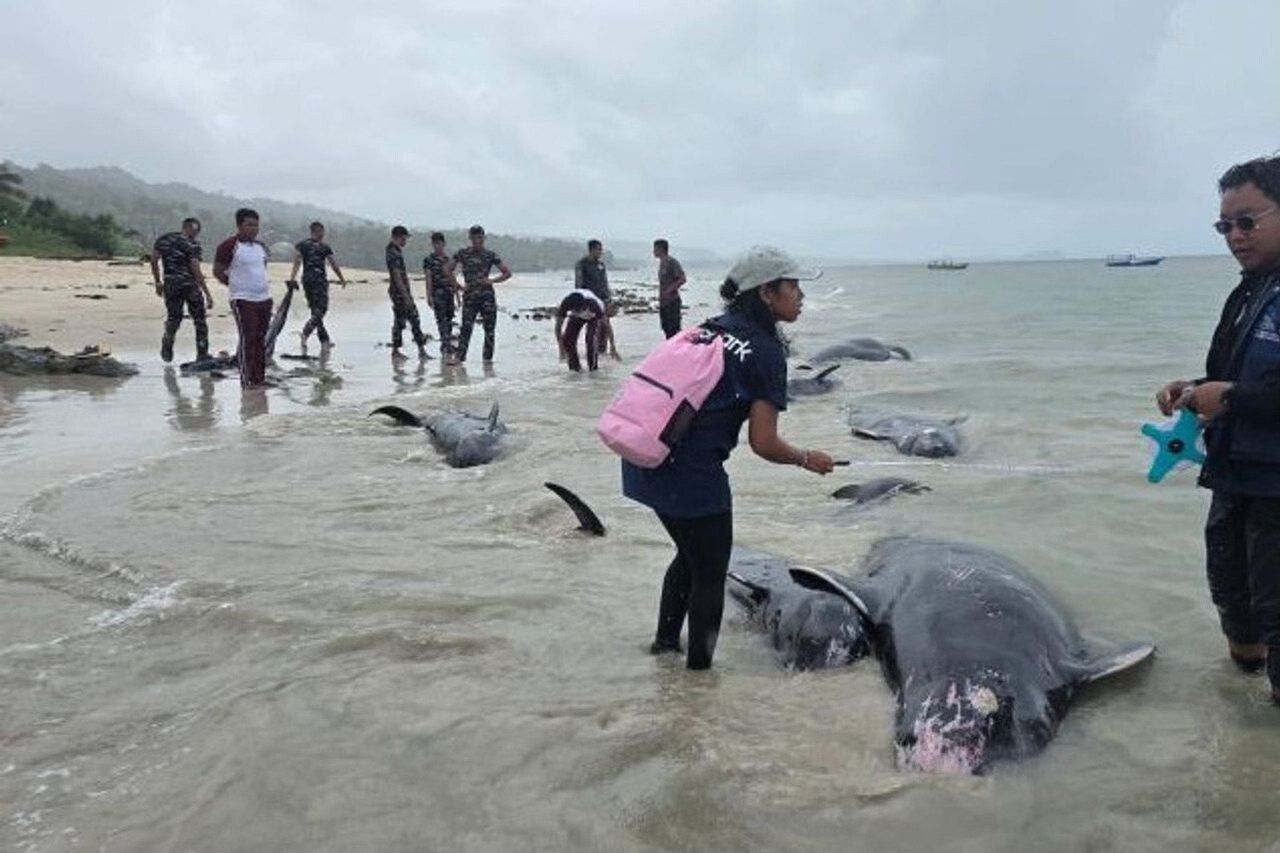
The weakened mammals were found at night, and a rescue operation began immediately. Those still alive were taken out to deeper water by boat, away from the shallows. The Kupang National Marine Protected Areas Authority (BKKPN) worked together with the police and local residents.
Despite all efforts, 21 animals died on this beach. Agency specialists confirmed the deaths of 13 females and 8 males. The dead included 17 adults and 4 calves. The largest male was over 5 metres long, while the smallest measured just 2.4 metres.
Reserve head Imam Fauzi personally oversaw the identification and measurements of each body. Veterinarians promptly carried out necropsies and took tissue samples for laboratory analysis. Scientists are trying to understand what caused the group of mammals to come ashore en masse.
Heavy machinery had to be brought in to bury the bodies on the beach. Local authorities provided an excavator and ensured the work was completed as quickly as possible. Speed is critical in such cases to prevent biological contamination of the coastal area.
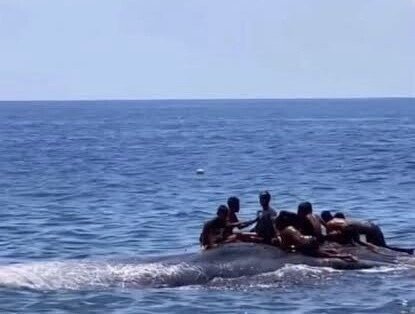
Police closely monitored compliance with safety protocols at the site of the tragedy. Rescue teams urged local residents not to approach the carcasses or try to take parts of the bodies. Pilot whales are a protected species, so any handling of them is prohibited by law.
Specialists are still collecting data, as the number of dead animals could rise if the pilot whales come ashore again. Laboratory tests should show what caused this behaviour. Two main theories are currently being considered: human activity or an infection. The leader of the pod may have been the only one infected. Pilot whales are social animals, so the whole group follows the leader, even if it mistakenly heads towards death on the shore.
This is far from the first such incident in Indonesian waters, which lie along one of the key migration routes for cetaceans. Similar tragedies occurred on Madura Island in 2021, when about 45 pilot whales died, and on Savu Island in 2012, when 51 pilot whales ended up on the shore.

You can add one right now!