
In Bali, dismissing an employee almost never looks like a simple “we’re no longer working together”. Even if the employer is sure the employee is underperforming or causing problems, the process of terminating employment in Indonesia is strictly regulated by law.

And any mistake in the procedure can quickly turn an internal conflict into a serious legal dispute.
Real-life case: when a rushed decision turns into a problem
One common scenario looks like this: a business owner decides to part ways with an employee quickly, informs them verbally that they are dismissed, pays the final settlement, and revokes access to work systems.
After some time, the former employee files a complaint with the labour authorities, claiming the procedure was breached. As a result, the business has to spend time negotiating, pay additional compensation, and deal with consequences that could have been avoided.
The main mistake employers make
In situations like this, the problem is not the reason for the dismissal itself, but the lack of a properly documented process.
In Indonesia, an employer must not only have grounds to terminate a contract, but also be able to prove that every step was followed correctly:
- breaches are documented in writing
- warnings are issued formally
- the procedure complies with labour law
Without this, even when the employer is clearly in the right, their position can be weak in a dispute.

Who the law protects from dismissal
Before dismissing someone, it is important to check whether the employee falls into a category of workers protected by law.
Article 153 of Indonesia’s labour legislation prohibits dismissing a person because of illness if they have a medical certificate — official sick leave can last up to 12 consecutive months.
Separate protection also applies to:
- pregnant women
- employees who are breastfeeding
- people getting married
In addition, the law protects employees’ right to:
- join trade unions
- attend religious events
- file complaints with government authorities
Dismissal also cannot be based on:
- religion
- political views
- gender
- skin colour
- the employee’s personal beliefs
If a dismissal is linked to any of these reasons, a court may declare it invalid and require the employer to reinstate the employee.
The warning system: SP1, SP2 and SP3
When the issue is related to discipline or work quality, the usual approach is a system of formal warnings — Surat Peringatan (SP1, SP2 and SP3).
These notices are issued step by step over six months. Each subsequent warning is given if the employee has not corrected the issue after the previous one.
The documents must:
- include a description of the breaches
- refer to the relevant clauses of the contract
- be properly executed using a Materai stamp
In practice, these documents are usually prepared with the help of a local HR specialist or a lawyer.
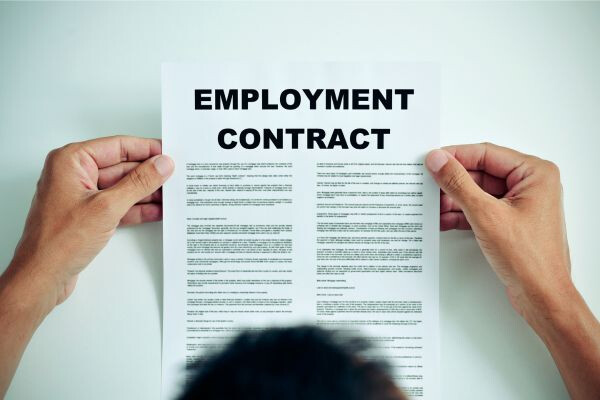
Even serious misconduct requires a procedure
Even theft, fraud, threats or a physical altercation do not allow an employer to completely ignore the established process.
All violations must be properly confirmed and documented. Moreover, Indonesian law imposes additional obligations on the employer.
For example, if an employee is arrested, Article 160 may require the company to temporarily support their family by paying part of the salary.
Financial consequences of dismissal
The amount of compensation is governed by Article 156 and depends on:
- the employee’s length of service
- the type of contract
- additional payments and allowances
If a fixed-term contract (PKWT) is terminated early without lawful grounds, the employer may be required to compensate the employee for salary for the entire remaining term of the contract.
What happens if the procedure is breached
Mistakes during dismissal often lead to lengthy disputes:
- employees contact the labour authorities
- they demand compensation
- the process starts distracting the business from normal operations
As a result, the costs can be significantly higher than the amount the business owner initially expected to spend.

Why most companies choose to reach an agreement
Indonesia’s labour law system is largely built around negotiations and finding a compromise.
For businesses, the safest option is usually to terminate the contract by mutual agreement. This approach helps to:
- reduce legal risks
- avoid court disputes
- keep operations running without additional pressure
Key takeaway
A “quick” dismissal in Bali often ends up costing more than properly preparing the procedure from a legal standpoint.
Before terminating a contract, it is important to:
- check the contract
- collect evidence of breaches
- make sure the paperwork is correctly prepared
If you have any doubts about whether your actions are lawful, it is safer to discuss the situation with a lawyer in advance than to deal with the problem after an employee has filed a complaint.
📩 Contact us in whichever way is convenient for a consultation!

You can add one right now!